LUCY LETBY CASE ERUPTS AGAIN — NEW MEDICAL AND STATISTICAL EVIDENCE PUTS CONVICTIONS UNDER FRESH SCRUTINY
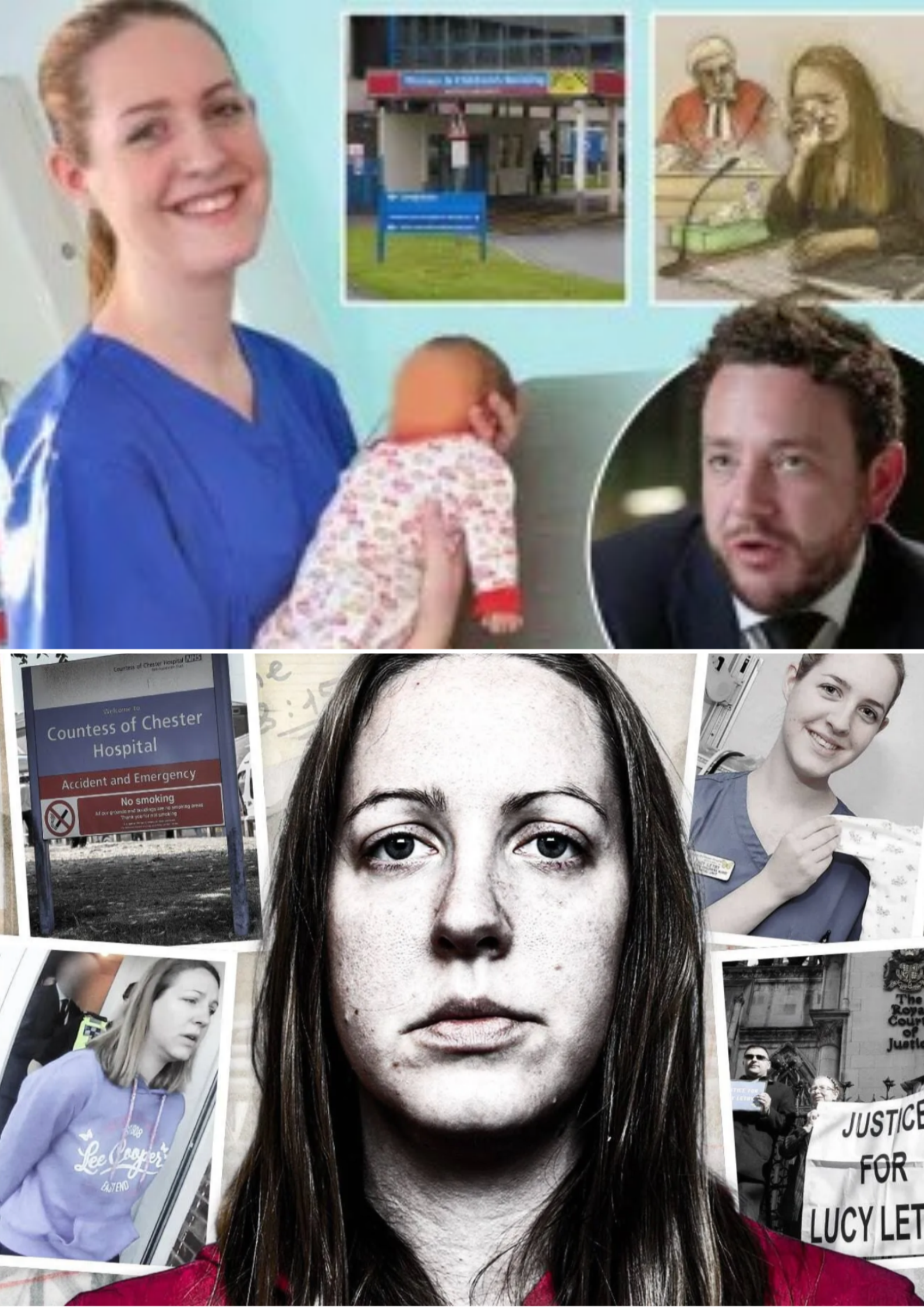
LUCY LETBY CASE ERUPTS AGAIN — NEW MEDICAL AND STATISTICAL EVIDENCE PUTS CONVICTIONS UNDER FRESH SCRUTINY
An international group of experts has challenged important parts of the evidence used against the convicted former neonatal nurse. But Letby remains convicted, and Britain’s miscarriage-of-justice watchdog has not yet decided whether her case should return to the Court of Appeal.
The Lucy Letby case is facing another extraordinary chapter.
Years after the former neonatal nurse was convicted of murdering seven babies and attempting to murder seven others, new medical and statistical arguments are being examined by Britain’s Criminal Cases Review Commission.
The developments have reignited a fierce debate over the evidence presented to the juries — particularly the medical explanations for some of the babies’ collapses and deaths.
But despite the growing controversy, one fact remains unchanged:
Lucy Letby’s convictions have not been overturned.
She remains in prison serving 15 whole-life orders following two trials at Manchester Crown Court.
 THE CASE THAT SHOCKED BRITAIN
Letby worked as a neonatal nurse at the Countess of Chester Hospital between 2015 and 2016.
She was convicted in 2023 of murdering seven babies and attempting to murder six others.
At a retrial in 2024, she was convicted of another attempted murder, bringing the total number of attempted murders to seven.
The prosecution’s case involved a series of unexplained collapses and deaths on the hospital’s neonatal unit.
A central feature of the prosecution’s case was the argument that the incidents were not natural medical events but deliberate acts.
Letby has consistently denied murdering or harming the babies.
 WHY THE EVIDENCE IS NOW BEING QUESTIONED
The renewed controversy centres heavily on medical evidence.
An international panel led by Canadian neonatologist Dr Shoo Lee reviewed evidence connected with the case and publicly challenged several of the medical conclusions presented at trial.
The panel included specialists from different fields and countries.
They argued that some of the babies’ deaths and collapses could have resulted from natural causes or problems with medical care rather than deliberate poisoning or other intentional harm.
Dr Lee has also questioned the way his own earlier research concerning air embolism was interpreted during Letby’s trial.
These arguments are now part of the material being considered in Letby’s attempt to have her convictions reviewed.
But they remain expert challenges to the existing evidence, not a judicial finding that the original verdicts were wrong.
THE STATISTICAL QUESTION
Statistics have also become a major part of the debate.
The prosecution presented the clustering of serious incidents during Letby’s time on the neonatal unit as an important part of the case.
Critics of the conviction argue that the way the pattern was interpreted may have overstated what could legitimately be inferred from the data.
In July 2026, neonatologist Neil Aiton and statistician Hilde Wilkinson-Herbots, an associate professor at University College London, were among experts whose work raised further questions about aspects of the case.
The significance of statistical evidence in a criminal case is particularly sensitive.
A pattern can raise legitimate questions and prompt investigators to look more closely.
But a statistical association alone does not establish that a particular individual caused the underlying events.
That distinction is now part of the broader debate surrounding Letby’s convictions.
THE MATERNITY RECORDS CONTROVERSY
Another major development emerged in July 2026.
A BBC investigation reported that maternity records for babies involved in Letby’s case had been seized by police but were not reviewed by the prosecution’s chief medical expert before trial.
The records included information about pregnancy, labour and birth.
The BBC also reported that the defence had requested the maternity notes but they were not disclosed because prosecutors considered them irrelevant to the case they were presenting.
That has attracted criticism from other medical experts.
Professor Phil Bennett, an obstetrics and gynaecology specialist at Imperial College London, told the BBC that maternity and neonatal care should normally be considered together when investigating the cause of a newborn baby’s collapse or death.
One case that has received particular attention is Baby O, one of the triplets whose death formed part of Letby’s convictions.
Bennett reviewed the case and proposed that liver damage associated with a difficult Caesarean delivery could provide an alternative medical explanation.
That interpretation is disputed.
Prosecution expert Dr Dewi Evans has maintained that the maternity information did not change his conclusions and said he did not believe the birth circumstances explained what happened to Baby O.
THE INSULIN EVIDENCE
Another major battleground concerns two babies identified in court as Baby F and Baby L.
Letby was convicted of attempting to murder both by deliberately administering insulin.
New defence evidence has challenged the scientific basis of those convictions.
In 2025, chemical engineering expert Helen Shannon and bioengineering professor Geoff Chase produced a report questioning aspects of the insulin evidence.
They continued to maintain that they considered it very unlikely that the two babies had been deliberately poisoned.
However, the story became more complicated in September 2026.
Shannon and Chase withdrew from Letby’s defence team after raising concerns about other arguments being advanced on her behalf.
They said they could not support some of those arguments because, in their view, they were inconsistent with available evidence, established science and physiology.
Their decision did not mean they had abandoned their concerns about the two insulin convictions.
Instead, they said they stood by their assessment of those cases while objecting to other scientific arguments being advanced by the defence.
A KEY PROSECUTION EXPERT ALSO FACES QUESTIONS
The credibility of prosecution expert evidence has itself become another issue.
In March 2026, The Guardian reported that Professor Peter Hindmarsh, a paediatric endocrinologist who gave important evidence concerning the insulin cases, had been subject to a formal investigation by his employer over concerns relating to his medical practice before he testified.
The investigation and the termination of his contract were not disclosed to the jury at Letby’s trial.
Cheshire Police and the Crown Prosecution Service said they were not aware of the investigation before his evidence was given.
The defence has included concerns surrounding expert evidence within the material submitted to the CCRC.
Again, however, the existence of questions surrounding an expert does not by itself invalidate a criminal conviction.
The courts will ultimately have to determine whether any new evidence reaches the legal threshold required to overturn the verdicts.
THE CCRC IS NOW EXAMINING THE CASE
The Criminal Cases Review Commission, the UK’s independent body for investigating possible miscarriages of justice, is currently reviewing Letby’s convictions.
The CCRC received a preliminary application in February 2025.
Additional expert reports and submissions followed throughout 2025 and into January 2026.
The commission confirmed in February that the review was underway.
Importantly, the CCRC explained that its role is not to decide whether Letby is innocent or guilty.
Instead, it must determine whether new evidence or arguments create a real possibility that a conviction would not be upheld by an appeal court.
If the legal threshold is met, the CCRC can refer the case back to the Court of Appeal.
For now, that has not happened.
TWO PREVIOUS APPEALS FAILED
The renewed challenge comes after Letby has already attempted to overturn her convictions through the courts.
Her previous appeals were unsuccessful.
That is why the CCRC review is so important for her defence.
A successful referral could potentially lead to another appeal.
But there is no guarantee that the commission will refer the case, and there is no guarantee that an appellate court would overturn the convictions if it did.
THE THIRLWALL INQUIRY
At the same time, another major investigation has examined what happened at the Countess of Chester Hospital.
The Thirlwall Inquiry was established to investigate events at the hospital and the wider implications of the Letby case.
Its report was published on September 15, 2026.
The inquiry examined issues including hospital management, clinical governance and the response to concerns raised about the neonatal unit.
The inquiry’s findings about institutional failures should not be confused with a legal finding that Letby’s criminal convictions were unsafe.
The two processes have different purposes.
The Thirlwall Inquiry examined how the hospital responded to events.
The CCRC is examining whether new evidence could justify another challenge to Letby’s convictions.
EXPERTS ARE DIVIDED
Perhaps the most striking feature of the current debate is that there is no single scientific consensus declaring Letby innocent.
Some experts have raised serious questions about aspects of the prosecution evidence.
Others have challenged arguments advanced by the defence.
That division was highlighted dramatically when Shannon and Chase withdrew from Letby’s defence team while maintaining their concerns about the insulin convictions.
Letby’s barrister, Mark McDonald, has argued that the new evidence is broad and comes from experts in different disciplines.
He has said the combined evidence fundamentally undermines parts of the scientific case used at trial.
The prosecution side, however, has not accepted that the convictions are unsafe.
The CPS has previously emphasized that Letby was convicted following jury trials and that previous appeals were dismissed.
WHAT HAPPENS NEXT?
The immediate question is whether the CCRC will refer any of Letby’s convictions to the Court of Appeal.
That decision could become one of the most significant developments in the case since the original trials.
If a referral is made, judges would then examine the new evidence and arguments under the legal framework governing criminal appeals.
If the CCRC does not refer the case, Letby’s convictions will remain in place unless another legal route becomes available.
For now, neither outcome has been decided.
A CASE THAT REMAINS DEEPLY DIVISIVE
Few British criminal cases have generated such a fierce debate over medical evidence.
The original trials produced devastating verdicts for the families of the babies involved.
The new challenges have created another painful chapter, particularly for parents who have already lived through years of investigation, trials and public discussion.
For Letby’s supporters, the emerging medical and statistical questions represent potentially serious flaws that deserve full judicial examination.
For the families of the babies, the renewed controversy has reopened wounds surrounding the deaths of their children.
And for the legal system, the central question is much narrower:
Do the new arguments create a real possibility that the convictions cannot safely stand?
That is a question the CCRC — and potentially the Court of Appeal — must answer.
THE VERDICT HAS NOT BEEN OVERTURNED
For now, the headlines about a “shattered prosecution case” go further than the evidence currently allows.
There are new expert challenges.
There are questions about medical evidence.
There are questions about maternity records and disclosure.
There are statistical arguments being examined.
And there is an active CCRC review.
But Lucy Letby’s convictions remain legally valid.
She remains convicted of murdering seven babies and attempting to murder seven others, and she remains subject to 15 whole-life orders.
The next chapter will depend not on social-media claims, leaked-document headlines or public pressure, but on what the independent legal review ultimately concludes.
For now, the Lucy Letby case is not over — but neither has her conviction been overturned.