CHRISTA PIKE WAS DECLARED BRAIN DE@D — HOURS LATER, SHE WOKE UP AND STARTED TALKING
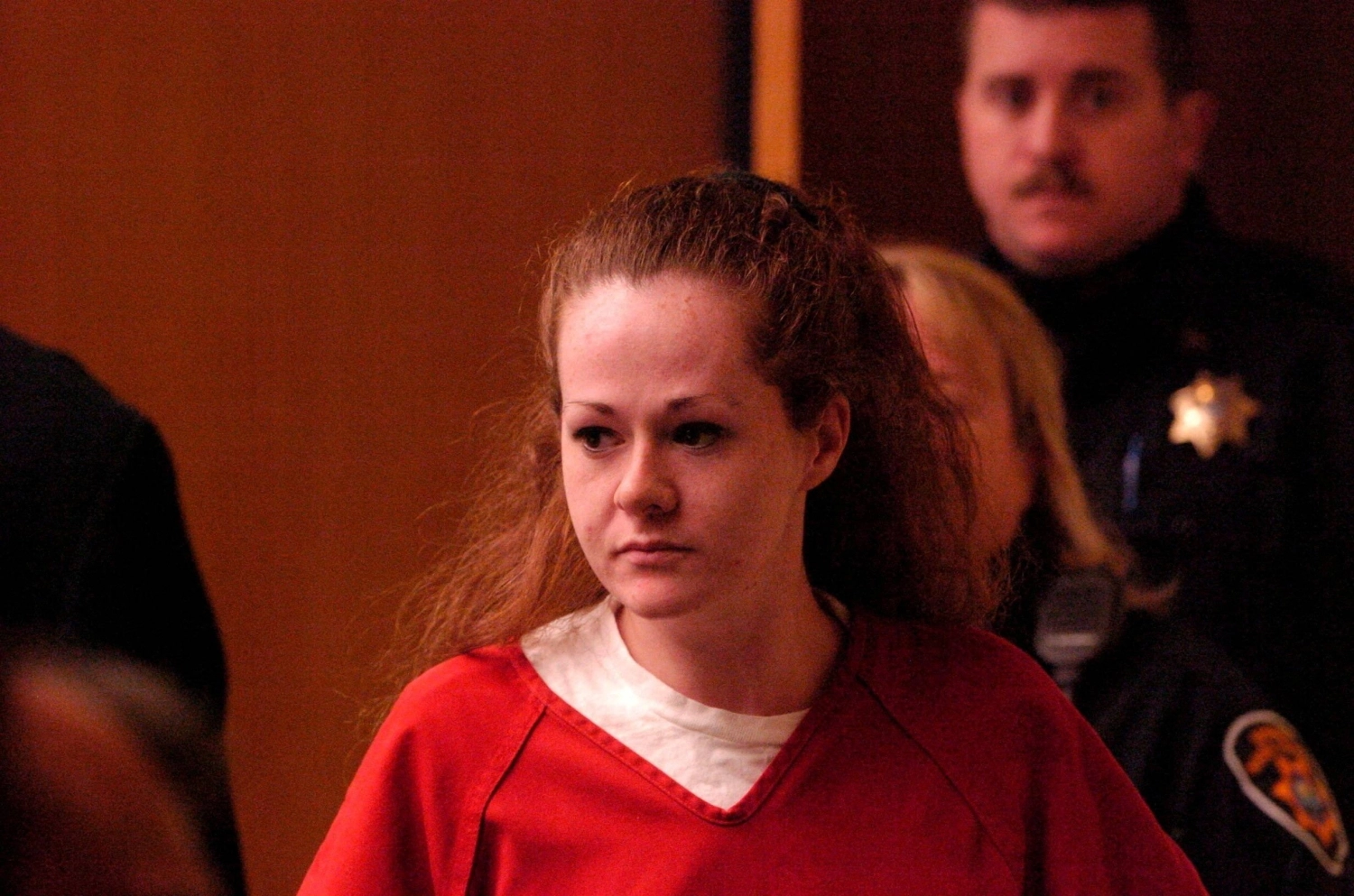
CHRISTA PIKE WAS DECLARED BRAIN DEAD — HOURS LATER, SHE WOKE UP AND STARTED TALKING
Six days after surviving a failed lethal-injection execution, death-row inmate Christa Pike was believed to be brain dead and facing the removal of life support. Then, in a stunning turn of events, she opened her eyes and began speaking.
For days, Christa Pike’s family and legal team feared they were facing the final chapter of a story that had already shocked the United States.
The 50-year-old Tennessee death-row inmate had survived an execution attempt on September 30 after the state administered two doses of pentobarbital.
She was taken from the execution chamber to a Nashville hospital unconscious and in critical condition.
Then came another devastating update.
On Monday night, October 5, Pike’s attorney Randy Spivey said the legal team was told that Pike was believed to be brain dead and that life support would be removed the following day.
But Tuesday brought an extraordinary development no one expected.
Christa Pike woke up.
And she began talking.
:max_bytes(150000):strip_icc():focal(749x0:751x2):format(webp)/Randy-Spivey-Nashville-2026-Christa-Pike-mugshot-100726-f1737966dfa0464d8219df29ce9f82d4.jpg) “WHERE AM I?”
“WHERE AM I?”
Pike’s attorneys were not in the room when she regained consciousness.
But Spivey said he was later told that her first words were believed to be:
“Where am I?”
She then reportedly asked:
“Who are you?”
The moment came as a complete shock to her legal team and the medical staff caring for her.
Spivey said he could not explain what had happened between Monday night and Tuesday morning.
“I do not have an explanation,” he said, while emphasizing that Pike still faces a long and uncertain recovery.
 SHE REMEMBERS THE EXECUTION
Perhaps most strikingly, Pike appears to have retained at least some memory of what happened inside Tennessee’s execution chamber.
Her attorney said she is aware that the state attempted to execute her.
But she is also confused at times and can become “spaced out” for extended periods.
Her lawyers described her as angry and confused about what has happened to her.
Her physical condition also remains extremely serious.
Pike is reportedly suffering from pneumonia and a blood clot in her arm.
She is unable to swallow and has not been able to eat for approximately a week, according to her attorney.
She also remains unable to move her arms, while her lawyers have described significant swelling in her hands and arms.
Her prognosis remains unclear.
THE EXECUTION THAT DIDN’T END HER LIFE
Pike was scheduled to be executed at Tennessee’s Riverbend Maximum Security Institution in Nashville on September 30.
The state administered two doses of pentobarbital.
But she did not die.
Witnesses reported that Pike remained alive during the procedure, with signs including breathing and movement.
Eventually, the execution was halted and Pike was transported to hospital.
Her attorneys have argued that the procedure caused serious physical injuries and have questioned how the execution was carried out.
The Tennessee Department of Correction has said the execution protocol was followed, but the failed procedure has triggered intense scrutiny.
A JUDGE ORDERS TENNESSEE TO PRESERVE THE EVIDENCE
Pike’s dramatic recovery has now become the centre of a legal battle.
On October 7, a Tennessee judge ordered the Department of Correction to preserve evidence connected to the failed execution.
That includes equipment from the execution chamber, syringes, IV lines, medical supplies, surveillance footage, photographs, notes, emails and other communications relating to the procedure.
Pike’s attorneys are seeking access to evidence that could help establish exactly what went wrong.
The judge’s order means potentially crucial evidence must now be retained while the legal proceedings continue.
HER LAWYERS WANT ANSWERS
Pike’s legal team has already filed a lawsuit against the state.
Her attorneys have raised concerns about access to their client and said Pike remained shackled and handcuffed to her hospital bed despite medical concerns.
A representative for the state denied that Pike’s lawyers were being improperly denied access.
The state has also indicated that some evidence may no longer be in its possession.
During the October 7 hearing, the judge ordered officials to preserve what evidence remains.
WHY WAS CHRISTA PIKE ON DEATH ROW?
Pike was sentenced to death for the 1995 killing of 19-year-old Colleen Slemmer, a fellow student at a Tennessee vocational school.
Pike was 18 at the time of the crime.
She was convicted in connection with Slemmer’s death and had spent decades on Tennessee’s death row.
Her September 30 execution was intended to bring that decades-old case to its final legal stage.
Instead, the execution became an unprecedented medical and legal crisis.
NOW, EVERYTHING HAS CHANGED
Before Tuesday, Pike’s legal team believed she was nearing the end of her life.
Now she is awake.
She can speak.
She remembers at least some of what happened.
But she remains seriously ill and faces what her lawyers describe as a long road to recovery.
There is also a major unanswered legal question:
What happens next?
It remains unclear whether Tennessee will ever attempt another execution.
During Wednesday’s court hearing, a state attorney did not provide an answer when the judge asked whether officials still intended to carry out another execution attempt.
Pike’s attorneys are asking for her death sentence to be commuted, arguing that she has already endured an extraordinary ordeal.
For now, however, she remains in hospital.
A woman who was expected to die last week is instead fighting to recover.
And perhaps the most haunting detail is the moment her lawyers say she first opened her eyes:
“Where am I?”
After everything that happened, Christa Pike was still there.
And she was talking.