LUCY LETBY CASE ERUPTS AGAIN AS NEW MEDICAL AND STATISTICAL QUESTIONS PUT HER CONVICTIONS UNDER INTENSE SCRUTINY
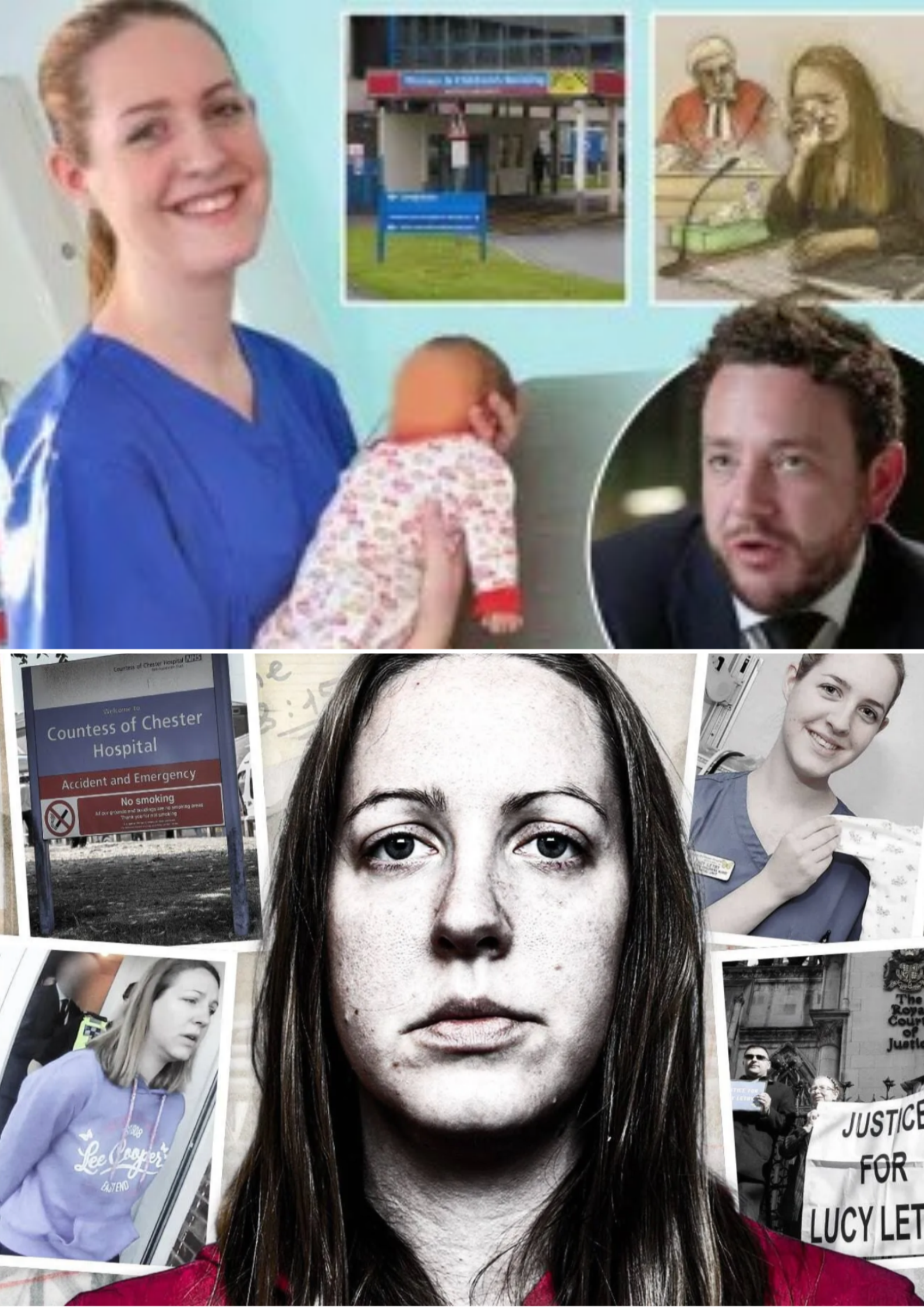
LUCY LETBY CASE ERUPTS AGAIN AS NEW MEDICAL AND STATISTICAL QUESTIONS PUT HER CONVICTIONS UNDER INTENSE SCRUTINY
NEW EXPERT EVIDENCE, PREVIOUSLY UNDISCLOSED MATERNITY RECORDS AND CONTINUING QUESTIONS OVER THE PROSECUTION’S MEDICAL CASE ARE NOW AT THE CENTRE OF A MAJOR LEGAL REVIEW
The legal battle surrounding convicted former nurse Lucy Letby has entered another dramatic phase, with new expert challenges and previously undisclosed medical records raising fresh questions about some of the evidence presented to the juries that convicted her.
Letby, 36, is serving 15 whole-life sentences after being convicted of murdering seven babies and attempting to murder seven others at the Countess of Chester Hospital between 2015 and 2016.
She has always maintained her innocence.
Her case is now being reviewed by the Criminal Cases Review Commission, or CCRC, after her legal team submitted extensive new material challenging aspects of the evidence used at trial.
But despite the growing controversy, there has been no ruling overturning Letby’s convictions.
The CCRC has not concluded that she was wrongly convicted, and the commission has stressed that its role is to determine whether there is a real possibility that a conviction would not be upheld if a case were referred to an appeal court.
 QUESTIONS OVER THE MEDICAL EVIDENCE
One of the central issues now being examined is the medical evidence used to explain why some of the babies suddenly deteriorated.
During Letby’s trials, prosecutors argued that she deliberately harmed babies through methods including injecting air, administering insulin or giving excessive amounts of milk.
Much of the prosecution case depended on medical interpretation of complex neonatal events rather than a single piece of evidence directly showing Letby carrying out an attack.
Since the convictions, however, a number of doctors and scientists have publicly questioned aspects of those interpretations.
In 2024, BBC File on 4 reported that senior clinicians and scientists had raised concerns about several elements of the medical evidence presented to jurors, including the interpretation of insulin cases, pathology findings and the health of individual babies.
Those experts did not establish that Letby was innocent. Their concerns instead focused on whether some medical evidence had been interpreted or presented appropriately.
That distinction remains crucial as the CCRC considers the case.
 NEW QUESTIONS ABOUT MATERNITY RECORDS
One of the most significant recent developments concerns maternity records belonging to the babies involved in the case.
A BBC investigation reported in July 2026 that Cheshire Police had seized maternity notes containing information about pregnancy, labour and birth.
The records were reportedly not reviewed by the prosecution’s principal medical expert and were not disclosed to Letby’s defence before her trial.
Experts who spoke to the BBC said such information can be important when assessing why a newborn baby deteriorated or died.
The records could contain information about complications during pregnancy, labour or delivery that might provide alternative medical explanations for a baby’s condition.
Dr Dewi Evans, the prosecution’s principal medical witness, told the BBC that he had not seen the full obstetric records.
He said he had instead seen shorter maternity summaries attached to the babies’ neonatal notes.
The significance of the records is now one of the issues being discussed in the wider debate surrounding the safety of the convictions.
INTERNATIONAL EXPERTS HAVE CHALLENGED PARTS OF THE CASE
The challenge to Letby’s convictions has also attracted doctors, scientists and statisticians from outside Britain.
A group of experts has argued that some of the medical and statistical reasoning used to link Letby to the babies’ deteriorations should be reconsidered.
Professor Shoo Lee, a Canadian neonatologist, has been among the most prominent medical figures questioning aspects of the prosecution’s case.
Other specialists have argued that some of the babies had serious underlying medical conditions or complications that may not have been adequately considered.
The experts have not produced a court ruling establishing that the convictions are unsafe.
Instead, their work has become part of the material submitted to the CCRC and has contributed to the continuing debate over whether alternative medical explanations were sufficiently examined.
THE INSULIN EVIDENCE HAS ALSO COME UNDER SCRUTINY
Two of Letby’s attempted-murder convictions involved allegations that insulin had been deliberately administered to newborn babies.
A 100-page report prepared by chemical engineering expert Helen Shannon and bioengineering professor Geoff Chase challenged aspects of the scientific interpretation surrounding those cases.
The experts previously argued that it was very unlikely that the two babies had been poisoned with insulin in the way alleged by prosecutors.
However, in September 2026, both experts withdrew from Letby’s defence team after raising concerns about some arguments being advanced on her behalf.
They continued to stand by their assessment that poisoning of the two babies was very unlikely, but said some arguments associated with the wider defence campaign were inconsistent with available evidence, science and established physiology.
Their withdrawal has therefore added complexity rather than providing a simple verdict in Letby’s favour.
QUESTIONS OVER STATISTICS
Statistics have also become a major part of the controversy.
At Letby’s first trial, prosecutors presented evidence about the unusual concentration of baby collapses and deaths during periods when she was working.
The pattern was used as part of the wider case linking her to the incidents.
Critics of the prosecution case have argued that statistical patterns in a neonatal unit can be difficult to interpret because many other factors may influence outcomes, including staffing, patient mix, the severity of illness and changes in clinical practice.
A group of experts raised concerns about the way statistics and scientific evidence involving newborn babies had been presented to jurors.
But the existence of statistical criticism does not itself establish that the prosecution’s calculations were wrong or that Letby’s convictions were unsafe.
Those questions are among the matters that must ultimately be assessed through the legal process.
THE THIRLWALL INQUIRY DID NOT RE-TRY LETBY
Another major development came with the publication of the long-awaited Thirlwall Inquiry report in September 2026.
The inquiry examined how the Countess of Chester Hospital responded to concerns about Letby and why senior management failed to act sooner.
It was not established to determine whether Letby was guilty or innocent.
Lady Justice Kathryn Thirlwall concluded that the hospital suffered serious management and safeguarding failures.
The inquiry found that doctors had raised concerns about Letby but that senior management did not respond adequately and that police involvement was delayed.
It also concluded that some babies could potentially have been saved had the hospital acted earlier.
However, the report did not overturn Letby’s convictions.
The distinction has become particularly important because supporters of Letby have argued that the inquiry should have examined alternative explanations for the babies’ deaths, while the inquiry’s remit focused on the hospital’s failures and safeguarding response.
THE CCRC IS STILL REVIEWING THE CASE
The Criminal Cases Review Commission confirmed in February 2026 that its review of Letby’s convictions was underway.
The commission said it had received expert reports and submissions from her legal team over an extended period.
Additional material continued to arrive throughout 2025 and into January 2026.
The CCRC emphasized that it makes independent, evidence-based decisions and does not determine guilt or innocence itself.
If the commission eventually finds a real possibility that one or more convictions would not be upheld, it can refer the case to the Court of Appeal.
The final decision on whether a conviction is unsafe would then belong to the appellate court.
There is currently no announced timetable for the CCRC to complete its review.
THE CONVICTIONS HAVE NOT BEEN OVERTURNED
Despite the renewed controversy, Letby remains legally convicted.
Her appeals have so far been unsuccessful.
The Court of Appeal previously rejected challenges to her convictions, including arguments concerning the reliability of prosecution expert evidence.
The Crown Prosecution Service has continued to maintain that Letby was convicted after two jury trials in which extensive evidence was examined.
That means the current situation is not a case of a court declaring that the prosecution evidence has been disproved.
Instead, it is an ongoing dispute over whether newly presented evidence and alternative interpretations are strong enough to justify reopening the convictions.
A CASE THAT REMAINS DEEPLY DIVISIVE
The Letby case has now developed into one of Britain’s most closely watched disputes over medical evidence and criminal justice.
On one side are the convictions, the original prosecution evidence and the findings of two juries.
On the other are doctors, scientists and members of Letby’s legal team who argue that important medical evidence deserves further scrutiny.
The newly reported maternity records have added another layer to that debate, particularly because they contain information about the babies’ pregnancies, births and medical histories.
Meanwhile, the CCRC continues to examine the material submitted by Letby’s defence.
For the families of the babies, the continuing controversy has been profoundly painful.
For Letby, the stakes are equally enormous.
She remains imprisoned under 15 whole-life sentences while the legal review continues.
And although claims that a “leaked review” has already destroyed the entire prosecution case have circulated online, no such official finding has been announced.
What is established is that significant new questions have been raised about aspects of the medical evidence, previously undisclosed maternity records and the interpretation of complex neonatal events.
Whether those questions ultimately change the legal status of Lucy Letby’s convictions remains for the CCRC and, if necessary, the courts to decide.