“I’M AT THE PRISON. I LOVE YOU SO MUCH!” — CHRISTA PIKE SENDS EMOTIONAL MESSAGE AFTER SURVIVING FAILED EXECUTION
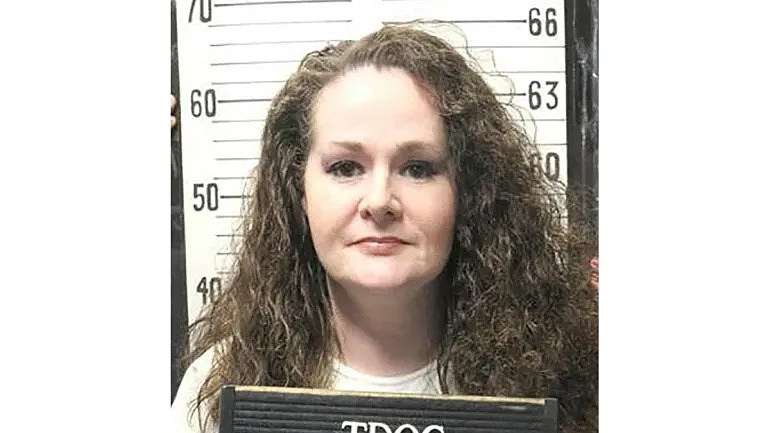
“I’M AT THE PRISON. I LOVE YOU SO MUCH!” — CHRISTA PIKE SENDS EMOTIONAL MESSAGE AFTER SURVIVING FAILED EXECUTION
The Tennessee death-row inmate has returned to prison after 10 days in hospital. But while a reported text message offers a glimpse into her recovery, her lawyers warn that the full extent of possible lasting cognitive damage remains unknown.
Christa Pike has sent a brief but emotional message after returning to prison following a failed execution that left her fighting for her life.
The 50-year-old Tennessee inmate was discharged from hospital on October 10, 2026, and transferred back to the Debra K. Johnson Rehabilitation Center in Nashville, where she had been incarcerated for approximately three decades.
Her return came just 10 days after state officials attempted to execute her by lethal injection on September 30. Pike survived two doses of the drug pentobarbital, prompting an emergency medical response and an investigation into what went wrong.
Now, a reported message sent from her prison-issued tablet has drawn fresh attention to her condition and the uncertain road ahead.
 THE MESSAGE SENT AFTER HER RETURN
According to reporting by The U.S. Sun and journalist Brian Entin of NewsNation, Pike sent a message to someone connected to a source familiar with her situation shortly after returning to prison.
The message, reportedly sent at 12:14 a.m. on Saturday, October 10, read:
“I’m at the prison. I love you so much!”
A screenshot of the message was reportedly shared with Entin through psychologist Dr. Bill Kimberland, who has a source close to Pike.
The identity of the recipient has not been publicly disclosed.
The brief message quickly attracted attention because it suggested Pike was able to communicate with someone outside the prison after an extraordinary medical ordeal.
However, it is important to understand what the message does—and does not—show. Although it demonstrates reported written communication, it cannot establish whether Pike has fully recovered cognitively or whether she has sustained permanent neurological damage.
 FROM A FAILED EXECUTION TO A HOSPITAL BED
On September 30, Tennessee officials began the scheduled execution of Pike, who was convicted in the 1995 torture and murder of her 19-year-old classmate, Colleen Slemmer.
During the procedure, officials administered two doses of pentobarbital. Witnesses reported that Pike continued breathing and making sounds after the injections, and the execution was halted.
She was taken to hospital for emergency treatment.
According to her lawyers, Pike was initially unconscious and placed on a ventilator. Her medical condition was so serious that her legal team feared she might have suffered catastrophic brain injury.
In the days that followed, however, her condition improved. Her attorneys reported that she regained consciousness, began speaking and was eventually able to walk with assistance and eat a regular diet.
She also suffered injuries to her arms, including swelling, burns and blisters, according to reports from her legal team.
Her discharge on October 10 marked a significant step in her physical recovery, although she continues to receive medical care at the prison.
QUESTIONS ABOUT POSSIBLE BRAIN DAMAGE
Despite the apparent progress, Pike’s lawyers have cautioned that her recovery is far from fully understood.
They have reported ongoing difficulties with memory and concentration. According to her legal team, it could take months to determine whether those problems will resolve or whether she has sustained lasting impairment.
The reported text message has therefore raised a difficult question: can someone communicate clearly while still experiencing serious cognitive problems?
Medical and psychological experts caution that the ability to write a coherent sentence does not, on its own, establish that a person’s memory, judgment or broader cognitive functioning has returned to normal.
In an October 12 discussion with NewsNation’s Brian Entin, Columbia University law professor Bernard Harcourt also explained that the ability to speak or send messages does not determine whether someone is legally competent to be executed.
That question would require a much more detailed assessment of the person’s understanding of the punishment and the reasons for it.
At this stage, there has been no definitive public finding establishing whether Pike has suffered permanent brain damage.
HER RETURN TO PRISON DOES NOT MEAN THE MEDICAL CASE IS OVER
Pike’s attorneys confirmed her discharge in a statement on October 10.
They said she was grateful to the emergency responders and medical professionals who treated her and confirmed that she would continue receiving medical care after returning to the Debra K. Johnson Rehabilitation Center.
The Tennessee Department of Correction also confirmed the transfer but did not provide further details about her medical condition.
Her return to prison has not resolved the questions surrounding the failed execution. Investigators are examining the procedure, while the incident has prompted scrutiny of the state’s execution protocols.
Governor Bill Lee has halted further executions scheduled for the remainder of 2026 while an independent review takes place.
The state has not publicly established a definitive explanation for why the execution failed.
WHAT COULD HAPPEN NEXT?
Pike’s medical condition could become relevant to future legal proceedings, particularly if evaluations establish significant cognitive impairment.
Under U.S. Supreme Court precedent, a person cannot be executed if they lack the required understanding of the reason for their punishment. Determining whether that standard applies requires a formal legal and medical assessment; a text message alone cannot answer the question.
Pike’s attorneys have also sought to have her death sentence commuted to life imprisonment. The outcome of that request remains uncertain.
Meanwhile, the family of Colleen Slemmer continues to live with the consequences of the 1995 crime. Slemmer was 19 when she was killed, and Pike was convicted for her role in the killing.
The renewed attention surrounding Pike’s condition has reopened difficult questions about the failed execution, the responsibilities of prison officials and what the law permits next.
A MESSAGE THAT ANSWERS ONLY ONE QUESTION
For now, the reported message offers a small glimpse of communication after a frightening medical crisis.
But it does not settle the larger questions about Pike’s physical recovery, her memory, her cognitive abilities or her legal future.
Her attorneys say her recovery is continuing, and the lasting effects remain uncertain. The independent review of Tennessee’s execution procedure is also ongoing.
The next developments will depend on medical assessments, the findings of the state review and any further legal action.