BREAKING: Wild Dolphin Does What Humans Could Not — Guides Stranded Mother Whale and Calf Back to Safety
BREAKING: Wild Dolphin Does What Humans Could Not — Guides Stranded Mother Whale and Calf Back to Safety
NEW ZEALAND — In one of the most extraordinary wildlife rescue stories ever witnessed, a wild bottlenose dolphin named Moko accomplished what an entire team of rescuers could not, guiding a stranded mother whale and her calf back to the open ocean after repeated human efforts failed.
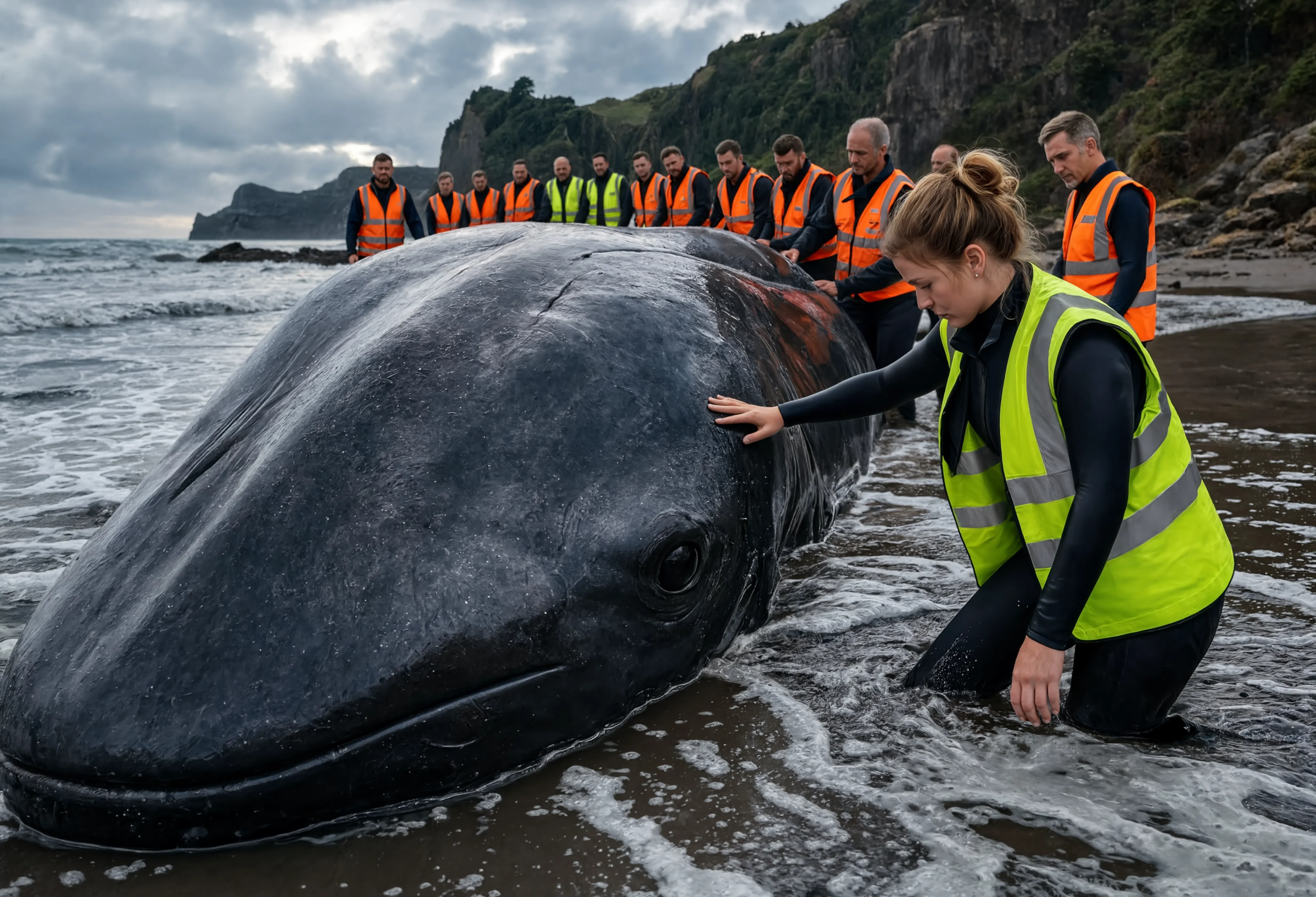
The remarkable event unfolded along a New Zealand beach when a mother pygmy sperm whale and her calf became trapped on a dangerous sandbar. Despite the determined efforts of volunteers, conservation workers, and local residents, the pair repeatedly returned to shallow water after being guided toward safety.
For more than an hour, rescuers battled cold water, difficult conditions, and growing concern as the exhausted whales appeared increasingly disoriented. Each attempt to lead them away from the sandbar ended the same way—they turned back toward the area that had trapped them.
Many feared they were about to witness a tragedy.
Then, unexpectedly, help arrived from the ocean itself.
The Arrival of Moko
Moko was already well known throughout the region. The wild bottlenose dolphin had gained a reputation among locals for his unusual curiosity and friendly interactions around the shoreline.
As rescuers struggled with the stranded whales, Moko suddenly appeared near the scene.
Witnesses watched in amazement as the dolphin swam directly toward the distressed animals. Rather than circling aimlessly, Moko positioned himself beside the mother and calf before beginning to move steadily along the coastline.
What happened next stunned everyone.
After resisting human assistance for over an hour, the whales immediately began following Moko.
The beach reportedly fell silent as onlookers realized they were witnessing something extraordinary.
A 200-Meter Journey to Freedom
For nearly 200 meters, Moko carefully led the pair around the complex sandbar system that had repeatedly trapped them.
Rescuers could only watch as the dolphin appeared to guide the whales through a narrow channel leading into deeper water. The mother and calf remained close behind him throughout the journey.
Finally, after reaching safe water beyond the sandbar, the whales continued out toward the open ocean.
They were not seen stranding again.
For the volunteers who had spent hours trying to save them, it was an emotional and unforgettable moment.
An Extraordinary Example of Interspecies Assistance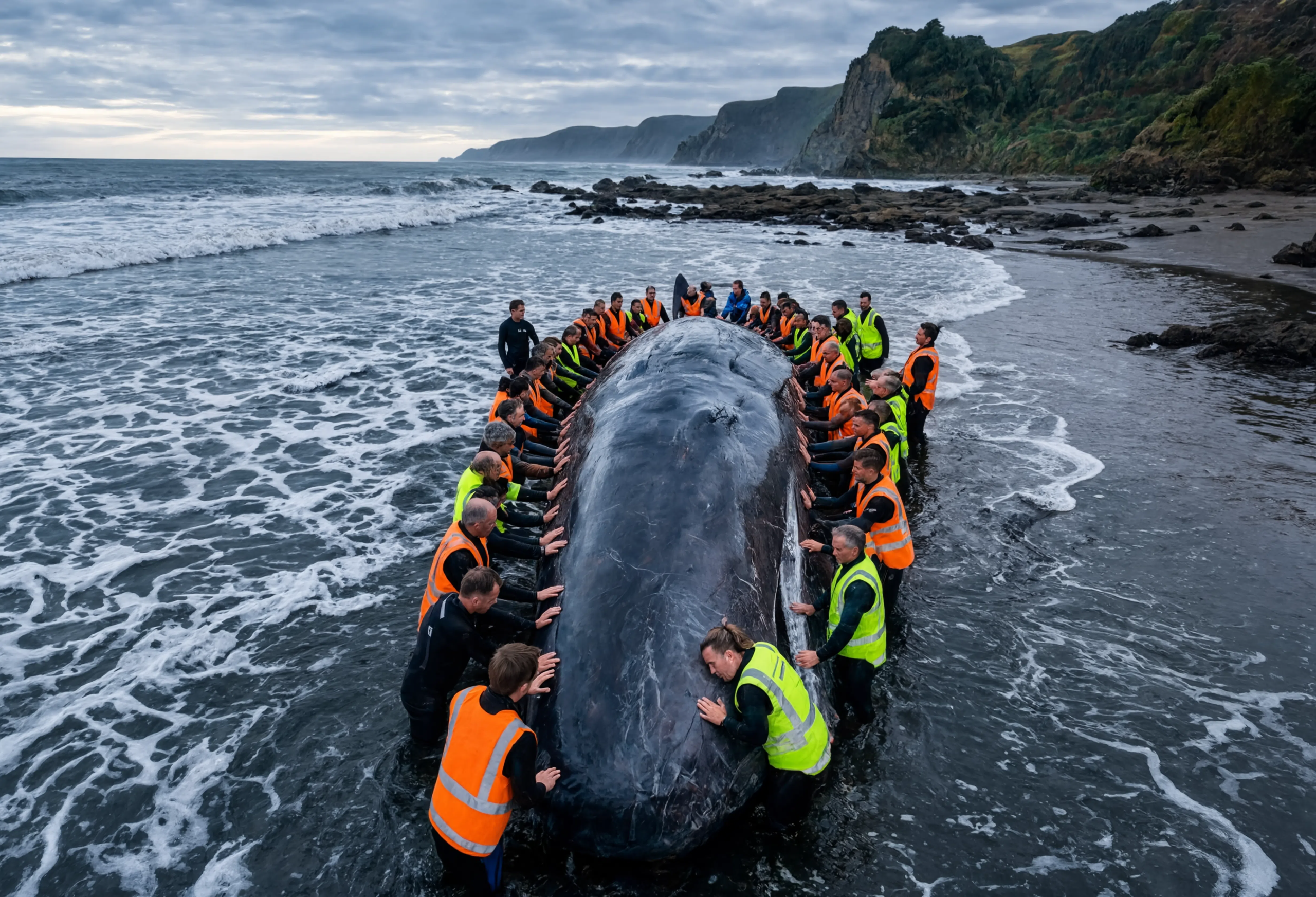
Marine biologists have long recognized bottlenose dolphins as some of the most intelligent animals on Earth. They live in complex social groups, communicate using sophisticated vocalizations, demonstrate self-awareness, and have been observed helping injured members of their own species.
However, what made Moko’s actions so remarkable was that the assistance appeared to extend beyond his own kind.
Experts and eyewitnesses described the event as one of the most compelling examples of possible interspecies helping behavior ever recorded in the wild.
While scientists caution against assuming human-like motivations in animals, many agree that Moko’s behavior was highly unusual. Rather than simply swimming nearby, he appeared to lead the whales through a safe route they had been unable to locate on their own.
Why Did the Whales Follow Him?
Researchers believe several factors may explain the whales’ response.
As marine mammals, dolphins and whales share certain communication abilities and acoustic awareness that humans cannot easily replicate. Moko may have been able to provide signals or guidance that the stranded whales understood instinctively.
Others suggest that the whales may have recognized Moko as an experienced local marine animal familiar with the surrounding waters.
Whatever the explanation, the result was undeniable.
After ignoring repeated human efforts, the mother and calf chose to follow a wild dolphin—and survived.
A Story That Continues to Inspire
Years later, the story of Moko remains one of the most celebrated wildlife rescue accounts ever documented.
For many people, it serves as a powerful reminder that intelligence, cooperation, and perhaps even empathy can sometimes be found in unexpected places.
In a moment when hope was fading, a single dolphin appeared and changed the outcome.
A guide when they were lost.
A hero when danger seemed inevitable.
And a reminder that the oceans still hold mysteries we have only begun to understand.