From Fearless Fighters to Timeless Icons: The Remarkable Transformation of Jet Li and Jackie Chan, Then and Now
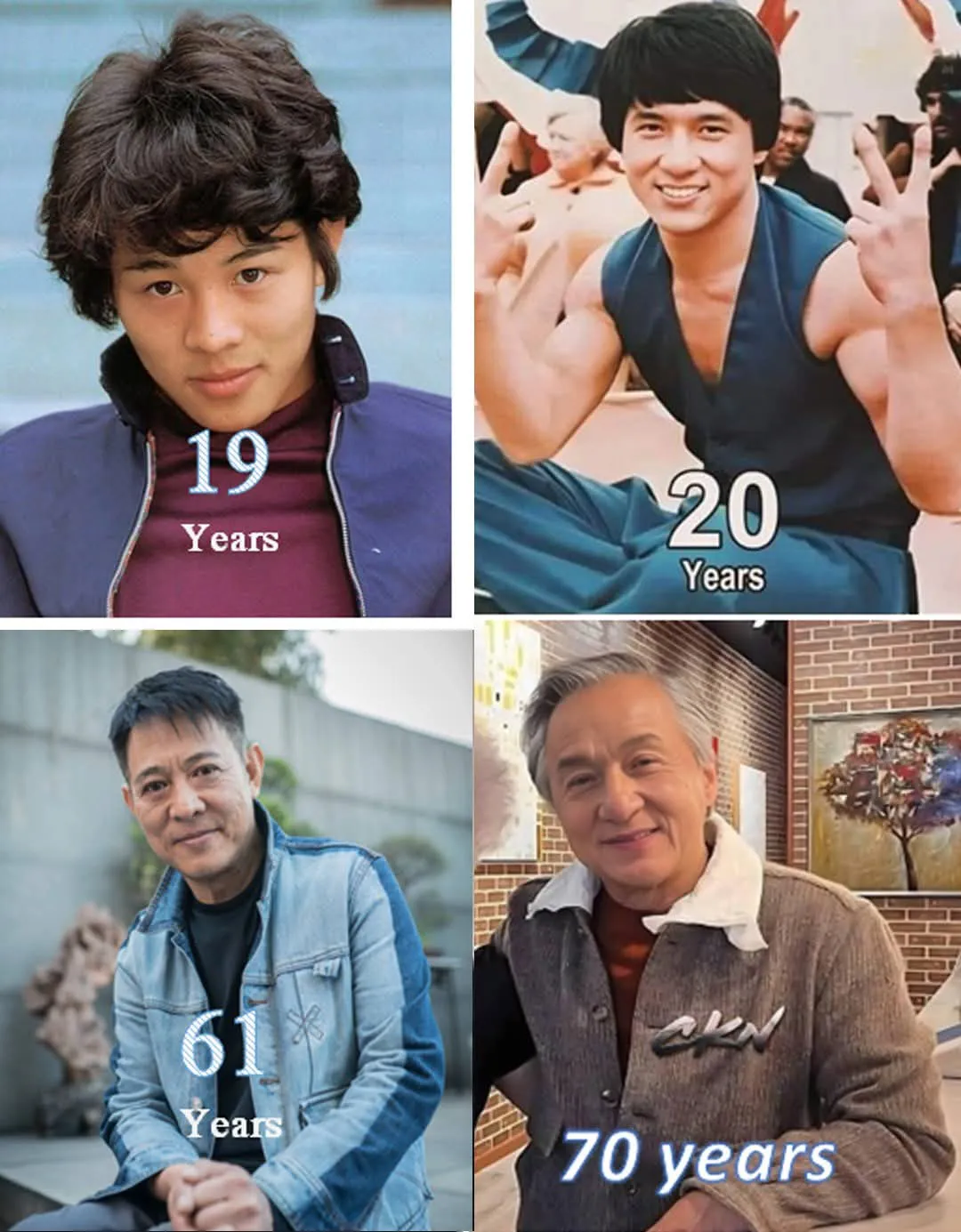
For millions of movie fans, Jet Li and Jackie Chan seem almost frozen in time: two impossibly fast martial artists who could turn an ordinary room, staircase, courtyard, or city street into an unforgettable action sequence.
But time has transformed both men.
Jackie Chan, now in his 70s, has gone from the fearless young stunt performer who built a career around spectacular physical risks to an elder statesman of action cinema who increasingly plays teachers, fathers, and mentors. Jet Li, now in his 60s, has traveled an equally remarkable path—from national wushu champion and lightning-fast screen fighter to philanthropist, spiritual seeker, and author reflecting openly on aging and mortality.
Their faces are older. Their movements are inevitably different. Yet neither man’s story feels finished.
Jackie Chan: The Man Who Turned Danger Into Comedy
Jackie Chan’s journey began long before Hollywood knew his name.
Born in Hong Kong in 1954, Chan received rigorous training in martial arts, acrobatics, acting, and performance as a child. He began appearing in films at a young age and later worked as a stunt performer before developing the unusual screen personality that would separate him from generations of martial arts stars.
Rather than trying to become another untouchable fighter, Chan made himself vulnerable.
He stumbled. He panicked. He got hurt. He grabbed chairs, ladders, tables, ropes, poles, and practically anything else within reach.
Most importantly, he made audiences laugh while performing feats that looked terrifyingly real.
Movies such as Snake in the Eagle’s Shadow and Drunken Master helped establish that formula in the late 1970s. During the 1980s, films including Project A and Police Story pushed it even further, combining martial arts choreography, physical comedy, elaborate stunt work, and Chan’s willingness to put his own body at the center of the spectacle.
Hollywood took longer to fully embrace him.
After years of success in Asia, Chan’s profile grew dramatically among Western audiences during the 1990s. Rumble in the Bronx helped introduce his style to a broader American audience, while Rush Hour in 1998 transformed him into a mainstream Hollywood star.
Paired with Chris Tucker, Chan proved that his appeal went far beyond martial arts.
He was funny, charismatic, expressive, and instantly recognizable.
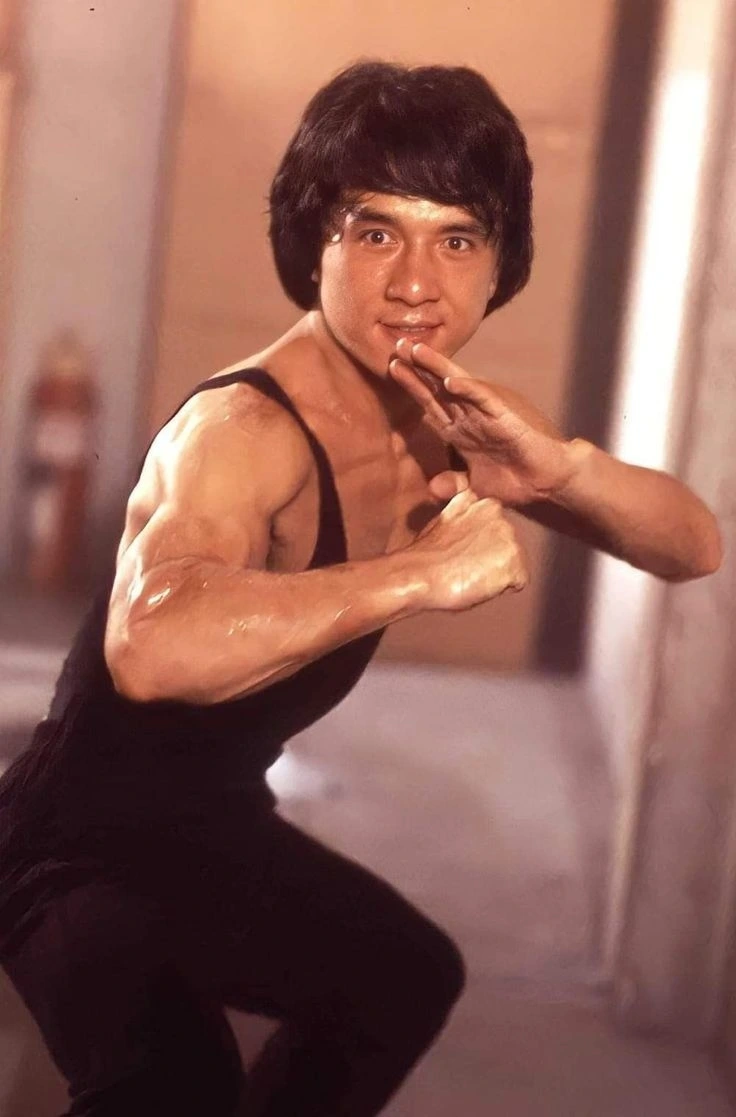
Jet Li: Speed, Precision and a Different Kind of Hero
Jet Li’s path to superstardom looked very different.
Born Li Lianjie in Beijing in 1963, he began training in wushu as a child and became one of the most accomplished young competitors in China.
His disciplined martial arts background shaped his entire screen presence.
Where Jackie Chan often fought like a man improvising his way out of chaos, Jet Li appeared controlled, precise, and almost unnaturally fast.
His starring role in Shaolin Temple in 1982 helped launch a film career that quickly turned him into a major martial arts star.
The Once Upon a Time in China films later established him as one of the defining figures of Hong Kong action cinema. Playing legendary folk hero Wong Fei-hung, Li combined speed and technical skill with an unusually calm screen presence.
Films such as Fist of Legend, Hero, and Fearless further strengthened that image.
His characters were often shaped not only by fighting ability, but also by discipline, honor, sacrifice, and personal responsibility.
Hollywood eventually recognized his appeal as well.
Li made a memorable American debut as a villain in Lethal Weapon 4 before becoming a Hollywood leading man in Romeo Must Die.
Movies such as Kiss of the Dragon, The One, and Unleashed followed.
By then, Jet Li was no longer simply a star of Chinese martial arts cinema. He had become a global action icon.
Two Legends Who Redefined Martial Arts Movies
Jackie Chan and Jet Li became famous during overlapping eras, but they rarely felt like copies of each other.
That difference helped make both of them legendary.
Chan’s fights were often chaotic and playful.
A Jackie Chan character might lose control of a situation, fall down a staircase, get trapped under furniture, grab an everyday object, and somehow turn disaster into victory.
Jet Li’s fights usually carried a different energy.
His movements could appear cleaner and more economical. His greatest screen battles often emphasized speed, balance, technique, and composure.
One seemed to survive through improvisation.
The other often seemed to dominate through precision.
Together, they helped show international audiences that martial arts cinema could contain far more than simple fights.
It could be funny.
It could be emotional.
It could be philosophical.
And it could create stars whose personalities mattered just as much as their physical abilities.
When Jackie Chan and Jet Li Finally Shared the Screen
For years, martial arts fans wondered what would happen if Jackie Chan and Jet Li appeared in the same movie.
That finally happened in 2008.
The Forbidden Kingdom brought the two superstars together for their first major screen collaboration.
By that point, both men had already spent decades building separate careers. Their meeting therefore felt less like the beginning of a partnership and more like a cinematic event.
The movie allowed audiences to see their contrasting styles side by side.
Chan brought his familiar looseness, unpredictability, and humor.
Li brought his controlled intensity and disciplined physical presence.
Their on-screen confrontation became one of the film’s biggest attractions because viewers were not simply watching two characters fight.
They were watching two different traditions of martial arts stardom collide.
For longtime fans, it was a moment that had been imagined for years.

Jet Li’s Transformation Beyond the Screen
As Jet Li grew older, his public life gradually changed.
His priorities began moving beyond acting.
A frightening experience during the 2004 Indian Ocean tsunami, when Li was vacationing in the Maldives with his family, became an important moment in his life.
The experience strengthened his interest in philanthropy and humanitarian work.
He later became closely associated with the One Foundation, a charitable organization focused on disaster relief and other humanitarian efforts.
Health also became a major part of Li’s later public story.
He has dealt with hyperthyroidism as well as the long-term effects of injuries accumulated during years of martial arts training and filmmaking.
At times, photographs of Li looking older triggered exaggerated online speculation about his condition.
But his later perspective has increasingly focused on accepting aging rather than trying to hide it.
Li has spoken openly about spirituality, Buddhism, mortality, compassion, and the difference between physical suffering and inner peace.
In 2026, those ideas became central to his memoir, Beyond Life and Death: The Way of True Freedom.
The transformation is striking.
The young Jet Li became famous because audiences could barely follow the speed of his movements.
The older Jet Li increasingly invites people to slow down and think.
Jackie Chan Keeps Moving
Jackie Chan’s later years have followed a different path.
Rather than retreating from filmmaking, he has continued working well beyond the age when most action performers would have stepped away from physical roles.
In 2016, he received an Honorary Academy Award recognizing his extraordinary contribution to cinema.
For many performers, such an honor might feel like the closing chapter of a career.
For Chan, it did not.
He continued making films.
In 2025, he returned as Mr. Han in Karate Kid: Legends, placing him firmly in the role of an experienced mentor guiding a younger generation.
The symbolism was difficult to miss.
The man once known for throwing himself through windows, sliding down poles, hanging from moving vehicles, and performing dangerous falls was now becoming the wise teacher.
Yet the transformation has not erased the old Jackie Chan.
His identity remains deeply connected to movement, action, and filmmaking.
Even in his 70s, he continues to take part in major productions and remains one of the most recognizable martial arts stars in the world.
Then and Now: More Than a Physical Transformation
Looking at Jet Li and Jackie Chan then and now can easily become a simple comparison of young faces and older ones.
But their real transformation goes much deeper.
Jackie Chan evolved from a young stuntman willing to risk almost anything into a global movie icon whose influence reaches actors, stunt performers, filmmakers, and martial artists across generations.
Jet Li evolved from a national wushu champion into one of cinema’s most elegant martial arts stars before gradually shifting his attention toward philanthropy, spirituality, and questions about life beyond fame.
Their careers also reveal two very different ways of growing older.
Chan continues pushing forward through filmmaking.
Li increasingly looks inward.
One remains closely connected to the physical world that made him famous.
The other has spent much of his later life exploring what remains when physical strength eventually fades.
Yet both paths lead to the same conclusion.
Their legacy is no longer measured simply by how fast they could kick, how high they could jump, or how dangerous a stunt they could survive.
Jackie Chan and Jet Li helped change the way the world viewed martial arts cinema.
They turned fighting into storytelling.
They inspired generations of performers.
And they became cultural icons whose names remain instantly recognizable decades after their first breakthroughs.
The bodies that once seemed indestructible have aged.
The legends have not.