Jackie Chan, Jet Li, Donnie Yen and Sammo Hung Defined Generations of Martial-Arts Cinema — Now One New Film Could Bring Their Worlds Together
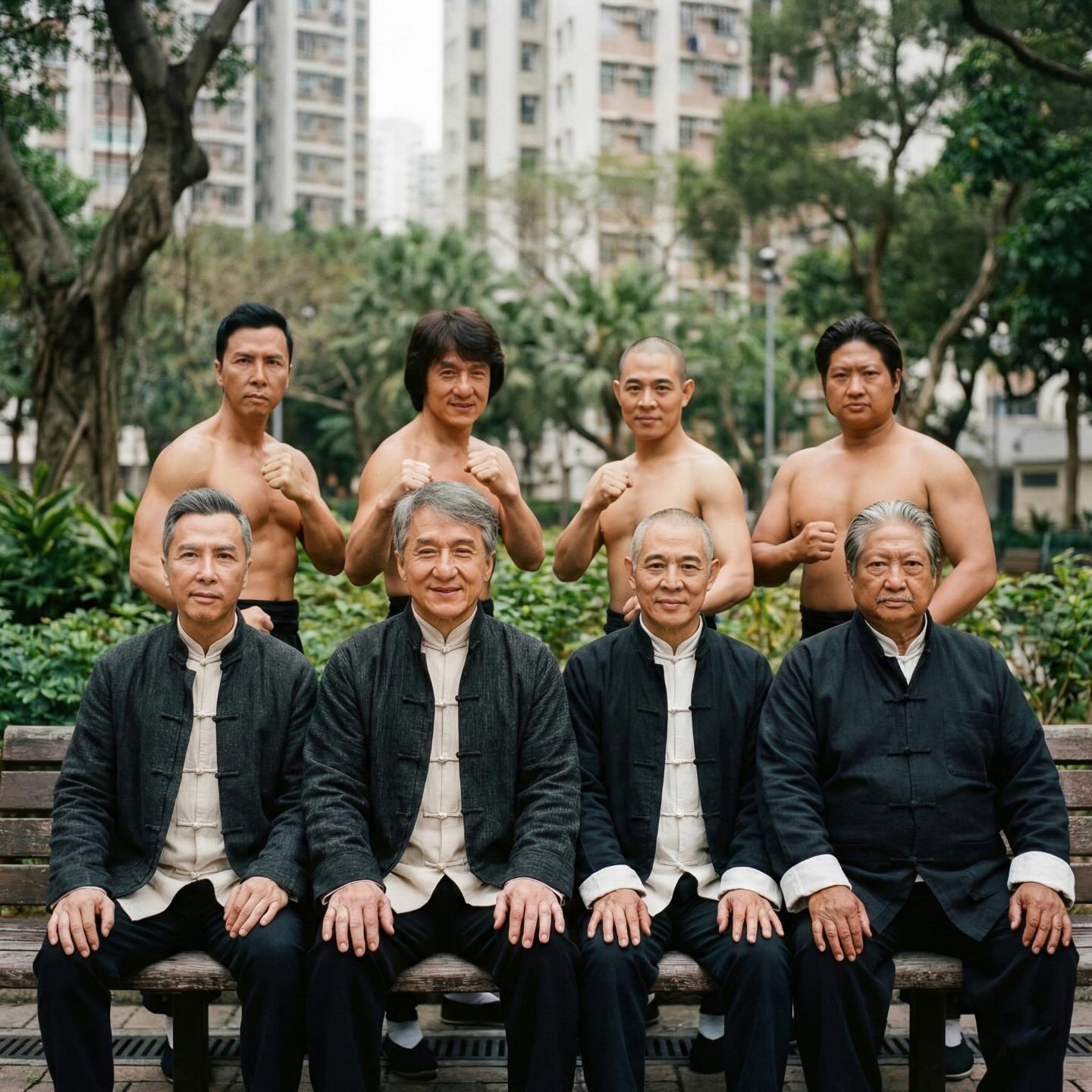
If 1941 comes together the way its creators hope, it could produce a martial-arts cinema image that decades of movies never quite managed to capture: Jackie Chan, Jet Li, Donnie Yen and Sammo Hung connected to the same film.
That possibility carries weight because these four careers have never simply run in parallel. They have crossed, separated and crossed again, creating some of the defining partnerships and confrontations in modern action cinema.
Chan and Hung grew out of the same demanding performance tradition before helping reinvent Hong Kong action in the 1980s. Li and Yen collided on screen in the 1990s and reunited a decade later for another celebrated duel. Over time, different combinations of the four shared movies, fight scenes and creative collaborators.
Yet the entire group has remained just out of reach.
Now a developing historical action film called 1941 is trying to assemble an unusually large collection of Hong Kong cinema veterans — and the project may finally connect those separate histories. The film has officially received approval to shoot, although its most spectacular proposed casting remains a work in progress.
Long Before the Fame, Jackie Chan and Sammo Hung Shared the Same Training Ground
The first path begins before either Jackie Chan or Sammo Hung was an international star.
Both trained at Hong Kong’s China Drama Academy, where students learned the physical disciplines required for Beijing opera: martial arts, acrobatics, tumbling, dancing and performance. Hung was among the older members of the celebrated group of young performers commonly remembered as the Seven Little Fortunes, while Chan trained in the same demanding system.
Those years created relationships that later became fundamental to Hong Kong action cinema.
By the early 1980s, Chan, Hung and fellow academy alumnus Yuen Biao were turning their shared physical vocabulary into movies. Their chemistry helped power Project A in 1983, an adventure that mixed martial arts with acrobatics, comedy and increasingly dangerous stunt work.
The following year, Hung directed Wheels on Meals, with Chan and Yuen Biao alongside him. Shot partly in Barcelona, the film became another showcase for the kind of intricate, full-bodied action the group was helping popularize. The British Film Institute has described Project A as the beginning of a major run built around the chemistry between the former classmates, while Wheels on Meals remains especially celebrated for Chan’s climactic fight with kickboxer Benny Urquidez.
Their partnership was not simply a collection of fight scenes. It represented a filmmaking culture in which performers, choreographers and stunt teams developed action together, often with the camera close enough to make audiences feel every fall, leap and impact.
While Chan eventually became one of the most internationally recognizable action stars in history, Hung remained equally important behind the camera — directing, choreographing and shaping generations of performers.
Then another martial-arts pairing began building its own legacy.
Jet Li and Donnie Yen Turned Rivalry Into Art
In 1992, Jet Li was already firmly established as Wong Fei-hung when Donnie Yen entered Once Upon a Time in China II as Commander Lan.
It was their first screen appearance together, and director Tsui Hark and action choreographer Yuen Woo-ping gave them a confrontation worthy of the occasion.
One of the film’s signature sequences sends Li and Yen through scaffolding while fighting with long poles, emphasizing precision and speed rather than hiding their abilities beneath frantic editing. Criterion has described Yen’s role as a star-making turn and highlighted the fight as one of the film’s major demonstrations of Yuen Woo-ping’s choreography.
Ten years later, the two met again in Zhang Yimou’s Hero.
This time the atmosphere was completely different.
Li played the mysterious swordsman Nameless, while Yen appeared as Long Sky. Their rain-soaked encounter turned combat into something closer to visual poetry, reflecting the film’s broader approach to wuxia as movement, color and emotion. The BFI later singled out their confrontation as one of the balletic action sequences that helped make Hero a landmark of the early-2000s wuxia revival.
By then, two very different branches of martial-arts cinema had become internationally familiar: the stunt-driven, comic physicality associated with Chan and Hung, and the controlled speed and elegance represented by performers such as Li and Yen.
But the branches were already beginning to overlap.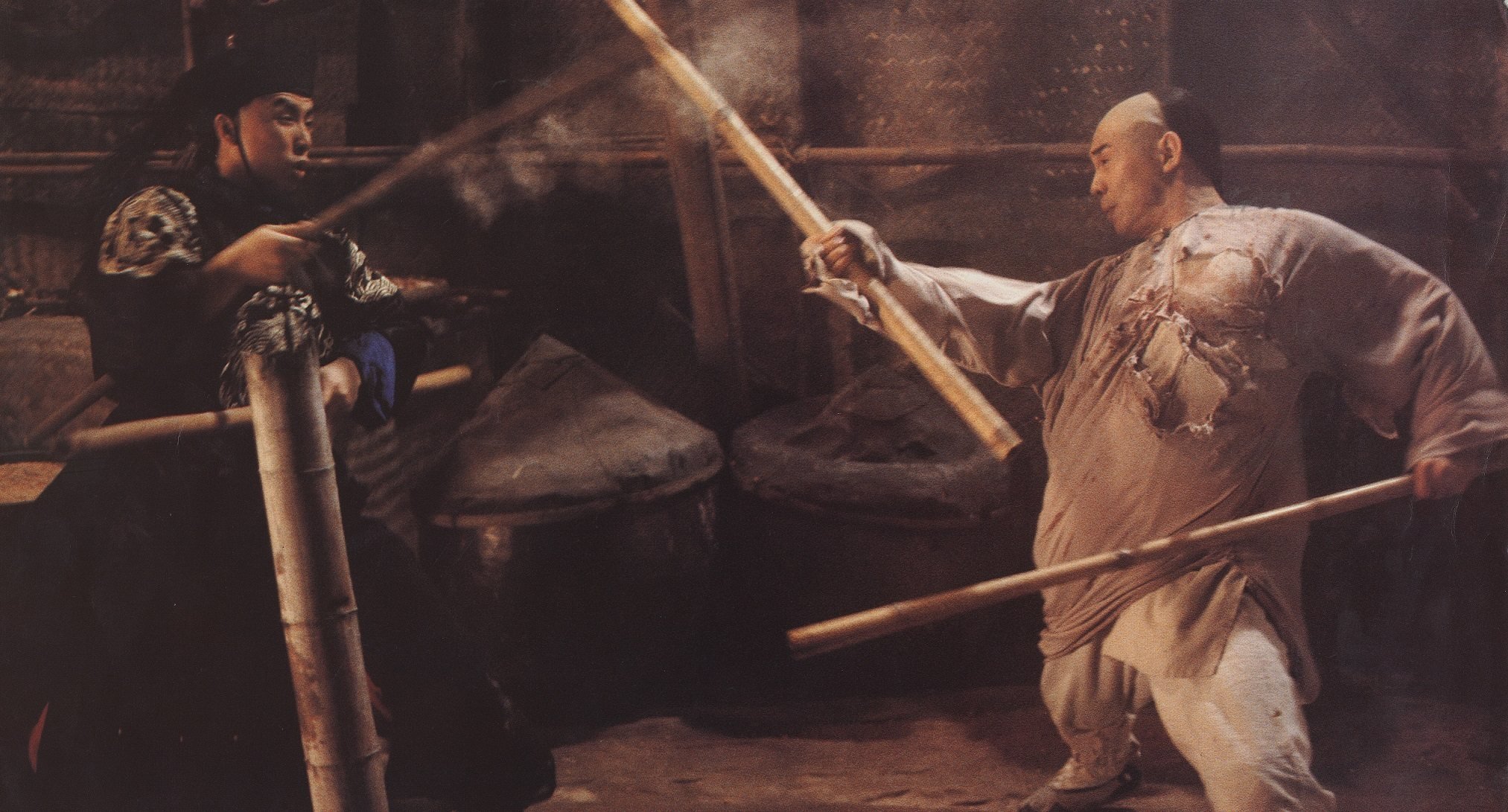
The Four Careers Kept Crossing — Two Stars at a Time
Donnie Yen eventually faced Jackie Chan in Shanghai Knights in 2003, playing the villainous Wu Chow opposite Chan’s Chon Wang. Their direct confrontation was brief, but it gave audiences another pairing of major Hong Kong action figures.
Five years later came an even more anticipated meeting.
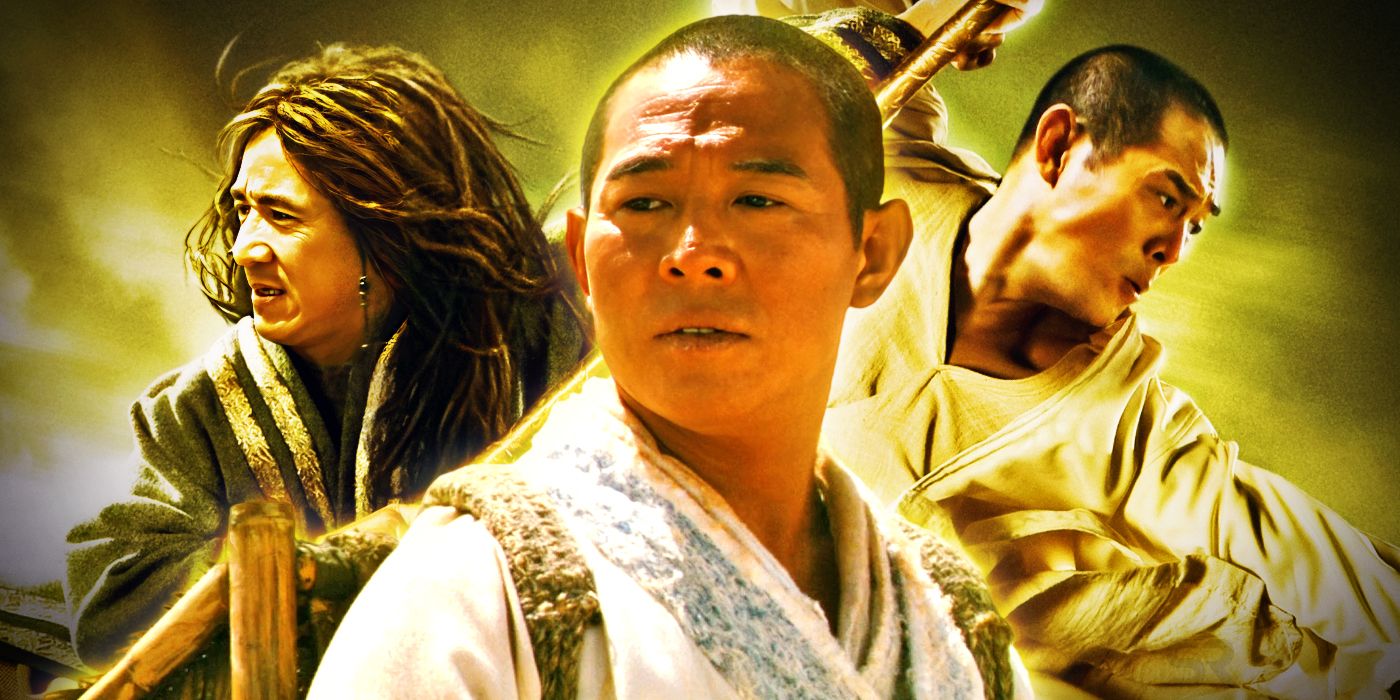
The Forbidden Kingdom united Jackie Chan and Jet Li on screen for the first time. Released in 2008, the fantasy adventure allowed the two stars to fight each other before ultimately fighting on the same side — a pairing that had been discussed by fans for years.
Yen’s world also repeatedly connected with Hung’s.
Hung served as action director on the first Ip Man, the 2008 film that gave Yen his defining role as the Wing Chun master. In Ip Man 2, Hung moved in front of the camera as well, playing Hung Chun-nam and sharing a memorable martial-arts confrontation with Yen.
The result is almost a map.
Chan had Hung. Li had Yen. Chan eventually met Yen. Chan eventually met Li. Hung and Yen became major collaborators and opponents.
The connections existed everywhere.
What did not exist was one project capable of gathering all those histories under the same roof.
Why 1941 Is Different
Plans for 1941 emerged publicly in early 2026 with producer and screenwriter Teddy Chan and director Chin Ka-lok discussing an unusually ambitious ensemble production.
The project is more than a conventional attempt to stack a cast with famous names. It is being developed in connection with the Hong Kong Stuntman Association, with proceeds intended to support veteran action performers, including older members of the profession whose circumstances have become difficult. Hong Kong reporting named Sammo Hung among industry veterans expected to participate, while Jackie Chan, Jet Li and Donnie Yen were among the major stars being approached or considering involvement.
That distinction matters. As of August 2026, an official government filing confirms the film itself, but does not provide a finalized cast list. Claims that every legendary name is already locked in go beyond what the strongest available reporting has established.
What is confirmed is the project.
China’s National Film Administration approved 1941 for production in May. Its official synopsis places the story during the Japanese attack on Hong Kong in 1941 and follows three very different men — a martial-arts movie star, an assassin and a martial artist — who are forced to enter occupied Kowloon for a secret rescue mission. Their uneasy alliance develops through betrayal and sacrifice.
The filmmakers have discussed shooting toward the end of 2026, with the project conceived in connection with Hong Kong’s 30th handover anniversary in 2027.
A Reunion That Would Mean More Than Nostalgia
That is what makes 1941 unusually fitting.
Jackie Chan, Jet Li, Donnie Yen and Sammo Hung became stars because audiences could see their individual gifts. But the cinema that produced them was never truly an individual art form.
Behind the famous faces were stunt performers, coordinators, training systems, action teams and filmmakers who spent decades pushing Hong Kong cinema toward increasingly ambitious physical storytelling.
Now a film designed partly to support that stunt community could become the project that reconnects some of its greatest success stories.
Whether all four legends ultimately appear remains unresolved.
But if they do, 1941 would not simply be another all-star action movie.
It would bring together four paths that began in different places, intersected across more than four decades, and helped teach the world four very different ways to understand martial arts on screen.