Psych Evaluation Diagnosing Bryan Kohberger with Autism, OCD, Anorexia Unsealed
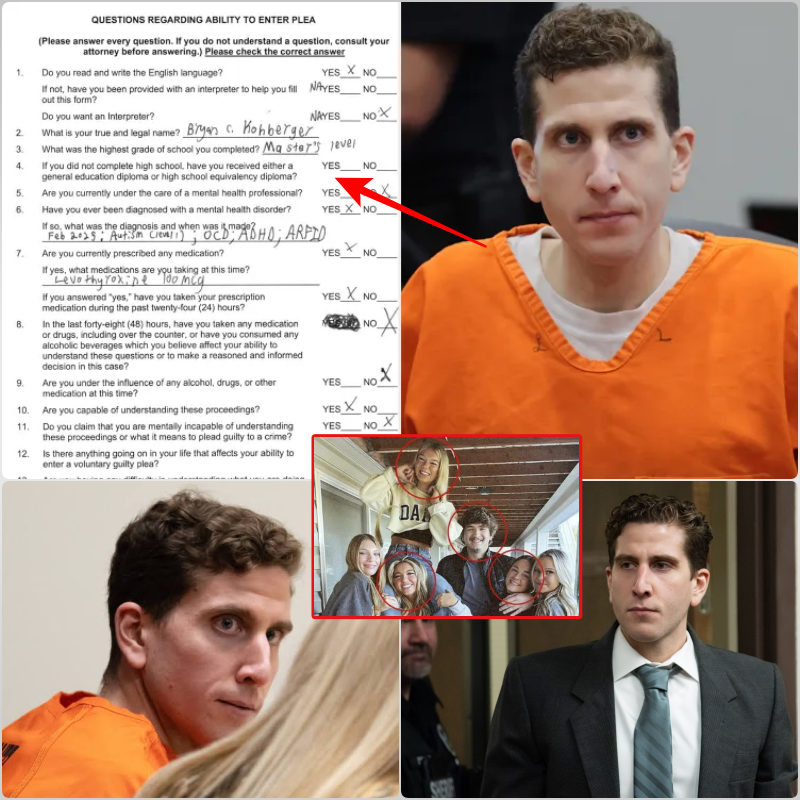
Bryan Kohberger revealed that he had been diagnosed with four “mental health disorders” in a 2025 court filing: “Autism (Level 1); OCD; ADHD; ARFID.”There was no additional information on those “disorders” included in that filing, but Kohberger did note that he had been diagnosed with all four in February 2025.
Now, the detailed neuropsychological evaluation that resulted in those diagnoses has been unsealed by the court, providing details about those four “disorders” while also revealing four additional diagnoses that were previously unknown.
The evaluation was done by Rachel Lawson Orr, PsyD, ABPP-CN, an expert hired by Kohberger’s defense team.
She was brought in by Kohberger’s attorney Anne Taylor as she and prosecutors butted heads over Kohberger’s mental health, which she argued should be a mitigating factor but prosecutors wished to classify as an aggravator, according to a motion in limine filed by the defense at the time.
Taylor wrote in her filing that the attempt by prosecutors to classify “Kohberger’s mental health and developmental disabilities are aggravators” violated her client’s Constitutional rights by “criminalizing his status as a disabled person.”
She also provided the court with Orr’s evaluation of Kohberger, which had remained under seal until now.
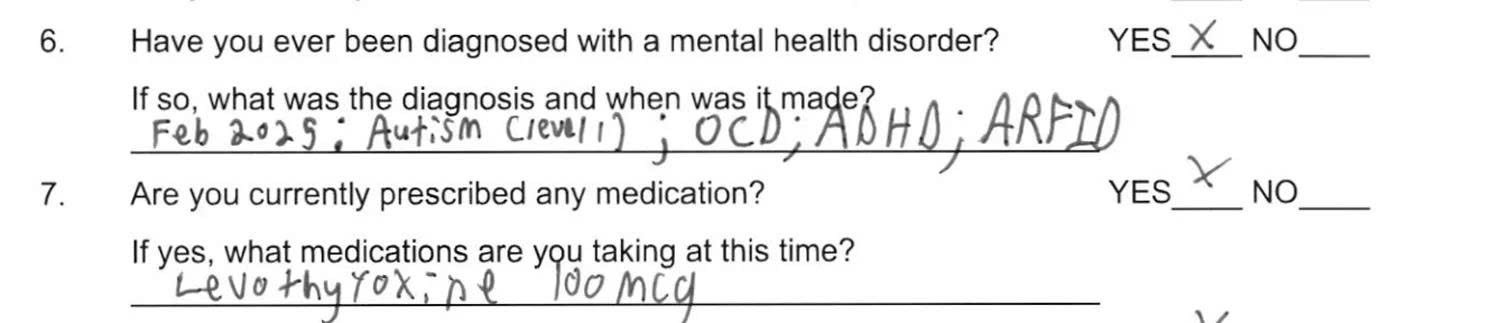
Bryan Kohberger first revealed his “mental health disorders” in a 2025 court filing.State of Idaho
Want to keep up with the latest crime coverage? Sign up for PEOPLE’s free True Crime newsletter for breaking crime news, ongoing trial coverage and details of intriguing unsolved cases.
The defense made it clear that this evaluation was not done to pursue a mental capacity defense at trial, but rather to put Orr on the stand if needed so she could respond to claims made by prosecutors.
Kohberger ultimately met with Orr on six separate occasions over three months for testing, evaluations and conversation, according to the evaluation, a copy of which PEOPLE obtained.
One of the first things Orr noted in her report was Kohberger’s “restricted range of facial expression, with stoic effect at baseline.”
She wrote his “smiles were often slight,” his “social smiling” was either “inconsistent” or absent” and the manner in which he “often furrowed his eyebrows during more light conversation … contributed to awkward engagement.”
Kohberger also exhibited a number of atypical social behaviors, she said, which included:
Lack of descriptive or emphatic gestures
Atypical speech tone and cadence
Awkward interaction, lack of fluidity
Awkward delivery of humor at times (e.g., carrying on with a joke longer than expected)
Awkward comments (e.g., “I had a lot of fun doing the XX [cognitive text]”)
Inconsistent understanding/acknowledgment of humor
Poor reciprocity of interaction, including very frequently re-focusing of conversation back on his own experiences or unusual responses to my sharing
Reduced social quality at times without awareness, primarily through matter-of-fact comments, or directives (e.g., replying firmly, “I’ll tell you when I’m done,“ when prompted for ‘anything else’ during cognitive measures), or in abrupt responses
Unusual observations he made during testing
Occasional intense gaze
Bryan Kohberger Reveals His Mother, Father and Sisters Were Included in Most Discussions About Murder Plea Deal
Bryan Kohberger Says Evidence Found In Murder Victim Ethan Chapin’s Hand Proves Innocence
Orr also wrote in her evaluation that Kohberger has “impulsive tendencies throughout evaluation,” pointing out that he “violated rules” and “rushed through tasks.”
Additionally, he had “overall poor” insight, according to Orr, except for a few “moments of fleeting acknowledgement when explicitly challenged to consider his role in certain situations.”
Much of the behaviors that Orr witnessed were also reported by Kohberger’s parents and two sisters, who were interviewed on multiple occasions as part of the evaluation.
Orr wrote that Kohberger’s family noted that his struggles with everything from “deficits in non-verbal communication” and “a limited range of facial expressions” to “rigid thinking and behavior” along with “trouble coping with changes in routine.”
His family members also “described engaging in extensive social coaching ad provision of social feedback, to no avail,” according to the evaluation.
This led Orr to diagnose Kohberger with four “mental health disorders.”
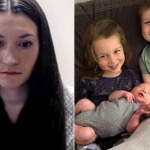
Anne Taylor (left) had the expert speak with Kohberger’s mother (center) and sister (right).AP Photo/Drew Nash
The first was Autism Spectrum Disorder (Level 1), without accompanying intellectual or language impairment. Individuals with that diagnosis tend to be high-functioning and display only a few symptoms of the disorder and often require no assistance to perform everyday tasks.
She also diagnosed Kohberger with Obsessive-Compulsive Disorder (OCD), which is typically characterized by an individual engaging in repetitive behaviors in an attempt to shut out unwanted, intrusive thoughts.
Kohberger also received an Attention-Deficit/Hyperactivity Disorder (ADHD) diagnosis, which is one of the more common developmental disorders and can manifest in a number of ways, varying from person to person. A majority of those diagnosed struggle to pay attention, while others struggle to stay organized, keep a schedule or stay focused on a specific task.
Lastly, she diagnosed Kohberger with the eating disorder ARFID, or Avoidant/Restrictive Food Intake Disorder. Most common in children, this disorder manifests in highly selective eating habits that greatly limit an individual’s diet and can result in malnutrition and limit a person’s physical growth.
Bryan Kohberger at his plea haring in Jukly 2025.Kyle Green-Pool/Getty
Orr also said Kohberger had met the criteria for four additional diagnoses in the past: Developmental Coordination Disorder (DCD), an unspecified depressive disorder, anorexia nervosa and Opioid Use Disorder (OUD). That last disorder — a result of the heroin addiction Kohberger developed in his teenage years — is in sustained remission, Orr noted in the evaluation.
Kohberger did not attempt to claim he was not of sound mind due to any of these diagnoses when entering his guilty plea to four charges of murder.
He wrote in his own filing that he was aware of the fact that if the judge accepted his plea he would likely be sentenced to serve four lifetimes in prison along with an additional 10 years on a burglary charge.
Kohberger then appeared in court on July 2, 2025, and confessed to killing the four University of Idaho students: Madison Mogen, 21; Kaylee Goncalves, 21; Xana Kernodle, 20; and Ethan Chapin, 20.
Our new app is here! Free, fun and full of exclusives. Scan to download now!
Three weeks later he was back in court, at which time he was sentenced to serve four lifetimes in prison for those murders.
Then, in July 2026, Kohberger filed a motion with the court asking that his guilty plea be tossed out and he be allowed a trial on account of his ineffective counsel.
Prosecutors have yet to respond to the filing.