Before the MCU, They Were Marvel Heroes — Then Wesley Snipes, Jennifer Garner and Chris Evans Came Back Nearly 20 Years Later
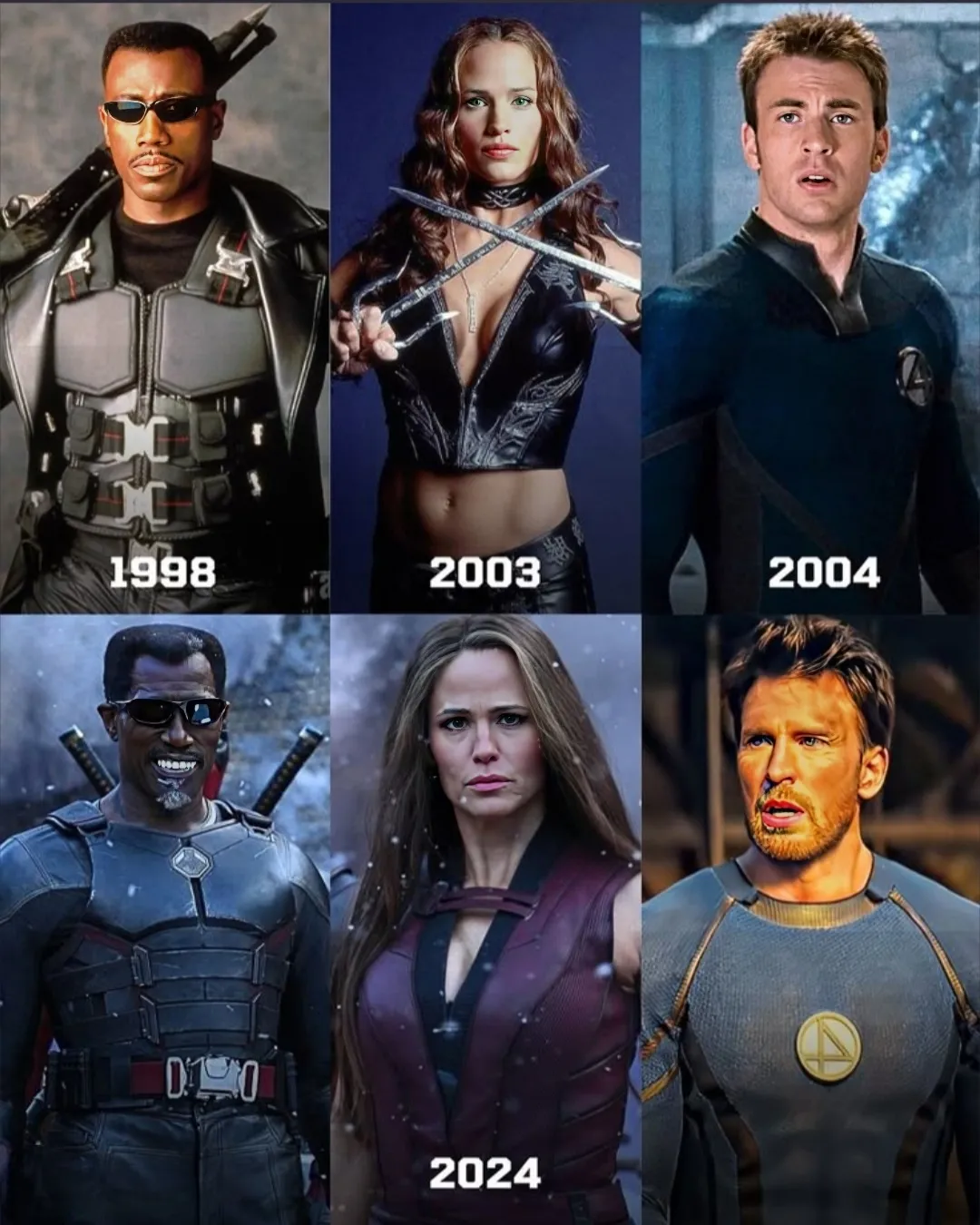
Long before Marvel movies became one enormous interconnected universe, Wesley Snipes was hunting vampires with a sword, Jennifer Garner was wielding a pair of sais, and Chris Evans was bursting into flames.
They belonged to a very different era of superhero filmmaking.
Snipes’ Blade arrived in 1998. Garner entered the comic-book world as Elektra in 2003’s Daredevil. Evans became Johnny Storm, the Human Torch, in 2005’s Fantastic Four. All three roles came before 2008’s Iron Man launched the Marvel Cinematic Universe and changed the way Hollywood approached superhero franchises.
Years later, Deadpool & Wolverine did something few fans expected: it brought all three actors back.
But their appearances were more than nostalgic cameos. Behind each return was a remarkable story — from a pair of Guinness World Records to months of physical preparation and one carefully designed joke that used Evans’ Captain America history against the audience.
 For Snipes, the return was literally record-breaking.
He first played Eric Brooks, better known as Blade, in the 1998 film that launched a trilogy. He returned for Blade II in 2002 and Blade: Trinity in 2004 before disappearing from the role for almost two decades.
Then, in Deadpool & Wolverine, the familiar sunglasses, sword and attitude were back.
Guinness World Records calculated that Snipes’ career as a live-action Marvel character had stretched an extraordinary 25 years and 340 days from his first Blade movie to his 2024 return. That gave him the record for the longest career as a live-action Marvel character.
His comeback produced a second record as well.
The 19 years and 231 days between Blade: Trinity and Deadpool & Wolverine became the longest gap between appearances as the same character in Marvel films, surpassing Alfred Molina’s long absence as Doctor Octopus between Spider-Man 2 and Spider-Man: No Way Home.
There was another layer to Snipes’ return: Ryan Reynolds had already shared the screen with him in Blade: Trinity, playing Hannibal King.
Nearly 20 years later, Reynolds helped bring Blade back.
Snipes said he had heard ideas about revisiting the character over the years, but nothing had materialized. When Reynolds unexpectedly contacted him, however, the possibility suddenly became real.
Snipes also prepared seriously for the physical side of the comeback, training for roughly a month because he did not initially know how demanding Blade’s action scenes would be.
Jennifer Garner faced a similar challenge.
Garner first played Elektra Natchios opposite Ben Affleck in Daredevil in 2003, then led the 2005 spinoff Elektra. By the time Deadpool & Wolverine arrived, almost 20 years had passed since audiences had last seen her in the role.
Putting on the costume again was only part of the job.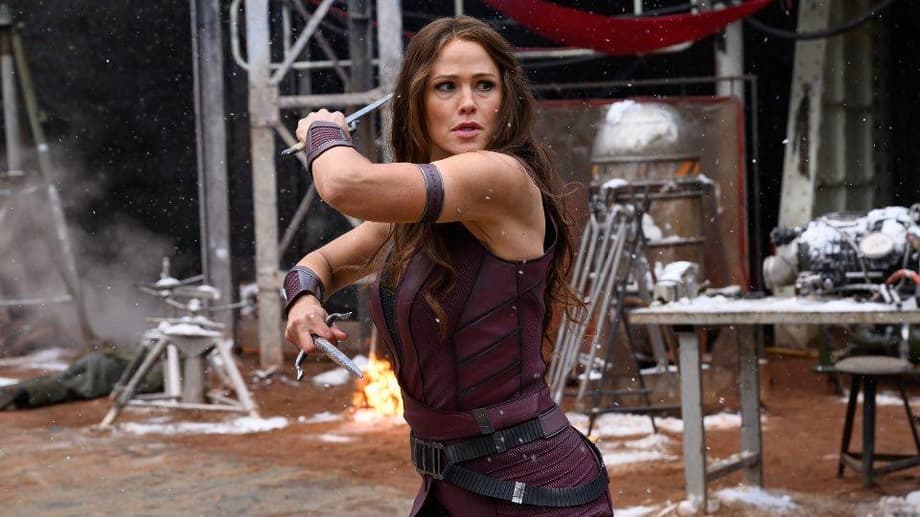
Garner revealed that she had not seriously handled Elektra’s signature sais since 2004. She considered herself fit, but, as she put it, she was not yet “Marvel fit.”
So she and her original stunt double, Shauna Duggins, went back to work.
Her preparation included strength training, running, swimming, rowing, boxing, jumping rope and extensive sai practice. Garner said her routine involved a daily workout plus additional assignments, while boxing sessions took place three times a week. Videos she later shared showed just how much physical work went into what audiences experienced as a surprise appearance.
The comeback also gave Garner something she had not realized she wanted: another ending for Elektra.
She later reflected that she had not known the character needed one until Reynolds and director Shawn Levy found a way to bring her back. Instead of simply appearing for a few seconds as an Easter egg, Elektra joins Blade, X-23 and Gambit in the film’s major battle in the Void.
Chris Evans’ return played with an entirely different kind of Marvel history.
By 2024, Evans was so closely identified with Steve Rogers that seeing his face in a Marvel movie naturally suggested one thing: Captain America was back.
Deadpool & Wolverine deliberately encouraged that assumption.
When Evans appears, Deadpool reacts as though he is about to witness the return of Captain America. The setup seems to be heading toward one of the MCU’s most famous heroic catchphrases.
Instead, Evans shouts Johnny Storm’s signature words: “Flame on!”
He was not returning as Steve Rogers at all.
He was playing the Human Torch — the impulsive young hero Evans had portrayed in Fantastic Four in 2005 and Fantastic Four: Rise of the Silver Surfer in 2007, years before he ever carried Captain America’s shield.
The person who convinced him to do it was, once again, Reynolds.
Evans recalled receiving a text asking whether he might be interested in revisiting something from about 20 years earlier. He agreed almost immediately.
More tellingly, Evans said Reynolds “might be the only guy” who could have persuaded him to do it. He trusted Reynolds’ ability to make fun of the situation before the audience could, allowing a potentially awkward nostalgia play to become part of the joke itself.
Evans’ cameo even extended his Guinness record for the most feature-film appearances as a Marvel superhero, bringing his total to 11 across his performances as Captain America and the Human Torch.
Taken together, the appearances of Snipes, Garner and Evans reveal what Deadpool & Wolverine was really doing with its enormous collection of old Marvel characters.
It was not simply borrowing recognizable faces.
Blade, Elektra and Evans’ Fantastic Four belonged to a period when Marvel characters were scattered across different studios and separate franchises. There was no expectation that Blade would eventually meet the Avengers, or that Elektra and Johnny Storm would occupy the same cinematic world.
Then Iron Man arrived in 2008, and Marvel Studios built the interconnected MCU that would dominate superhero filmmaking for years.
By bringing these earlier heroes into the Void — a place filled with characters and objects discarded from other realities — Deadpool & Wolverine turned that history into part of its story.
Levy later explained that the filmmakers also contacted dozens of performers connected to the Fox-era Marvel films for the behind-the-scenes tribute shown during the end credits. He described the sequence as a “love letter to those years.”
That may be the best way to understand the three returns.
Snipes came back to a character he had left behind long enough to break two world records. Garner rebuilt the physical skills required to become Elektra again. Evans allowed audiences to believe for a few seconds that Captain America had returned, only to resurrect the Marvel hero he played before most moviegoers associated him with a shield.
For one movie, characters from Marvel’s fragmented past were no longer forgotten versions from abandoned franchises.
They were heroes again.