ONE OF THE WORLD’S OLDEST ORCAS MAY HAVE BEEN SH@T — SPAIN LAUNCHES INVESTIGATION
ONE OF THE WORLD’S OLDEST ORCAS MAY HAVE BEEN SHOT — SPAIN LAUNCHES INVESTIGATION
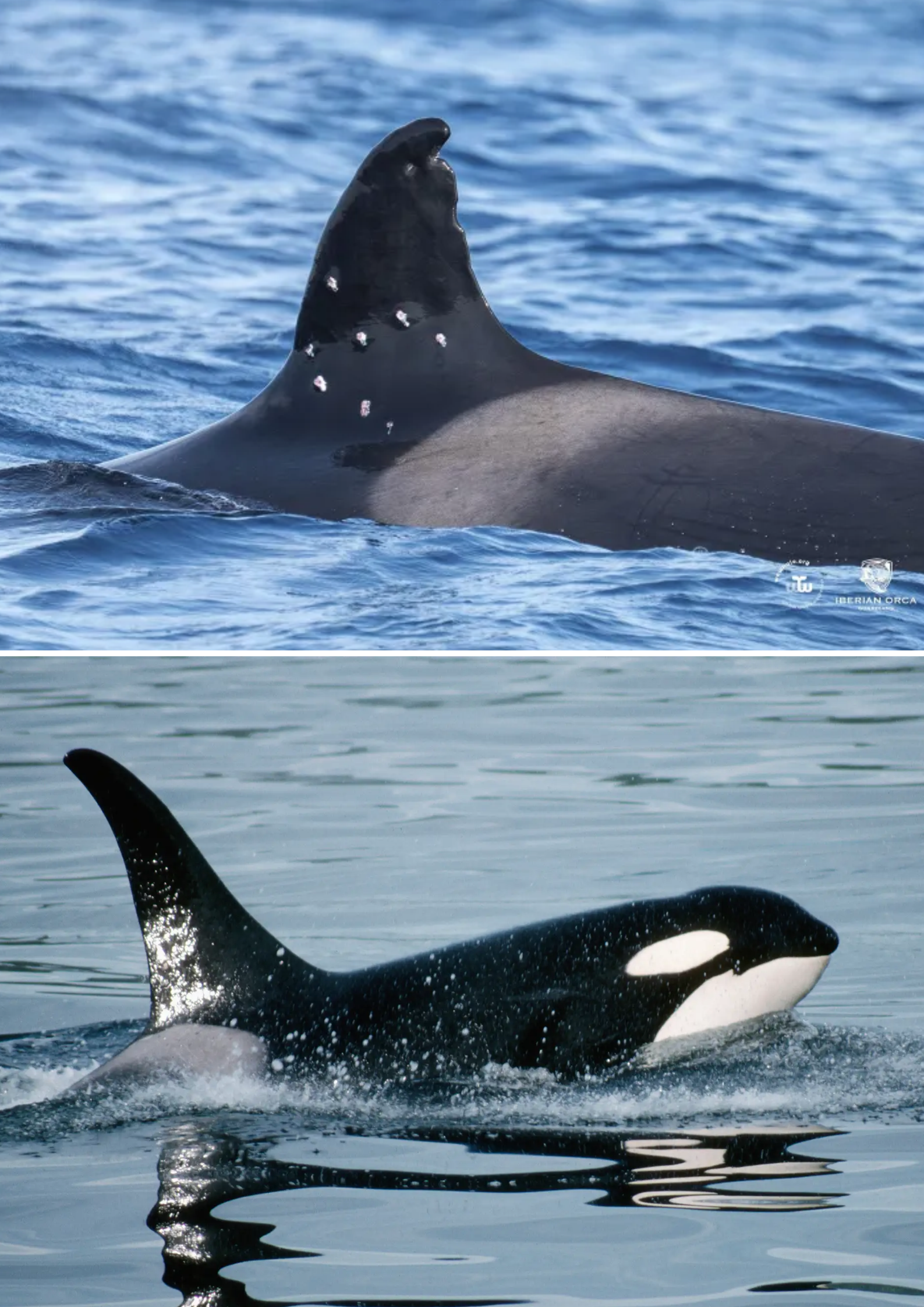
A 60-year-old Iberian orca known as Toñi — “La Abuela,” or “The Grandmother” — has been photographed with a series of new wounds on her dorsal fin and back that conservation groups believe are consistent with shotgun pellets. Spanish authorities have now opened an investigation.
STRAIT OF GIBRALTAR, Spain — A disturbing discovery involving one of the Iberian Peninsula’s most recognizable orcas has triggered an official investigation in Spain.
Toñi, believed to be around 60 years old, was recently spotted in the Strait of Gibraltar with multiple round marks across her dorsal fin and back. Conservation groups say the injuries were not visible in photographs taken only weeks earlier and appear consistent with wounds caused by shotgun pellets.
Spanish authorities are now working to determine exactly what happened.
And because Toñi belongs to an exceptionally small and vulnerable population, the case has raised concerns far beyond the fate of a single whale.
:max_bytes(150000):strip_icc():focal(999x0:1001x2):format(webp)/orca-whale-110723-tout-01be92879164403eb9e4e95097fbc527.jpg) THE ORCA KNOWN AS “THE GRANDMOTHER”
THE ORCA KNOWN AS “THE GRANDMOTHER”
Toñi is considered the oldest known member of the Iberian orca population that moves through the Strait of Gibraltar and Gulf of Cádiz.
Researchers have monitored her for years, building a photographic record that has made it possible to compare her appearance over time.
That historical record became crucial when conservationists recently noticed something unusual.
New marks had appeared on her dorsal fin and back.
The injuries were not visible in photographs taken only weeks earlier.
For conservationists who know Toñi well, the sudden appearance of multiple wounds was alarming.
:max_bytes(150000):strip_icc():focal(653x463:655x465):format(webp)/OrcaWhaleShots-89188ebd53c64c31bf2c02bf21579236.jpg) WERE THE MARKS CAUSED BY A SHOTGUN?
WERE THE MARKS CAUSED BY A SHOTGUN?
The organization WeWhale, which monitors orcas in the region, alerted Spanish authorities after documenting the injuries.
Based on the appearance, number and distribution of the wounds, conservationists said they believed Toñi had been struck by shotgun pellets.
Some experts have suggested that the pattern could be consistent with multiple lead pellets fired from a shotgun.
But there is an important caveat:
Authorities have not yet officially confirmed that Toñi was shot.
The origin of the injuries remains under investigation.
That distinction is critical because the investigation is still at an early stage.
SPAIN MOVES TO FIND OUT WHAT HAPPENED
Spain’s Ministry for the Ecological Transition and the Demographic Challenge, known as MITECO, opened preliminary investigative proceedings after being notified about Toñi’s injuries.
Officials say the purpose is to establish the circumstances surrounding the wounds and determine whether someone was responsible.
Spanish Deputy Prime Minister and Environment Minister Sara Aagesen publicly emphasized the seriousness of the incident, noting that the Iberian orca population is legally protected.
If human action is ultimately established, authorities could pursue sanctions under Spain’s wildlife-protection laws.
WHY TOÑI’S CASE IS SO SERIOUS
The Iberian orca population is exceptionally small.
Fewer than 40 animals are believed to remain in the population that inhabits the waters around the Strait of Gibraltar and Gulf of Cádiz.
That means the injury of one mature female can have consequences beyond one animal.
Toñi is not simply another member of the population.
She is one of its oldest known individuals.
Researchers have spent decades documenting these whales, making each individual important to understanding the group’s behavior, social structure and survival.
THE ORCAS HAVE ALREADY BEEN AT THE CENTER OF CONTROVERSY
The incident comes after years of tense encounters between Iberian orcas and boats.
Since 2020, some orcas in the region have repeatedly interacted with and sometimes rammed sailing vessels, damaging rudders and creating dangerous situations for crews.
Those encounters have generated frustration among some sailors.
But marine scientists and conservationists have repeatedly warned against retaliating against the animals.
The reasons behind the behavior remain debated, with researchers studying whether it could involve play, social learning, hunting behavior or other factors.
Whatever the explanation, conservation groups argue that violence against the whales is not an acceptable response.
A WARNING FROM CONSERVATIONISTS
The suspected attack has renewed calls for stronger protection of Iberian orcas.
The population already faces multiple pressures, including reduced food availability, pollution and heavy maritime traffic.
Now, conservationists fear that deliberate harm could become another threat.
The potential shooting is particularly disturbing because Toñi was apparently able to continue swimming and behaving normally despite the injuries.
But visible survival does not necessarily mean the wounds are harmless.
Embedded projectiles can cause tissue damage and potentially create longer-term health complications, including infection.
INVESTIGATORS STILL NEED ANSWERS
At this point, authorities have not identified a suspect.
They also have not publicly confirmed the exact weapon or ammunition involved.
Researchers are continuing to examine photographs and historical records while attempting to observe Toñi and her pod again.
The scientific monitoring organization CIRCE, which has maintained records of Iberian orcas for decades, has also been involved in efforts to compare Toñi’s current condition with earlier images.
That comparison could help establish when the injuries appeared and potentially narrow down where and when the incident occurred.
THE BIGGER MYSTERY
The most troubling question is not simply whether Toñi was injured.
It is why.
If investigators ultimately confirm that a person intentionally fired at the whale, authorities will need to determine who was responsible, where the incident occurred and what motivated it.
Was it an act of retaliation?
Was someone attempting to scare the orcas away from a boat?
Or was the injury caused by something entirely different?
Right now, investigators do not have a public answer.
ONE OF THE WORLD’S OLDEST ORCAS IS STILL BEING WATCHED
For now, Toñi remains alive.
But conservationists are closely monitoring the situation because of the animal’s age, the apparent severity of the wounds and the fragile status of the Iberian population.
The case also highlights an uncomfortable conflict in the waters between Spain and Portugal:
Humans are trying to protect themselves from increasingly controversial encounters with orcas — while the orcas themselves are a protected and highly vulnerable population.
The challenge is finding a way for both to coexist without turning fear and frustration into violence.
THE INVESTIGATION IS ONLY BEGINNING
Spain’s investigation has not yet established who caused Toñi’s injuries — or even conclusively confirmed that they came from a shotgun.
But the sudden appearance of multiple wounds on a whale that researchers have followed for decades has already sounded an alarm.
Toñi has survived for roughly six decades.
She has become an important member of one of Europe’s most threatened orca populations.
And now, researchers are watching closely to determine whether she can recover from injuries that may have been inflicted by humans.
The question hanging over the Strait of Gibraltar is simple:
WHO HURT “LA ABUELA” — AND WHY?
Until investigators have an answer, Toñi’s wounds remain both a mystery and a warning about the increasingly complicated relationship between humans and the world’s most iconic marine predators.