Anthony Michael Hall Says Ferris Bueller Was Written for Him. Saying No Cost Him More Than the Role
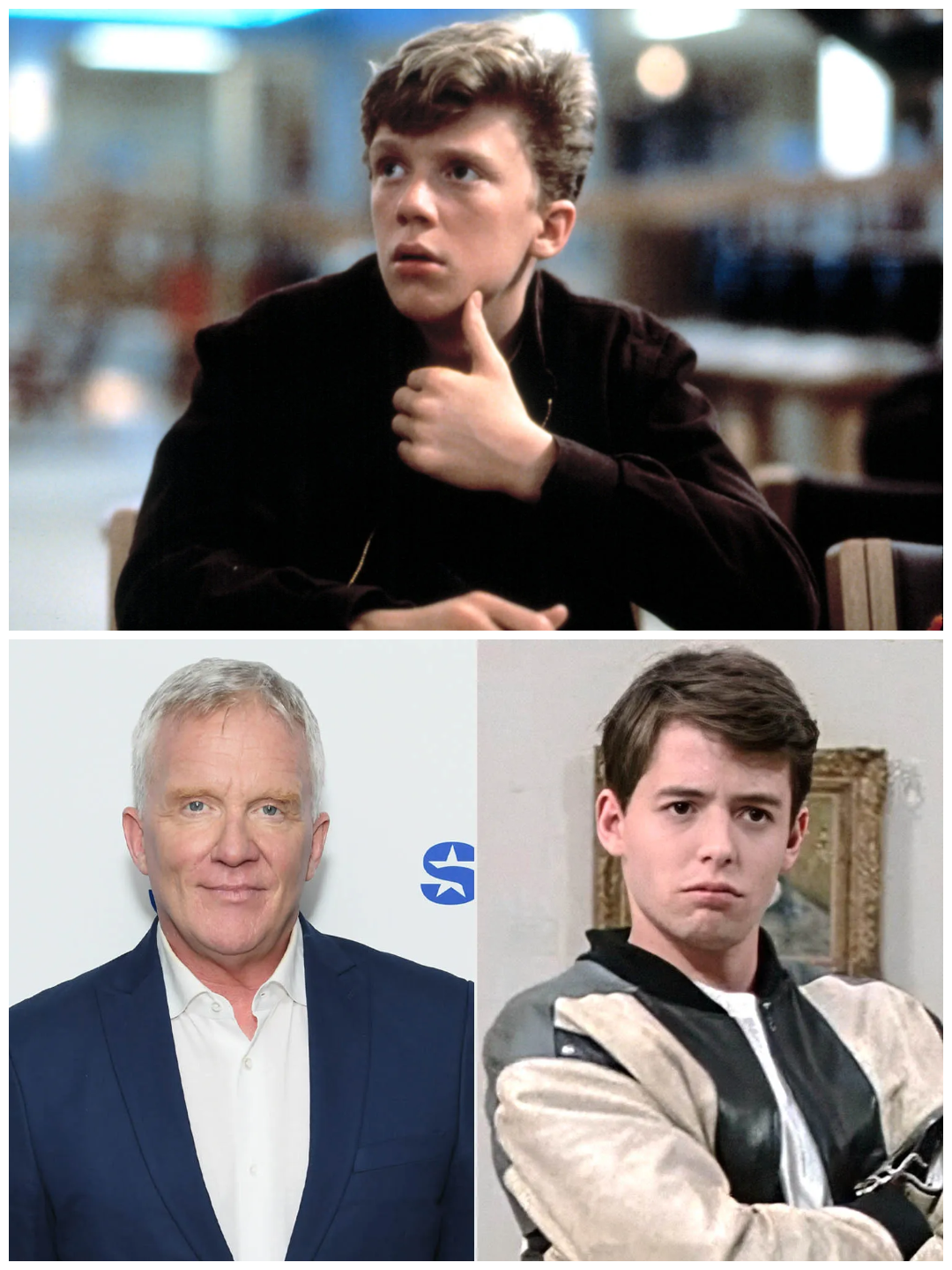
For four decades, it has been difficult to imagine anyone other than Matthew Broderick looking into the camera and confidently explaining exactly how to get away with skipping school.
Ferris Bueller’s Day Off helped make Broderick one of the defining faces of 1980s teen movies. His performance as the endlessly charming Ferris became so closely connected to the character that the two can feel almost inseparable.
But Anthony Michael Hall has now offered a very different version of how the movie might have happened.
According to Hall, John Hughes originally wrote Ferris Bueller with him in mind.
And Hall did not simply lose the role or miss an audition.
He says he turned it down.
The decision helped him avoid being locked into the same kinds of teenage roles he had already been playing, but Hall says it also came with a much more personal consequence.
He believes saying no damaged his friendship with Hughes.
Hall Says Hughes Wanted Him for Both Movies
Hall discussed that period of his career during a recent appearance connected to the Teen Beat podcast, looking back at his creative relationship with Hughes.
By then, the two had already worked together repeatedly.
Hall had become one of the actors most strongly associated with Hughes’ early films, appearing in projects including Sixteen Candles, The Breakfast Club and Weird Science.
That run made him one of the most recognizable young performers in Hughes’ cinematic world.
But success created a problem.
Hall was beginning to worry that Hollywood would see him only as a teenager — and, more specifically, as some variation of the awkward, brainy or socially uncomfortable kid audiences already knew.
Then Hughes came to him with more work.
Hall said Hughes wanted him to appear in both Pretty in Pink and Ferris Bueller’s Day Off.
Hall declined.
And in the case of Ferris Bueller, he says the decision was especially significant because Hughes had not merely considered him for the part.
Hall says the role had actually been written for him.:max_bytes(150000):strip_icc():format(webp)/Anthony-Michael-Hall-Matthew-Broderick-082226-c9a4360c45f84c1e89c8282863c860bf.jpg)
Why Hall Walked Away
From the outside, rejecting a John Hughes lead role now seems almost impossible to understand.
But Hall was making the decision before anyone knew what Ferris Bueller’s Day Off would become.
At the time, he was thinking about his future.
Hall has explained that he wanted to move into a different phase of his career rather than continue playing similar teenage characters.
He worried about being typecast.
That concern also influenced his decision on Pretty in Pink.
Hall felt that project was too close to territory he had already explored in Sixteen Candles. Rather than staying inside the same creative lane, he wanted to move on.
For a young actor trying to establish a career beyond adolescence, the logic makes sense.
What Hall could not know was how permanently Ferris Bueller would enter popular culture.:max_bytes(150000):strip_icc():format(webp)/John-Hughes-cast-Breakfast-Club-082226-e11026ae1ca7439a8e05df8773c374f3.jpg)
The Ferris Audiences Got Instead
The role ultimately went to Matthew Broderick.
Released in 1986, Ferris Bueller’s Day Off follows Ferris as he skips school with his best friend Cameron Frye and girlfriend Sloane Peterson, turning one supposedly ordinary day into an elaborate Chicago adventure.
Broderick’s relaxed confidence became central to the movie’s identity.
Ferris breaks the fourth wall, manipulates almost everyone around him and somehow remains likable even when his schemes become absurd.
The performance became iconic.
Hall has made clear that he recognizes how well Broderick handled the role.
There is no suggestion that he believes the casting was a mistake.
In fact, Hall has praised Broderick’s Ferris.
That makes his story less about resentment over a missed opportunity and more about the strange alternate histories that exist behind famous movies.
Had Hall said yes, one of the most recognizable teen characters of the 1980s might have looked completely different.:max_bytes(150000):strip_icc():format(webp)/Anthony-Michael-Hall-Breakfast-Club-082226-250136facd3c4f33a15d41d3d7729f57.jpg)
Saying No Had a Personal Cost
The more surprising part of Hall’s recollection is not the casting itself.
It is what happened between him and Hughes afterward.
Hall described a “rupture” in their friendship following his decision to turn down the films.
He believes Hughes was genuinely hurt.
That detail gives the story much more weight than a typical “actor almost played famous role” anecdote.
Hall and Hughes had already built a major creative partnership.
Hughes had helped define Hall’s early career, while Hall had become one of the performers who brought Hughes’ teenage characters to life.
So when Hall decided he needed to move away from that world, Hughes may not have experienced it as an ordinary casting decision.
For Hall, it was about avoiding typecasting.
For Hughes, it may have felt more personal.
Hall has suggested that the rejection created real distance between them.
Their Partnership Had Already Defined an Era
The tension makes more sense when viewed in the context of what the two had already accomplished together.
Hughes became famous for understanding teenage characters in a way Hollywood rarely had before.
His young protagonists could be funny, selfish, vulnerable, terrified, rebellious and deeply insecure — often within the same scene.
Hall fit naturally into that world.
In Sixteen Candles, he played the overconfident yet awkward Farmer Ted.
In The Breakfast Club, his Brian Johnson was the academically successful student quietly crushed by expectations.
In Weird Science, Hall again occupied the territory of a teenager struggling with confidence and identity.
Those roles made him successful.
They also made his fear of being trapped by them understandable.
If Hall had continued into Pretty in Pink and then Ferris Bueller’s Day Off, he might have become even more deeply associated with Hughes-style teen movies.
At some point, Hall decided he had to test whether audiences could see him differently.
One of Hollywood’s Biggest “What Ifs”
Casting stories are often interesting because they allow audiences to imagine a familiar film with another face.
This one goes further.
Hall is not saying he was merely one of several actors considered for Ferris.
He says Hughes wrote the role for him.
That changes the question.
How different would Ferris have been if Hall had played him?
Hall had already developed a screen persona that was far different from Broderick’s effortless cool.
Would Hughes have written or directed the character differently around him?
Would Ferris have been more awkward, more manic, or more visibly vulnerable?
There is no way to know.
What is clear is that the version audiences eventually received became definitive.
Broderick made Ferris his own.
And Hall’s decision helped push his career away from the exact path Hughes had imagined for him.
A Career Decision That Changed Two Relationships
Looking back, Hall’s choice becomes difficult to categorize as either right or wrong.
He passed on a film that became a classic.
But he also made a decision many young actors eventually face: whether to keep accepting the roles that made them successful or risk leaving that identity behind.
The cost was not only professional.
According to Hall, it affected a friendship with one of the filmmakers who had played an enormous role in his early life.
That is what makes the revelation linger.
For decades, fans have thought of Matthew Broderick as Ferris Bueller without questioning how the character reached him.
Now Hall has revealed an earlier chapter.
John Hughes had apparently pictured someone else first.
Anthony Michael Hall says Ferris was written for him.
He chose to walk away.
And the role was not the only thing he lost.