Tim Curry Never Married or Had Children — and He Had a Blunt Answer for Anyone Who Wanted to Know Why
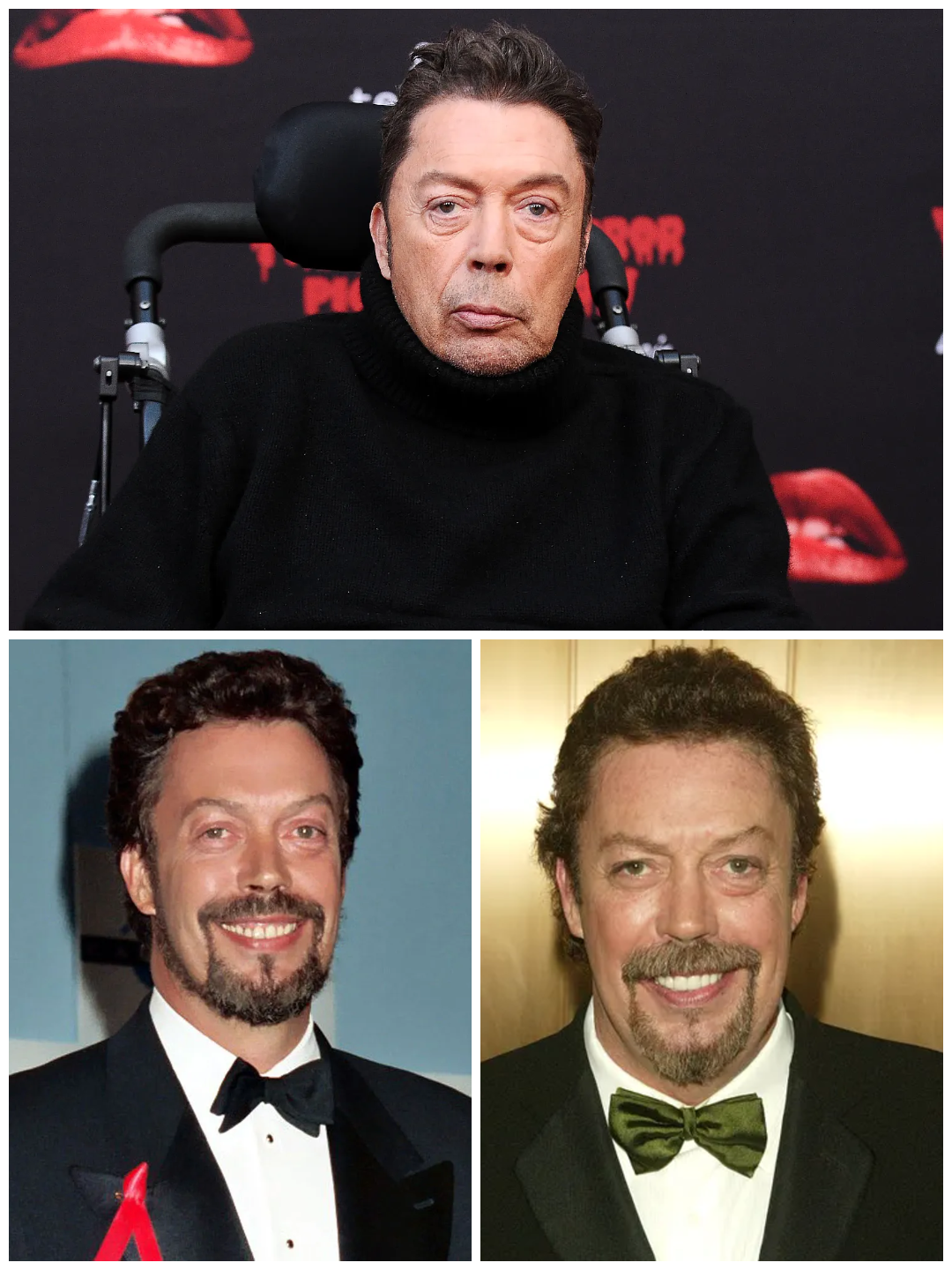
Tim Curry spent more than five decades becoming unforgettable on screen while remaining remarkably difficult to know off it.
Audiences knew the theatrical swagger of Dr. Frank-N-Furter in The Rocky Horror Picture Show. They knew his terrifying Pennywise in It, his work in Annie and the dozens of wildly different characters he disappeared into over the years.
But when it came to the person behind those performances, Curry deliberately kept the door closed.
The actor, who died peacefully at his Los Angeles home on Aug. 25 at age 80, never married and never had children. He also resisted the assumption that his fame meant audiences were entitled to an explanation about his romantic life.
When Curry finally addressed the subject in his 2025 memoir, Vagabond, he did so in unmistakably direct fashion.
He acknowledged that he had experienced love, heartbreak and the emotional wreckage that can come with relationships. But readers hoping for intimate stories about his romances were given a clear boundary instead.
The details, Curry effectively said, were nobody else’s business.
He Was Willing to Admit He Had Loved — But Not to Name Names
Curry’s position was not that romance had been absent from his life.
Quite the opposite.
In the introduction to Vagabond, he made clear that he had known what it meant both to love and to be loved. He had also experienced heartbreak and everything between those extremes.
Those experiences, he said, inevitably helped shape the person he became.
What he refused to provide were the specifics.
Curry had little interest in revealing who those relationships involved, how long they lasted or what happened behind closed doors.
His boundary was especially striking in an era when celebrity memoirs are often marketed around exactly those kinds of disclosures.
For Curry, writing about his career did not create an obligation to turn his most private relationships into entertainment.
And his refusal was not something he developed late in life.
It reflected a discomfort with celebrity culture that had followed him almost from the beginning of his career.:max_bytes(150000):strip_icc():focal(818x440:820x442):format(webp)/tim-curry-082626-8-9b3fa79f864d4d609bebe1e1b5f9430d.jpg)
Fame Came With a Price Curry Never Fully Accepted
Later in his memoir, Curry explained that one of the aspects of show business he disliked most was the idea that becoming famous somehow transformed a person’s private life into public property.
He understood why actors had to give interviews.
Publicity was part of the job.
But he still considered the process intrusive.
Curry believed there was an important difference between discussing a performance and exposing every part of the person performing it.
He rejected the idea that audiences needed access to an actor’s private emotions or relationships in order to appreciate the work.
In his view, a performance should be able to stand on its own.
That attitude also shaped the way he approached self-promotion.
Curry said he had been repelled by it from the earliest stages of his career. Being asked to constantly sell himself as a personality was almost the opposite of what attracted him to acting in the first place.
He wanted to become somebody else.
Not persuade audiences to become obsessed with Tim Curry.:max_bytes(150000):strip_icc():focal(740x387:742x389):format(webp)/Tim-Curry-red-carpet-tout-012524-515fc8b14b6d4f75856ac8246bd81bbe.jpg)
His Biggest Concern Was When Fans Felt They ‘Owned’ Him
Curry also understood that fame could create a strange illusion of intimacy.
A devoted fan could watch an actor for years, read interviews and follow every new project until the performer began to feel familiar.
But Curry believed that familiarity could become unhealthy when fans started confusing admiration with an actual personal relationship.
He wrote about people becoming so intensely invested in a celebrity that they began to believe they had somehow bonded with that person — or even had a claim over them.
At times, Curry felt forced to remind admirers of the distinction.
His message was essentially simple: he was a person, but he was not their person.
Curry admitted that might sound rude.
Still, he felt it had sometimes been necessary.
That philosophy helps explain why his decision never to marry became less of a mystery to him than it was to outsiders.
The public wanted an explanation.
Curry did not believe he owed one.:max_bytes(150000):strip_icc():focal(749x0:751x2):format(webp)/tim-curry-082626-8-47faacefd2724c3cb8af00336998f5ee.jpg)
Even a Direct Question in 2025 Didn’t Change His Answer
In October 2025, Curry was again asked why he could discuss some parts of his personal history while keeping his romantic life so tightly protected.
His answer had not softened.
He reiterated that his romances were nobody else’s business and pointed out that he had already made that position very clear in his memoir.
Even while addressing the subject, Curry could still turn the conversation toward language and humor, joking about the amount of profanity he had used while explaining himself in the book.
But beneath the joke was a consistent principle.
Some parts of his life belonged to the public.
Others belonged only to him.
Curry Believed Being an ‘Enigma’ Helped Him as an Actor
That same year, while promoting Vagabond, Curry spoke about why maintaining a degree of mystery was important to him.
He actually encouraged it.
Rather than establishing a tightly controlled celebrity identity and repeatedly presenting that persona to audiences, Curry tried to avoid becoming too easily defined.
That desire was closely connected to his philosophy of acting.
He had originally been attracted to the profession because it offered the freedom to become somebody else.
Early on, Curry admitted, fame had appealed to him too. But over time he came to strongly dislike it.
He saw himself as something of a purist about acting.
Some performers, in his view, remained recognizable star personalities no matter which character they played.
Curry wanted the opposite.
He wanted to vanish into the role.
Ideally, audiences would not simply react with relief or excitement because Tim Curry had appeared on screen. He wanted them focused on the character standing in front of them.
That approach produced an unusually varied body of work.
The flamboyant Frank-N-Furter and the nightmare-inducing Pennywise hardly seemed like creations belonging to the same performer.
That was precisely the point.
The Mystery Was Intentional Until the End
Curry’s private life inevitably attracted curiosity because so little of it was publicly documented.
He never married.
He had no children.
And even after agreeing to write a memoir, he resisted one of the biggest expectations attached to celebrity autobiography: revealing everything.
Instead, Curry drew a sharp line.
He could tell readers that love had mattered to him without identifying the people he loved.
He could admit to heartbreak without turning that pain into gossip.
He could write honestly about his life while deciding that honesty did not require complete access.
For an actor who built his reputation by disappearing into other people, there was something fitting about that choice.
Tim Curry gave audiences countless characters to know intimately.
He simply never promised them the same access to himself.