Luke Evans Reveals the Letter He Wrote to Tim Curry Weeks Before His Death — Though the Two Never Met
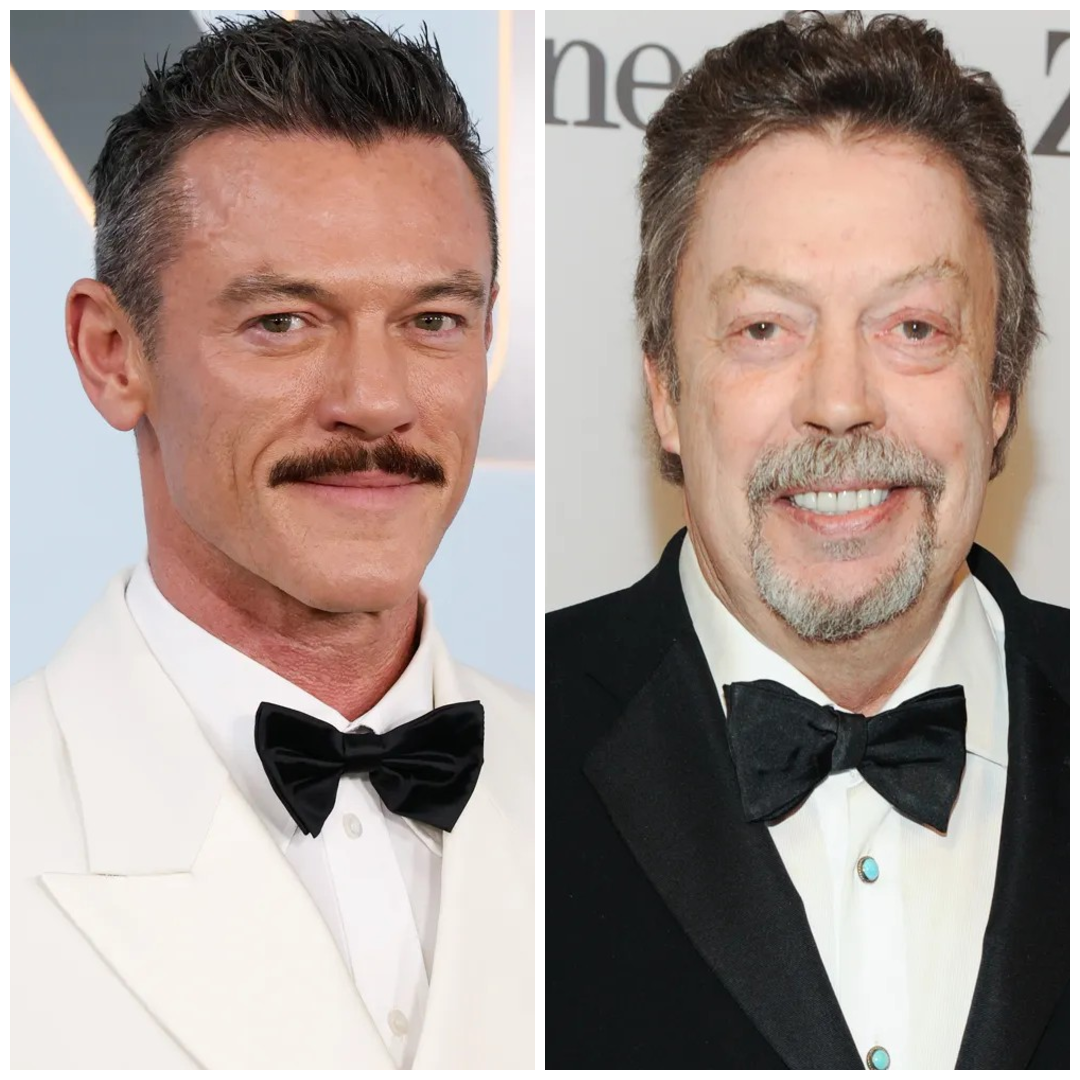
Luke Evans had spent months stepping into one of Tim Curry’s most famous roles. But as his Broadway run neared its end, there was something he wanted the legendary actor to know.
So he wrote Curry a letter.
The two men had never met. Yet Evans felt Curry had been present throughout his experience playing Dr. Frank-N-Furter in the Broadway revival of The Rocky Horror Show. Every night, Evans was taking on a character Curry had transformed into a cultural phenomenon more than half a century earlier.
Weeks later, the letter took on a meaning Evans could not have anticipated.
Curry died Tuesday evening at age 80, according to his publisher, Jimmy Franco. Shortly afterward, Evans shared the message he had written, revealing a deeply personal expression of gratitude from one Frank-N-Furter to the man who started it all.
Evans Had Just Finished His Own Run as Frank-N-Furter
At 47, Evans was coming off one of the most distinctive stage roles of his career.
The Beauty and the Beast actor had been starring as Dr. Frank-N-Furter in the Broadway revival of The Rocky Horror Show, earning a Tony nomination for his performance. His run concluded on Sunday, only days before news of Curry’s death.
Evans was preparing to hand the character over to Jake Shears, who is scheduled to begin playing Frank-N-Furter on Sept. 11.
But before leaving the production, Evans wanted to acknowledge the performer whose shadow inevitably hangs over anyone brave enough to put on Frank’s heels.
In his letter, Evans explained that although he and Curry had never met, Curry had been part of his Broadway experience from its beginning.
For Evans, playing Frank-N-Furter did not simply mean learning a role from a script. It meant entering a decades-long artistic conversation Curry had started.
Being compared with Curry, Evans wrote, was among the highest compliments he could receive.
At the same time, he understood the impossible standard such comparisons created.
Evans made clear that his goal had never been to imitate Curry. He believed recreating Curry’s performance would be impossible. Instead, he tried to respect what Curry had created while discovering his own interpretation of the character.:max_bytes(150000):strip_icc():format(webp)/luke-evans-tim-curry-1-7a17c130fa66432ca7c72db624a07adc.jpg)
The Role Tim Curry Made His Own
The connection between Curry and Frank-N-Furter stretches back more than 50 years.
Curry originated the character in the stage musical The Rocky Horror Show in 1973. Two years later, he returned to the role for the movie adaptation, The Rocky Horror Picture Show.
The film would become one of the most enduring cult movies in popular culture, while Curry’s corseted, commanding and unapologetically theatrical Frank-N-Furter became the performance against which later versions of the character would inevitably be measured.
Countless performers have taken on Frank since then.
But Curry remained inseparable from the character.
Evans understood that reality before he ever walked onto the Broadway stage.
His letter acknowledged not only the quality of Curry’s performance but also the courage behind it. Evans thanked him for embracing a character who would eventually become an important queer cultural figure and for helping generations of actors feel permission to be bolder themselves.
That influence extended far beyond a single costume, song or performance.
What Curry created in the 1970s continued to challenge actors more than five decades later.:max_bytes(150000):strip_icc():format(webp)/luke-evans-1-3576867326334467a82434b0597b38ba.jpg)
A Letter That Became a Farewell
The timing makes Evans’ message especially poignant.
He wrote it in the final weeks of his own Rocky Horror run, while Curry was still alive. It was intended as an expression of admiration from one actor to another — an acknowledgment of a creative debt from a performer temporarily occupying a role to the man who had defined it.
Then Curry died.
Evans shared the letter publicly the following day while reflecting on the actor’s legacy.
“There will only be one Tim Curry,” Evans wrote in his tribute.
His longer message carried the same idea.
Evans thanked Curry for creating something that had lasted, for taking risks with the role and for influencing generations of performers. As he prepared to close his own chapter as Frank-N-Furter, Evans expressed the hope that Curry would have approved of another actor enjoying his own adventure in the character’s famous heels.
The sentiment captured the unusual challenge facing every performer who inherits an iconic role.
They must honor what audiences already love without becoming an imitation.
For Evans, Curry was not someone to be copied.
He was the starting point.:max_bytes(150000):strip_icc():format(webp)/Tim-Curry-red-carpet-2-012524-74ed88deb4d54b3a873944b9e61d9c1e.jpg)
Curry Continued to Embrace the Film’s Legacy
Curry’s connection with Rocky Horror remained visible late in his life, even after serious health problems changed the way he appeared publicly.
He suffered a major stroke in 2012 and dealt with significant health issues afterward. A cause of death had not been reported when his death was announced.
His final public appearance came in November 2025, when he reunited with several Rocky Horror Picture Show castmates for a screening celebrating the movie’s 50th anniversary.
Joining him were Barry Bostwick, who played Brad Majors; Nell Campbell, who portrayed Columbia; and Patricia Quinn, who played Magenta.
Curry also continued discussing what the film had come to mean.
He viewed its legacy as larger than sexuality alone. To Curry, the famous Rocky Horror idea of turning dreams into reality could apply to anyone seeking permission to become the person they wanted to be, provided their choices did not cause harm.
That interpretation helps explain why the character continued to resonate far beyond the original stage production.
Frank-N-Furter was outrageous by design. But underneath the spectacle was a message about refusing to be confined by other people’s expectations.
One Frank Saying Thank You to Another
Evans’ letter ultimately became more than a celebrity tribute.
It offered a glimpse into what happens when an actor inherits a role so strongly associated with someone else that the original performance feels almost impossible to escape.
Evans did not resent that comparison.
He embraced it as an honor.
And rather than attempting to replace Curry’s Frank-N-Furter, he treated Curry’s work as the foundation from which his own version could grow.
The two actors never met.
Yet Curry’s influence accompanied Evans onto the Broadway stage night after night.
Now, as Evans leaves the role and another Frank-N-Furter prepares to follow him, that chain continues.
More than 50 years after Tim Curry first stepped into the character, actors are still putting on the heels, facing the comparisons and discovering their own version of Frank.
And Evans’ final message made clear whom he believed they all had to thank.