Robert Patrick Says Billy Idol Was in Line for ‘Terminator 2.’ One Physical Requirement Changed Who Became the T-1000
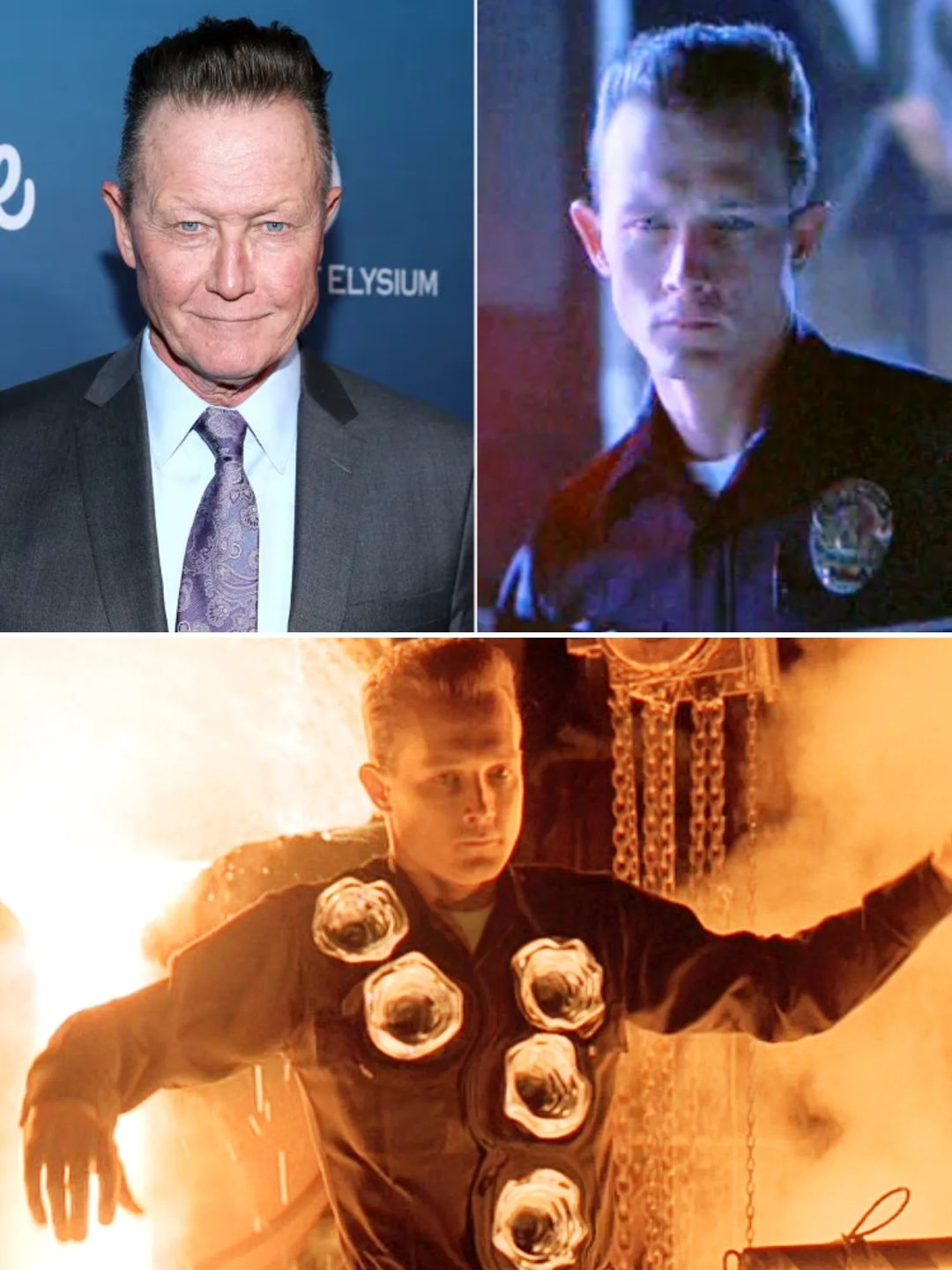
It is difficult to imagine the T-1000 looking like anyone other than Robert Patrick.
For millions of Terminator 2: Judgment Day fans, Patrick’s expressionless stare, police uniform and relentless running are inseparable from one of the most memorable villains in movie history.
But James Cameron once had another very famous face in mind.
Billy Idol.
The rock star was seriously considered for the liquid-metal assassin before Terminator 2 began filming. The idea had progressed far enough that legendary effects artist Stan Winston’s team created visual concepts based on Idol’s appearance, and Idol even participated in audition and screen-test work.
Then a motorcycle accident changed everything.
The problem was not simply that Idol had been injured.
One particular physical requirement of playing the T-1000 had suddenly become almost impossible:
He had to run. A lot. And he had to run fast.
Idol’s damaged leg left him with a pronounced limp at precisely the moment Cameron needed an actor capable of playing a machine that could chase people with frightening, almost superhuman speed.
That opened the door for a relatively unknown actor named Robert Patrick.
Thirty-five years later, Patrick is looking back at the twist of fate that changed his career.:max_bytes(150000):strip_icc():focal(749x0:751x2):format(webp)/robert-patrick-terminator-2-082826-3a-a409397795a7416188f1e7595dbabae9.jpg)
Billy Idol Was More Than a Casual Casting Idea
Stories about actors who “almost” played famous roles can sometimes become exaggerated over time.
This one went much further than someone simply mentioning Billy Idol’s name in a meeting.
Idol has said he actually auditioned.
He recalled wearing the police helmet and sunglasses associated with the T-1000 during test material, while Cameron filmed the process.
Even more strikingly, Idol later visited Stan Winston’s effects facility and saw artwork depicting him as the Terminator.
“They had drawings of me as the Terminator,” he recalled.
That means an alternate version of Terminator 2 was not purely hypothetical.
The filmmakers had already begun imagining what Idol might look like as the new machine sent back through time to kill John Connor.
Then came February 1990.
Idol was involved in a serious motorcycle accident that badly injured his leg. The consequences affected not only his music career but several acting opportunities.
For Terminator 2, however, one consequence mattered above all others.
He could no longer run properly.:max_bytes(150000):strip_icc():focal(749x0:751x2):format(webp)/robert-patrick-terminator-2-082826-1-21db26d0205f4f1b8aebee46c9eb5d25.jpg)
The T-1000 Couldn’t Have a Limp
Anyone who has seen Terminator 2 knows why that became such a problem.
Unlike Arnold Schwarzenegger’s heavier T-800, the T-1000 is designed to feel unnaturally fluid.
He does not simply walk toward his targets.
He pursues them.
One of the character’s defining images is Patrick sprinting after John Connor with mechanical efficiency, arms pumping and face almost completely emotionless.
There is no visible strain.
No panic.
No sense that he is getting tired.
The T-1000 looks like something that could keep running until its target simply cannot.
Idol has specifically identified this as the reason he could not play the role.
“The one thing that stopped me from being in Terminator was I couldn’t run,” he later explained.
At the time, his motorcycle injuries had left him with what he described as a “terrible limp.” Visual effects could accomplish extraordinary things in 1991, but replacing that kind of full-body physical performance was not yet practical.
The same character requirement that ruled Idol out would eventually become one of Patrick’s greatest advantages.:max_bytes(150000):strip_icc():focal(749x0:751x2):format(webp)/robert-patrick-arnold-schwarzenegger-terminator-2-082826-1-eff530ce3ad84b6ca8e89ee7e7ffa38a.jpg)
Cameron Began Looking for Someone Audiences Didn’t Know
Once Idol was no longer physically able to handle the role, Cameron’s search changed direction.
Patrick says the director wanted a relatively unknown performer — someone audiences would not bring strong expectations to before the T-1000 even appeared.
Patrick fit that description.
He had acting experience, including a small role in Die Hard 2, but he was nowhere near being a household name.
That anonymity became useful.
Arnold Schwarzenegger was already one of the biggest movie stars in the world.
The new Terminator did not need to compete with him through celebrity.
Instead, Patrick could simply appear and be frightening.
But Patrick says the audition process itself initially kept him somewhat in the dark.
He did not immediately understand exactly what character he was pursuing.
Over several days, he went through increasingly unusual tests designed to explore his physicality, movement and ability to project menace.
Only later was he finally allowed to read the screenplay.
That was when the scale of the opportunity became clear.
Patrick recalled realizing, in effect: “Oh my god, I’m the new Terminator.”:max_bytes(150000):strip_icc():focal(749x0:751x2):format(webp)/terminator-2-082826-1-2a72bd0d4832459294cc2c2dd7e15cf4.jpg)
Patrick Turned Running Into Part of the Character
If running had been the obstacle that prevented Idol from becoming the T-1000, Patrick made it one of the signatures of his performance.
He trained extensively for the role.
The goal was not simply to run quickly.
He had to run like a machine.
That meant maintaining speed while minimizing visible signs of human exhaustion. Heavy breathing, facial strain or sloppy movement could undermine the illusion that audiences were watching an advanced killing machine rather than an actor performing a difficult chase.
Patrick became extraordinarily good at it.
In one famous sequence, the T-1000 runs after John Connor as John escapes on a small motorcycle.
Patrick later recalled that during an early take he actually caught up with Edward Furlong’s bike, forcing the production to adjust because the supposedly fleeing motorcycle was not moving fast enough to stay ahead of him.
That story demonstrates just how central physical performance was to Cameron’s idea of the character.
The person playing the T-1000 could not merely look intimidating.
He needed to move like something built to hunt.:max_bytes(150000):strip_icc():focal(749x0:751x2):format(webp)/robert-patrick-edward-furlong-arnold-schwarzenegger-linda-hamilton-james-cameron-mtv-movie-awards-082826-1-1d619d6ec3ce43e6a7b1618aa85c06fb.jpg)
Even Billy Idol Says Patrick Was the Right Choice
There is an unusually graceful ending to this almost-casting story.
Idol has not spent the decades since Terminator 2 insisting audiences missed out on the better T-1000.
Instead, he has praised Patrick.
Looking back at the finished performance, Idol said Patrick brought a cold, robotic quality that he himself did not think he could have matched.
“The right man got the job,” Idol concluded.
Patrick’s T-1000 became a landmark movie villain.
The character could transform into other people, repair enormous damage to his body and turn his arms into weapons.
But some of the most unsettling moments required no digital transformation at all.
They were simply Patrick moving toward someone.
Walking.
Staring.
Running.
The very thing Idol’s injury had prevented him from doing.
Fans Can See That Performance on the Big Screen Again
The casting story has resurfaced at an especially appropriate moment.
Terminator 2: Judgment Day is celebrating its 35th anniversary with a U.S. theatrical rerelease running from August 28 through September 2, 2026.
The film is returning in 4K, RealD 3D and premium formats including 4DX and DBOX, timed around the franchise’s famous “Judgment Day” date of August 29.
For Patrick, the rerelease gives audiences another chance to see a performance that transformed his career.
For fans who already know every chase and confrontation, his new comments also provide something else to watch for.
Look at the T-1000 running.
It seems like such a simple part of the character.
But it was not.
Thirty-five years ago, that exact physical demand helped determine who would play one of cinema’s most recognizable villains.
Billy Idol had the look.
Stan Winston’s team had already imagined him as the machine.
But after one motorcycle accident, Idol could no longer do the thing the T-1000 absolutely had to do.
He couldn’t run.
Robert Patrick could.
And movie history changed at full speed.