LINDSAY CLANCY “SCARED” AS JURY REMAINS DEADLOCKED AFTER TWO DAYS — KEY EVIDENCE REQUESTED IN HIGH-STAKES DELIBERATIONS
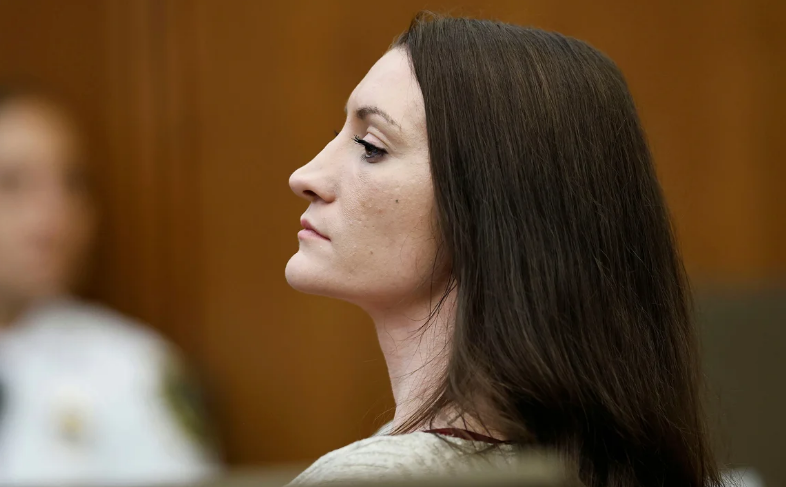
LINDSAY CLANCY “SCARED” AS JURY REMAINS DEADLOCKED AFTER TWO DAYS — KEY EVIDENCE REQUESTED IN HIGH-STAKES DELIBERATIONS
PLYMOUTH, MASS. — Lindsay Clancy is reportedly “scared” and nervous as 12 jurors weigh one of the most difficult questions of her highly publicized trial: whether she should be held criminally responsible for the deaths of her three young children.
After two days of deliberations, the jury has not reached a verdict.
The jurors were sent home Friday and are expected to return Monday to continue weighing the evidence in the case, which has focused heavily on Clancy’s mental state at the time of the January 2023 tragedy.
Clancy, a former labor and delivery nurse from Duxbury, Massachusetts, is accused of killing her children — 5-year-old Cora, 3-year-old Dawson and 8-month-old Callan — before attempting to take her own life.
Her attorney, Kevin Reddington, has acknowledged that Clancy committed the acts but argues that severe mental illness left her unable to appreciate the wrongfulness of what she was doing.
:max_bytes(150000):strip_icc():focal(749x0:751x2):format(webp)/lindsay-marie-clancy-013023-1-176600bdc3614f6ca230e63734b87361.jpg) JURY ASKS TO SEE KEY EVIDENCE
JURY ASKS TO SEE KEY EVIDENCE
The deliberations took a significant turn Friday when jurors requested to examine several pieces of evidence from the case.
Among the items they asked to review were the knife involved in Clancy’s suicide attempt and prescription medication bottles connected to her treatment.
The requests suggest jurors are taking a close look at the competing arguments surrounding Clancy’s mental condition and the circumstances immediately surrounding the killings.
The jury consists of nine women and three men.
They have been tasked with considering an enormous amount of testimony and evidence presented during a trial that lasted more than a month.
DEFENSE: SHE WAS IN THE GRIP OF PSYCHOSIS
Reddington has portrayed Clancy as a deeply troubled mother whose mental health deteriorated dramatically in the months before the tragedy.
The defense argues that Clancy suffered from postpartum psychosis and other serious psychiatric problems, and that her condition was worsened by the medications she was prescribed.
Defense experts testified that Clancy was experiencing a break from reality and was not criminally responsible when she harmed her children.
Reddington also repeatedly criticized the medical care Clancy received, arguing that warning signs were missed and that her treatment ultimately failed her.
Her severe suicide attempt has also been central to the defense.
Clancy went through a second-story window after the children were harmed and suffered devastating injuries that left her paralyzed.
The defense argues that the severity of that attempt supports its claim that Clancy was experiencing an extreme psychiatric crisis rather than calmly carrying out a calculated plan.
:max_bytes(150000):strip_icc():focal(749x0:751x2):format(webp)/lindsay-clancy-court-080426-1-0d554916be174019b004a84bdf0e8019.jpg) PROSECUTORS: SHE KNEW WHAT SHE WAS DOING
PROSECUTORS: SHE KNEW WHAT SHE WAS DOING
Prosecutors have offered a dramatically different interpretation.
Assistant District Attorney Jennifer Sprague has acknowledged that Clancy was struggling psychologically but argued that mental illness does not automatically mean someone is incapable of understanding right from wrong.
The prosecution has pointed to evidence they say demonstrates planning and awareness.
They argued that Clancy created an opportunity to be alone with the children and deliberately carried out the acts before attempting to take her own life.
Prosecutors also highlighted her communications, searches and behavior before the tragedy as evidence that she remained capable of making decisions and understanding the consequences of her actions.
The central question for jurors is therefore not simply whether Clancy harmed her children.
It is whether she was criminally responsible for doing so.
A DIFFICULT DECISION WITH FIVE POSSIBLE OUTCOMES
Jurors have several possible verdicts available.
They can find Clancy guilty of murder, guilty of a lesser offense such as manslaughter, find her not guilty, or determine that she was not criminally responsible because of mental disease or defect.
A finding of not criminally responsible would not necessarily mean she would simply walk free.
Instead, Massachusetts law provides for psychiatric treatment and potential institutionalization in cases where a defendant is found not criminally responsible because of mental illness.
NO VERDICT AFTER MORE THAN 10 HOURS
The jury has now spent roughly 10½ hours deliberating since closing arguments ended Thursday.
A legal analyst speaking with CBS Boston said the lack of a verdict does not necessarily indicate which way the jury is leaning.
The jurors must work through testimony from approximately 85 witnesses, along with medical records, psychiatric evidence, journals and other material introduced during the trial.
That makes the case particularly complex.
Every juror must ultimately agree on the verdict.
And with such sharply conflicting accounts of Clancy’s mental state, reaching that unanimous decision could take considerable time.
THE FAMILY TRAGEDY AT THE CENTER OF THE CASE
Beyond the legal arguments, the trial has repeatedly returned to the lives of the three children.
Cora, Dawson and Callan were at the center of a case that has drawn national attention not only because of the allegations, but because of the questions it has raised about postpartum mental illness and the American mental-health system.
Clancy’s former husband, Patrick Clancy, has testified during the trial and has publicly expressed forgiveness toward her.
For jurors, however, forgiveness is not the legal question.
Their task is to determine whether the evidence proves beyond a reasonable doubt that Lindsay Clancy was criminally responsible at the time of the killings.
THE WAIT CONTINUES
For now, there is no verdict.
Clancy remains in legal limbo as her attorneys wait alongside prosecutors, her family and the public for the jury’s decision.
The jurors are expected to return Monday and resume deliberations.
Until then, one question continues to hang over the courtroom:
Was Lindsay Clancy a mother who deliberately chose to take her children’s lives — or a severely mentally ill woman who, at the time, could no longer understand the wrongfulness of what she was doing?
That decision now belongs entirely to the jury.