AMERICAN SCHOOLS RETHINK CLASSROOM TECHNOLOGY AS PENS AND PAPER MAKE A SURPRISING RETURN
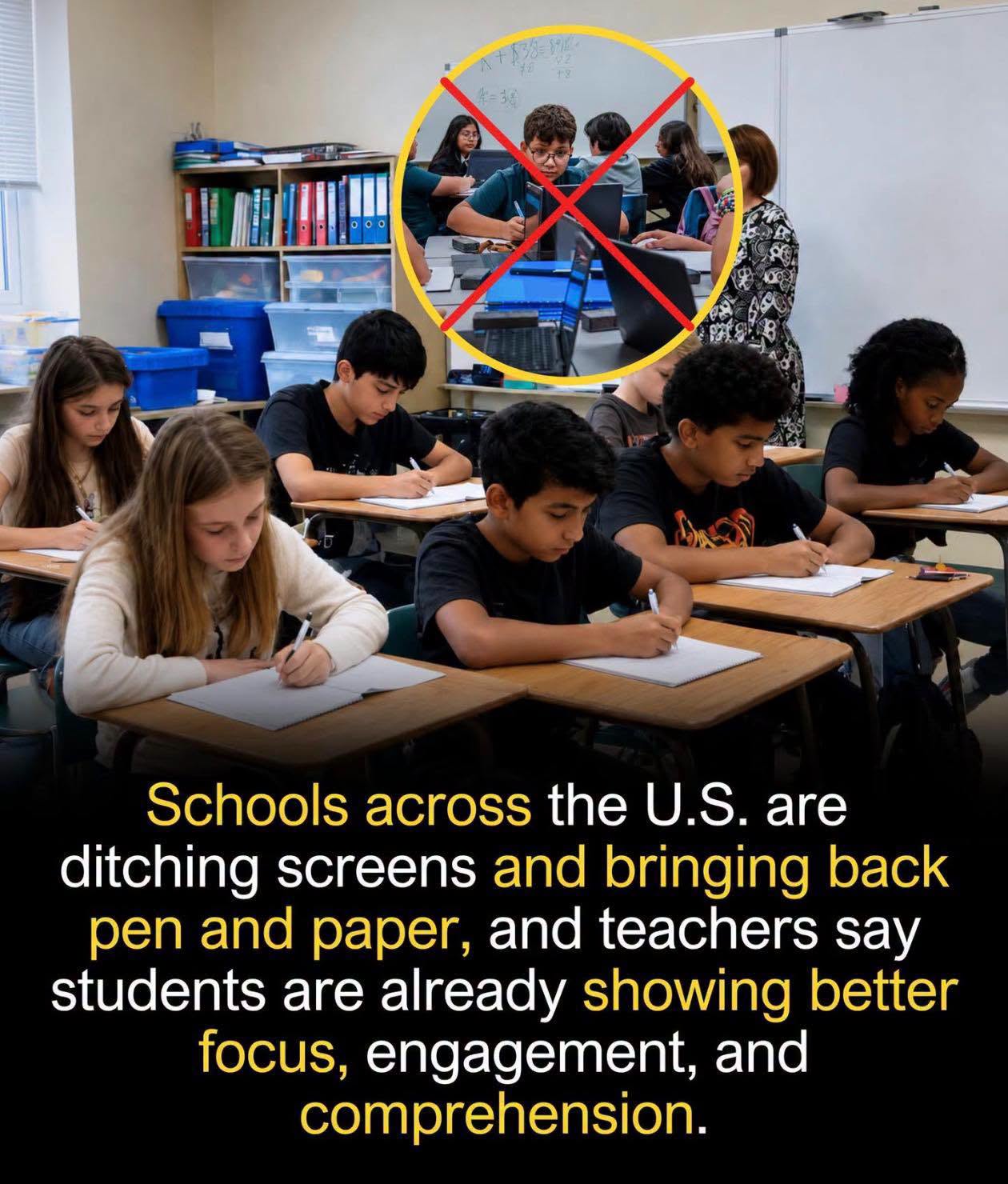
AMERICAN SCHOOLS RETHINK CLASSROOM TECHNOLOGY AS PENS AND PAPER MAKE A SURPRISING RETURN
After nearly two decades of aggressively integrating digital devices into primary and secondary education, school districts across the United States are raising a fundamental question: Are children actually learning better without constant exposure to screens? Following a prolonged shift toward digital-first instruction, a growing consensus among educators, parents, and cognitive researchers suggests that excessive classroom screen time may be hindering academic performance, attention spans, and foundational literacy skills.
In major metropolitan districts like Los Angeles, administrators have enacted strict regulations on daily device usage. Younger students in preschool through first grade now face complete bans on classroom screens, while time limits of twenty and thirty minutes per day have been established for second through fifth graders. Elsewhere, entire school systems are systematically phasing out personal laptops, reintroducing traditional printed textbooks, and replacing digital note-taking with mandatory handwriting assignments.

Teachers monitoring these transitions report marked improvements in student behavior and cognitive performance, including sharper classroom focus, significantly reduced digital distractions, enhanced retention of complex concepts, and higher levels of active peer participation. Neuroscience and educational psychology strongly support these practical observations. Scientific studies demonstrate that the physical act of writing by hand activates complex neural pathways related to motor control, visual recognition, and spatial processing. This tactile engagement requires students to synthesize and process information far more deeply than the passive exercise of typing on a keyboard.
While technology will undoubtedly remain a valuable component of modern education, the nationwide shift away from screen saturation reflects a practical reality. Educators are rediscovering that simple, low-tech tools often deliver superior educational outcomes.