Woman Questions Officer’s Uniform at 24-Hour Car Wash — Minutes Later, the Dispute Ends in Handcuffs
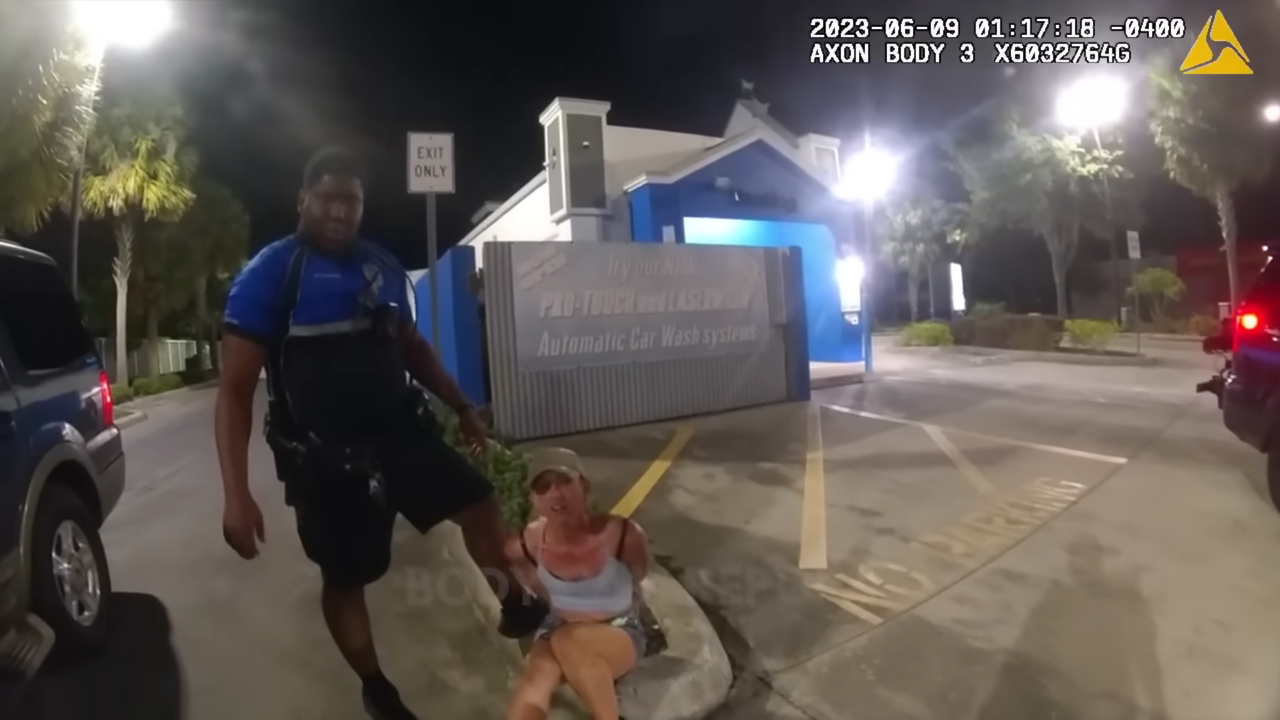
What began as a disagreement over whether a woman had to leave a 24-hour car wash was rapidly becoming something much more volatile.
By this point in the encounter, the business owner had already told police that he wanted the woman off the property. An officer had relayed that request, provided his name and badge number, and repeatedly told her she needed to leave.
But the woman’s concern was shifting.
She was no longer focused only on whether the owner had the right to ask her to go.
Now she was questioning whether the man giving her those orders was actually a police officer.
That doubt would become the defining issue of the next several minutes — and ultimately help push an already tense confrontation toward an arrest.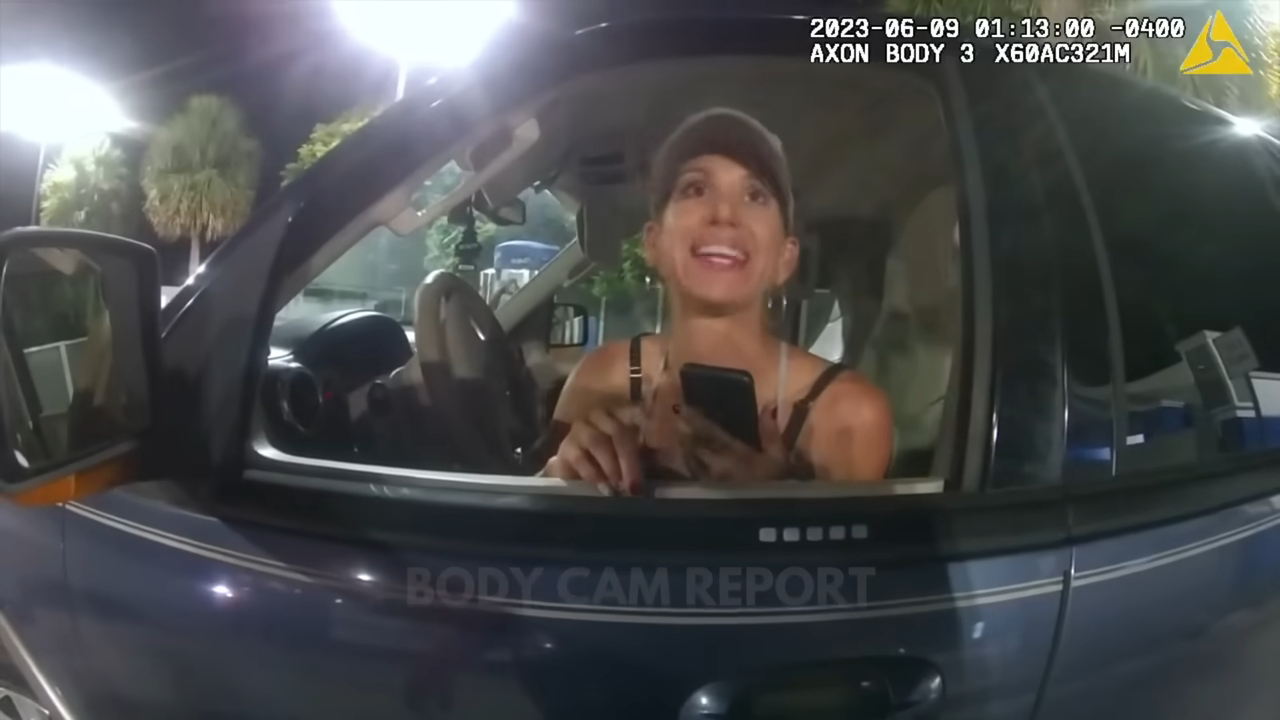
“I’ve Never Seen an Officer Wear That Uniform”
At approximately 6:17 into the footage, the woman began closely examining what she saw around her.
She questioned the officer’s vehicle and uniform.
“It’s not a police car,” she said during the exchange, before challenging the way the officer was dressed.
“I’ve never seen an officer wear that uniform.”
To her, the clothing appeared more like something worn by a security guard.
The officer rejected that suggestion.
“This is a police uniform, ma’am,” he told her, explaining that he was wearing a bike uniform.
But the explanation did little to settle the woman’s concerns.
Instead, she began describing the entire situation as “odd.”
She questioned why a business owner would be watching surveillance cameras closely enough to determine how long she had been at the car wash and then contact police because of it.
She once again returned to the same explanation she had given earlier: she had just purchased the vehicle, it was dirty, and there were numerous loose pieces she was trying to clean and organize.
The officer attempted to lower the temperature of the conversation.
“Can you dial it down for me?” he asked.
The woman was equally direct about her emotional state.
“I’m pissed.”
The officer then tried again to explain that the owner was entitled to watch the cameras because it was his business. According to the owner, she had been there since approximately 9:45.
The woman disputed that timeline as well.
What had originally been a relatively simple instruction — the owner wants you to leave — had now become tangled in several separate disagreements.
How long had she actually been there?
Why was the owner watching her?
Was the officer really a police officer?
And why should she have to leave a business that was open 24 hours?
She Says She Is Packing Up
Despite those arguments, the footage shows the woman indicating that she was preparing to go.
As the encounter continued, she complained that the officer’s presence made her appear as though she had committed some wrongdoing.
The officer responded that he had never said she had done anything wrong.
But he also made clear that whether she had recently purchased the vehicle or needed time to clean it was no longer relevant to the instruction from the property owner.
Eventually, the woman told the officer she would go somewhere else.
“You see me packing and leaving,” she said. “I’ll go to another car wash.”
Yet even while preparing to leave, she continued questioning the officer’s legitimacy.
She said she planned to speak with a friend and determine whether the officer was lying.
“I will make sure and find out if you are an officer or not a security person,” she told him.
The officer responded that she was free to investigate that question.
It was a critical moment.
The woman appeared to acknowledge that she needed to leave, but her distrust of the officer prevented the encounter from simply ending there.
Instead of driving away and challenging the matter afterward, she continued examining the situation around her.
That would soon produce an even stronger warning.
“You’re Pushing Me Real Hard to Take You to Jail”
At around 9:33, the confrontation intensified again.
The woman continued arguing that she was not refusing to leave.
She also focused on the police vehicle and said that examining its plate had increased her suspicion that something might not be legitimate.
The officer pointed out that the vehicle clearly displayed Sanford Police Department markings.
But the woman was not persuaded.
She then said she had filed — or intended to file — a complaint with Internal Affairs because she believed she was being treated improperly despite doing nothing wrong.
She again explained that she was taking care of a truck she had recently bought.
The officer’s response marked one of the clearest warnings in the entire encounter.
“Ma’am, you’re pushing me real hard to take you to jail tonight,” he said.
He immediately explained why.
“I asked you to leave multiple times.”
The woman continued insisting that she was communicating with her friend while also preparing to leave.
The officer repeated the instruction:
“You have to leave.”
At that point, the stakes were no longer ambiguous.
The officer had made clear that continued failure to leave could end with an arrest.
But the woman’s concern about identification still had not been resolved to her satisfaction.
And within seconds, that issue moved to the center of the encounter.
“I Want Your ID Badge”
At approximately 10:37, the argument reached its breaking point.
The woman demanded an identification badge.
“I want your ID badge.”
The officer again asked the question that had surfaced repeatedly throughout the encounter:
“Are you refusing to leave?”
Then came another warning.
“Ma’am, you’re going to force me to arrest you. You understand that?”
He reminded her that he had already explained the situation multiple times.
The officer again pointed to the marked police vehicle as evidence that he was with the Sanford Police Department.
The woman dismissed that as insufficient.
“Just because it’s a car doesn’t mean anything.”
She continued demanding an ID badge.
Seconds later, the verbal confrontation became physical.
As officers moved in, the woman reacted immediately.
“Don’t grab me,” she said as she continued demanding identification.
She asked how she could be trespassing and said she was following advice from a friend.
Then, as the officers attempted to restrain her, she made the statement that might have ended the dispute minutes earlier.
“I will leave.”
But by then, according to the officer, that option had passed.
“It’s already too late.”
She was told to stop resisting as the officers continued taking her into custody.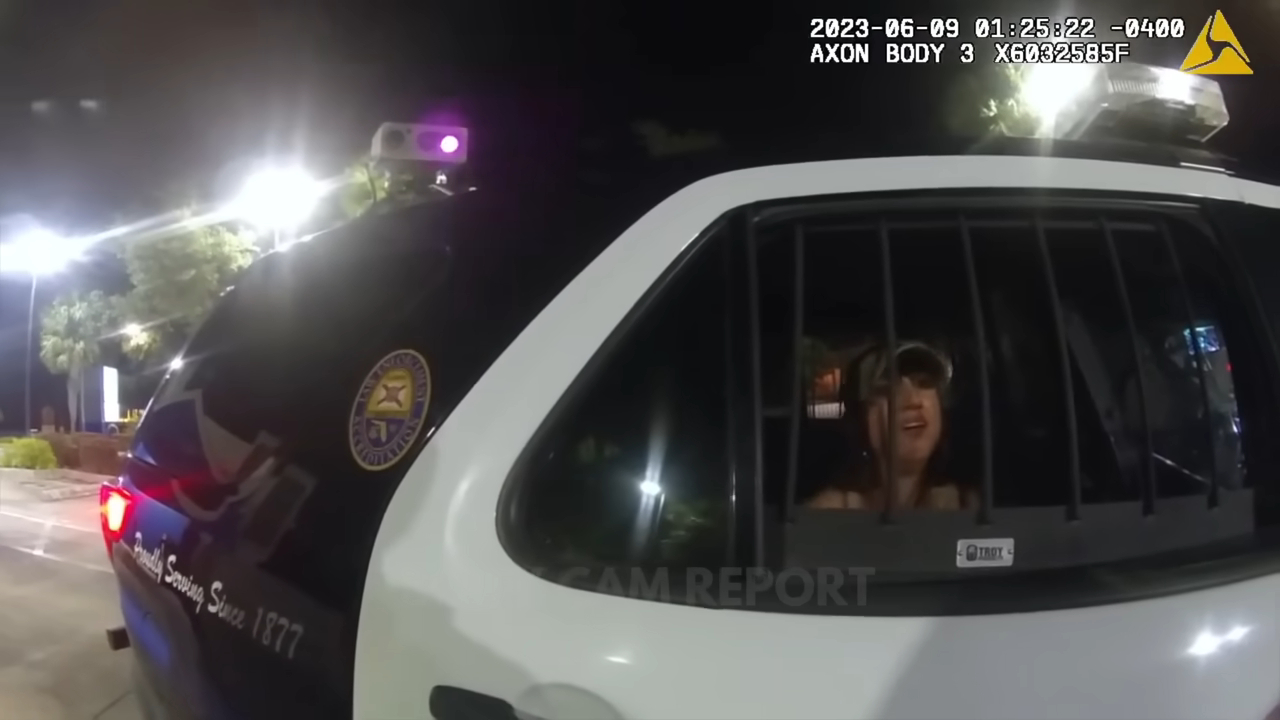
A Dispute That Changed in Minutes
The sequence shows how dramatically the encounter had evolved.
Initially, the dispute centered on a private business owner asking a customer to leave his property.
The woman believed the request made little sense because the car wash operated 24 hours and she said she was legitimately using the facility to clean a newly purchased vehicle.
But once she began doubting the officer’s identity, the confrontation took on an entirely different character.
She questioned his uniform.
She questioned the vehicle.
She compared his appearance to a security guard.
She demanded an identification badge.
And even after being warned that she was close to being arrested, she continued insisting that the visible police markings were not enough to convince her.
By the time she said, “I will leave,” officers had already begun taking her into custody.
But the arrest did not end the argument over who the officers were.
In fact, once she was restrained, that concern would become even more intense.
She would repeatedly demand another officer, ask to call 911 herself to verify the people detaining her, and insist that anyone could wear a uniform.
The disagreement over a car wash was about to become a prolonged confrontation over trust, authority and identification.