Mom Gives Birth to 2 Lb. Micropreemie. 5 Months Later, He Finally Returns Home from the NICU
When Kim Montgomery gave birth to her son Shane nearly four months early, she had no idea he’d be spending the next five months in the hospital.
The Clarksville, Md.-based mom, 35, was ecstatic to learn that she and her husband Josh Montgomery were pregnant again. Kim, who also shares son Xander with Josh, 43, tells PEOPLE that the pregnancy “felt normal” until about three weeks later, when she started experiencing some spotting.
Worried, Kim went to see her doctor. They performed bloodwork and an ultrasound, but while they were able to rule out an ectopic pregnancy, doctors weren’t able to determine where the bleeding was coming from. They asked her to come back for routine ultrasounds so they could keep a close eye on her pregnancy, but eventually she stopped spotting and doctors were never able to fully determine what happened.
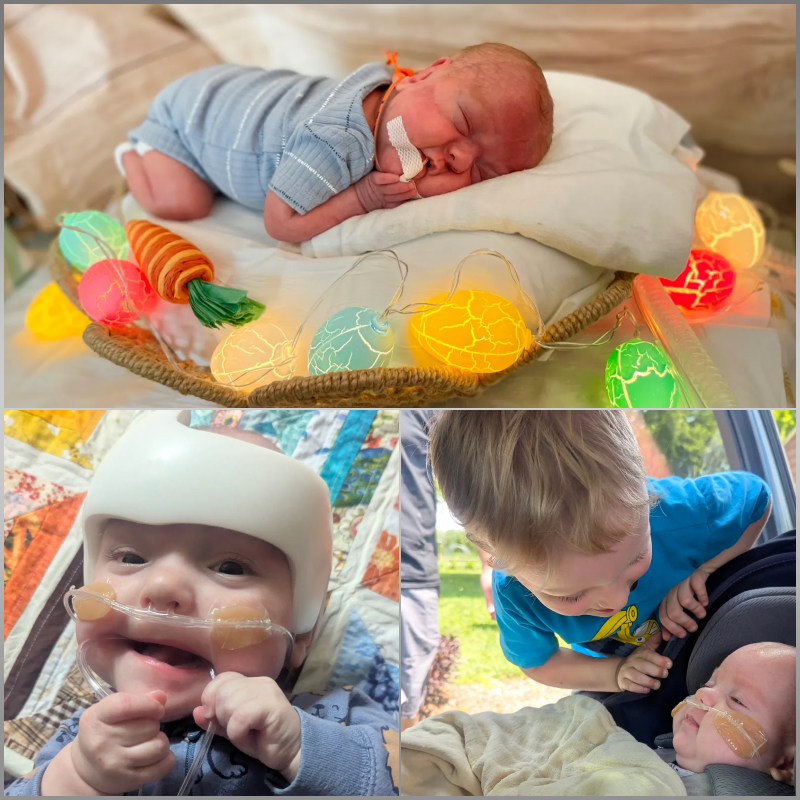
Baby Shane, born at just 2 lb.Courtesy of Kim and Josh Montgomery
Then, on Jan. 14, 2025, Kim went to see her doctor because she was spotting again. But when she went into the appointment, nothing could have prepared her for what she heard.
“I was four centimeters dilated and was about to be admitted to the county hospital for pre-term labor,” Kim says. “I was 21 weeks, 3 days pregnant at this time, still not feeling any aches, pains or discomfort.”
Once she was admitted to the hospital, she listened to what her options were. She recalls that “emotions were high” and all she could think about was that her healthy baby might lose his life because she was unable to carry the pregnancy to full-term.
Never miss a story — sign up for PEOPLE’s free daily newsletter to stay up-to-date on the best of what PEOPLE has to offer, from celebrity news to compelling human interest stories.
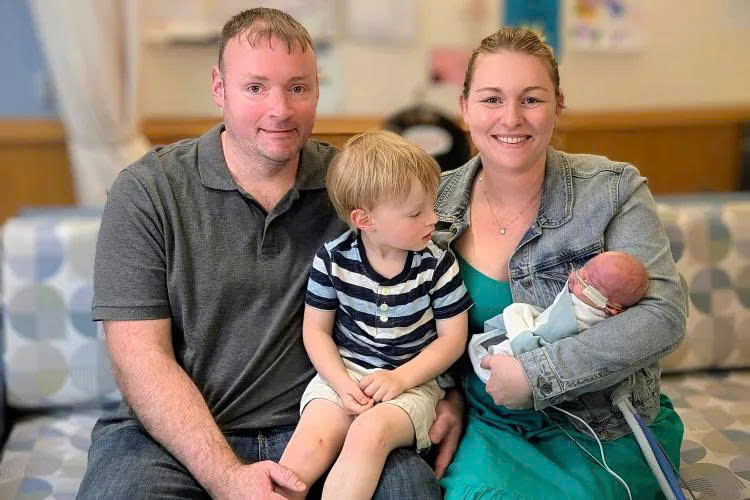
Baby Shane Montgomery in the hospital.Courtesy of Kim and Josh Montgomery
Doctors suggested a cervical cerclage, which is a procedure where the cervix is sewn closed during pregnancy to prevent preterm labor or pregnancy loss, but there was no guarantee that the stitches would hold. They were also given the option to deliver at the county hospital, but unfortunately they were not equipped with the level of neonatal intensive care unit (NICU) Kim’s baby would need after he was born.
“On [January] 15th, we found out from a godsend of a nurse who was not ours, but who had heard of our situation, that University of Maryland Medical Center in Baltimore (UMMC) intervenes at 22 weeks,” Kim says. “At that point, we knew our next step was to request a transfer.”
Although they had decided on getting the cerclage, Kim and Josh wanted to hear UMMC’s opinion. She was transferred to the hospital the next day and immediately admitted to labor and delivery.
“We felt calmer and at peace having arrived at UMMC knowing they were equipped and familiar with handling our set of circumstances, all the while knowing in the back of our minds that Kim still needed to make it to Saturday to reach the 22-week 0-day threshold for interventions,” the couple explains.
Shane Montgomery (right) and his big brother.Courtesy of Kim and Josh Montgomery
When Saturday finally arrived, Kim and Josh signed consent forms and met with their teams to ensure the best plan forward for delivery.
“It was overwhelming and emotional, and trying to make the next best decision for your child and your family in that set of stressful circumstances was hard, to put it mildly,” they say.
Kim always wanted to deliver vaginally, especially since she’d had a C-section with her first baby and experienced a rough recovery process. When she learned that her second baby would be coming early, the family had to reevaluate to determine the best course of delivery for her.
“The medical staff did not pressure us in any way, but informed us of the risks in everything, as they should do,” they say. “They were meant to discuss the very real and likely possible outcomes of our child, many of which we wouldn’t see the immediate result of, even if he were to survive.”
Baby Shane Montgomery smiles.Courtesy of Kim and Josh Montgomery
Doctors told Kim and Josh that their baby was at risk for death, respiratory distress and failure, feeding failure and infection, among other complications. After they’d been privy to many of these conversations, Kim decided that she’d still like to pursue a vaginal delivery if possible.
“Resuscitating a baby at 22 weeks is one of the most difficult decisions we face in neonatology,” Dr. Dina El-Metwally, chief of neonatology at the University of Maryland Golisano Children’s Hospital and the Mary G. Covey Endowed professor of pediatrics at the University of Maryland School of Medicine, says.
“At the NICU at UMMC, we began resuscitating infants at 22 weeks’ gestation in late 2023. We are balancing two factors of profound importance, the value of a child’s life and the quality of the life we hope that child can have,” Dr. El-Metwally continues. “[Kim’s baby] reminds us why, with the right expertise, resources and partnership with families, it is possible to offer hope at the very edge of viability.”
On Jan. 18 at 4 a.m., Kim woke up with some mild cramping. By 4:30 a.m., she was in active labor. She says that the “emotional and mental toll” she was undergoing was unlike anything she’d ever experienced.
“I was incredibly scared and uncertain of the unknown but also determined to get Shane out so he could have a shot,” Kim says of her baby. “Things had already quickly been slipping from my control just in the past few days, [so] there wasn’t much I could do, but I could get him out. I had to.”
Baby Shane with his big brother.Courtesy of Kim and Josh Montgomery
Luckily, Kim was able to deliver her son successfully. Once her son, whom she named Shane, was out, doctors used the smallest tube they had available to stabilize him and take him directly to the NICU. Later, she found out that Shane was the youngest gestational age neonate born at UMMC.
“Shane wasn’t just born at 22 weeks, he was born at exactly 22 weeks, when every additional day of development matters,” Dr. El-Metwally says. “He was extraordinarily tiny and vulnerable, but he was a fighter from the very beginning. And so were his parents, Kim and Josh. His remarkable progress reflects Shane’s resilience, his family’s strength and the dedication of the team that cared for him.”
Related Stories
Wisconsin Baby Deemed a ‘Real-Life Miracle’ Finally Leaves the NICU After Spending 375 Days in the Hospital
Mom Unexpectedly Welcomes Baby Weighing Less Than 2 Lbs. After Experiencing 11 Miscarriages (Exclusive)
Shane was born weighing 1 lb., 2.2 oz. and was considered a micropreemie. Kim remembers meeting her son for the first time and leaning on “God for strength, wisdom and trust in the medical team” as he was wheeled away.
“As we looked at him for the little time we could before they rushed him off to the NICU, we didn’t know if we would see him alive again,” she says. “The image of him being just born stays with me daily.”
Shane Montgomery.Courtesy of Kim and Josh Montgomery
Shane ended up spending the next almost five months in the NICU. He had to hit several milestones and grow stronger before he could leave.
“One of the largest hurdles in the beginning was waiting for his PDA (patent ductus arteriosus) to close,” Kim says. “In a full-term baby, this vessel typically closes within a few days after birth, but for pre-term babies, we learned that it can take a lot longer.”
They also had to wait for Shane to transition from the jet ventilator to the CPAP, and then eventually to a high-flow nasal cannula. He also received weekly eye exams to make sure his blood vessels were growing in the right direction and to prevent retinal detachment. In total, Shane spent 144 days in the NICU.
When they were finally able to take Shane home, the couple says it was both “exciting and scary” at the same time.
“He came home on 1 liter of oxygen, a monitor to measure his heart rate and oxygen saturations and his g-tube and pump,” they say. “We had six months to learn as much as possible and to prepare ourselves for this day, but nothing quite prepared us for the day when all the in-person support in the form of nurses and therapists disappears.”
“Sleepless nights and long days were the new norm for us, it seemed, until he began to wean his oxygen at home and eventually drop it completely,” they add.
Our new app is here! Free, fun and full of exclusives. Scan to download now!
This past January, Shane turned 1. He still returns to the hospital regularly and sees his neurologist every six months. Shane will see the cardiologist again at age 3. He graduated from his outpatient program in March. Thankfully, he has no signs of any medical needs or problems.
Kim and Josh say Shane is also walking and running everywhere to try and keep up with his big brother.
“He knows how to say ‘Dada,’ ‘mama,’ ‘up,’ ‘snack,’ and ‘night-night,’ ” they say, “And recently started waving and saying ‘hi.’ He is an extremely happy baby and seems to find joy in each day.”
“One of the many incredible gifts we’ve been able to witness is watching Shane and his older brother play and interact,” they continue. “They are inseparable, and we see how those interactions have significantly played a role in helping Shane surpass so many milestones.”