A Drone Flew Over an Empty Oregon Beach—Then Rescuers Spotted Three Letters Made From Sticks
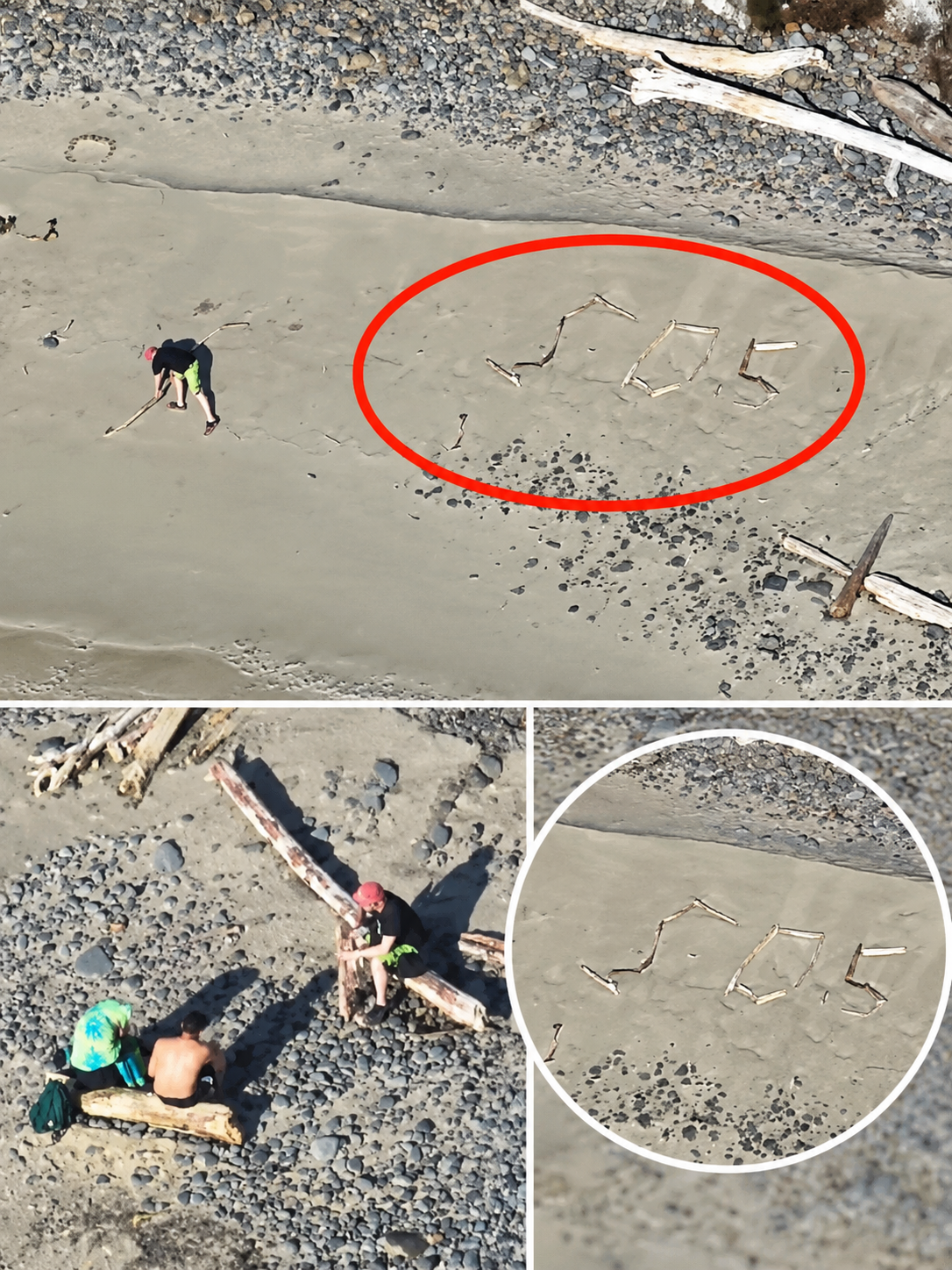
From the air, the secluded stretch of Oregon coastline looked almost empty.
Then rescuers saw three letters arranged across the sand.
SOS.
The crude distress signal, made from pieces of driftwood, had been assembled by three tourists who were stranded on Lost Boy Beach after rising ocean water cut off the route they had used to get there.
What began as a trip to capture a dramatic photograph had turned into a five-hour ordeal on one of the more difficult-to-reach sections of the northern Oregon coast.
With no normal cellular service, cold conditions setting in and the amount of dry land steadily shrinking, the group had few options left.
Fortunately, one of them still had access to a satellite emergency connection.
That call — combined with the simple SOS visible from above — ultimately helped rescuers find them before conditions became even more dangerous.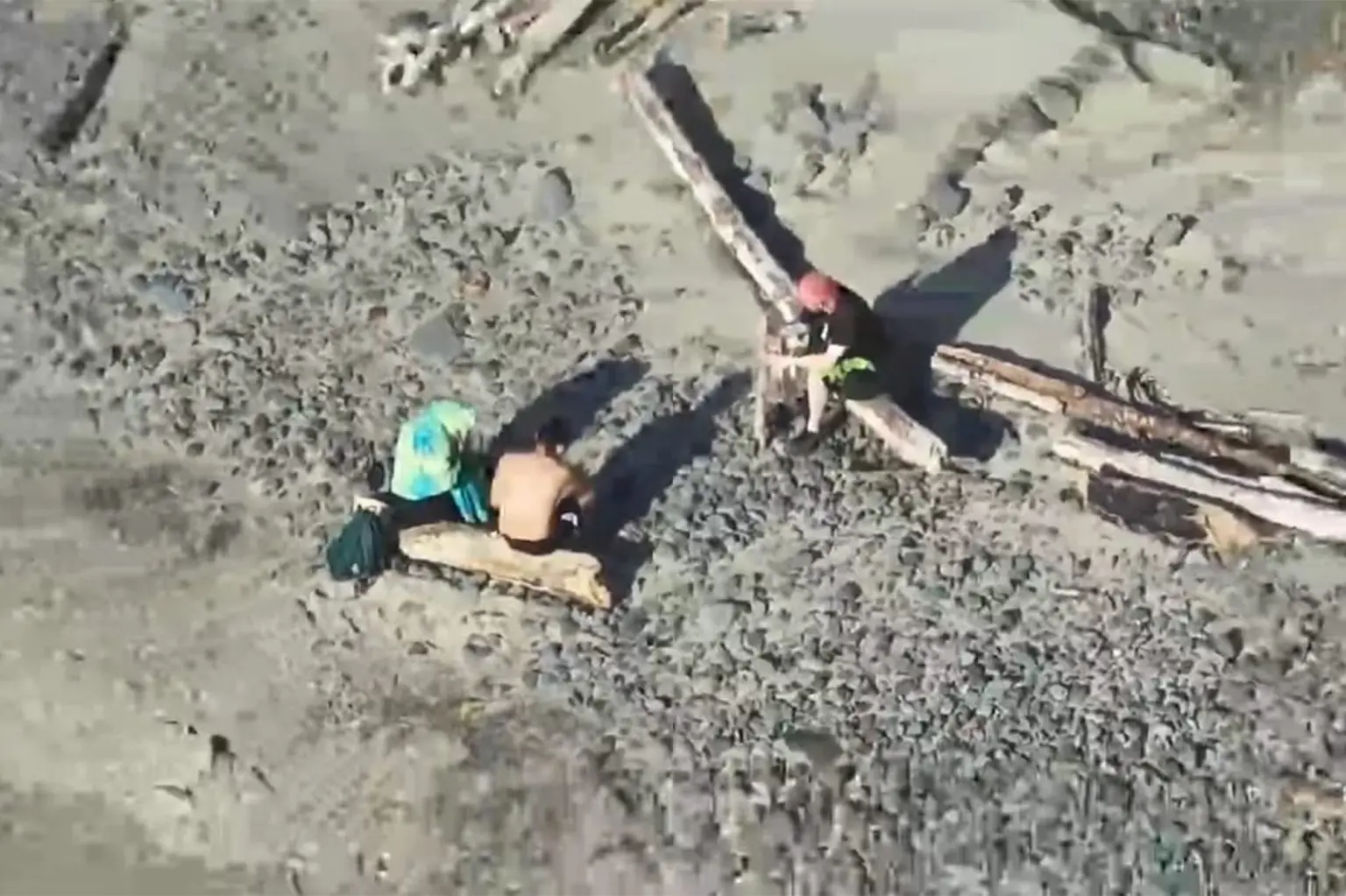
A Trip to a Beach That Is Difficult to Reach
The incident unfolded on September 16 near Oceanside in Tillamook County.
Lost Boy Beach is not the kind of place visitors can simply reach by walking down a paved trail.
Access involves navigating rough terrain near Tunnel Beach, scrambling across rocky areas and passing through or around a sea-cave section that is heavily affected by the tide.
Fire Chief Jeff McBrayer said the three visitors — two men and a woman in their mid-20s — had gone to the area hoping to get what he described as a dramatic photo.
They succeeded in reaching the secluded cove.
Getting back out was another matter.
The problem was timing.
Lost Boy Beach can become effectively sealed off when the ocean rises. The same rocks and passageways that can be crossed at low tide can quickly become covered by surf.
According to local officials, there can be only a very short window around low tide when the area can be accessed without wading through water.
The visitors apparently did not realize how quickly that window would disappear.
The Route Back Vanished
Once the tide began coming in, the group discovered that the path they had used was no longer safely passable.
That answers the most obvious question surrounding their ordeal: if they had walked into Lost Boy Beach, why couldn’t they simply walk back the same way?
Because the ocean had changed the route.
Water moved into the rocky access area, waves became more powerful and the safe portions of shoreline became narrower.
Trying to retrace their path without proper equipment could have exposed them to dangerous surf, slippery rock and powerful waves.
Instead, the group stayed on what remained of the dry beach.
Officials said they became stranded for roughly five hours.
As time passed, another problem emerged.
They were getting cold.
The combination of wind, seawater and dropping body temperature meant rescuers were concerned about the possibility of hypothermia if the group remained trapped much longer.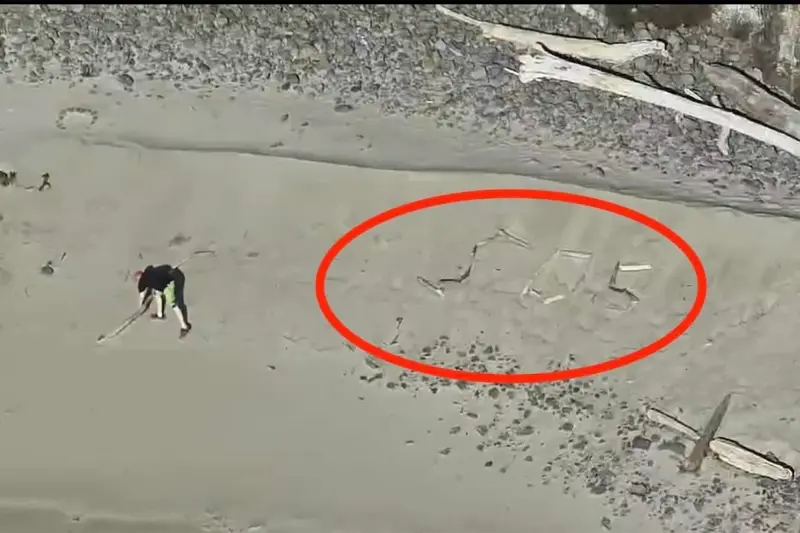
No Cell Signal — But One Emergency Connection
Lost Boy Beach’s isolation created another serious complication.
Normal cellphone service was not available.
Around 3:44 p.m., however, emergency dispatchers received a report that three people were stranded on the beach.
One member of the group had managed to reach 911 using a satellite-capable device.
That technological lifeline gave rescuers their first opportunity to respond.
But even with the emergency call, finding and reaching the group was not simple.
The Netarts-Oceanside Rural Fire Protection District sent resources toward the remote section of coastline.
A drone was deployed to survey the area from above.
What it saw became one of the most memorable images of the rescue.
On the remaining strip of beach, the tourists had taken pieces of driftwood and arranged them into three enormous letters:
SOS.
The message was unmistakable.
Three Letters in the Sand
For generations, SOS has been associated with emergencies at sea and in isolated locations.
At Lost Boy Beach, the signal was remarkably simple.
There were no electronic screens, flashing lights or elaborate equipment involved — just wood gathered from the beach and placed where someone in the air might see it.
It worked.
Drone footage allowed rescuers to visually locate the stranded visitors and assess where they were as the tide continued to affect the shoreline.
The image of the three letters also captured how isolated the group had become.
Around them were cliffs, rock formations and ocean water.
Behind them, the route they had used to enter the cove was no longer safely accessible.
Ahead of them was the Pacific.
The tourists had been reduced to waiting on the remaining dry ground and making themselves as visible as possible.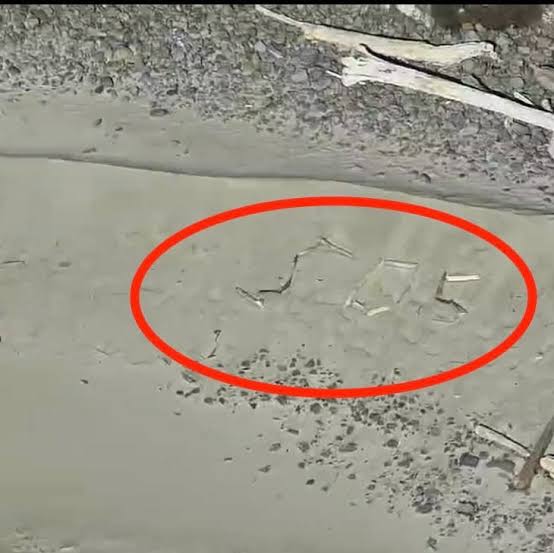
Rescuers Had to Enter the Same Dangerous Conditions
Locating the group was only the first part of the operation.
Firefighters still had to physically reach them.
Three rescue swimmers were sent toward the beach carrying ropes and personal flotation devices.
According to Chief McBrayer, crews moved along the shrinking shoreline while dealing with large waves and rough water.
At some points, rescuers had to wade through the surf to make progress.
When they reached the stranded visitors, the tourists were cold and soaked.
Rescuers fitted them with life jackets before guiding them back through the dangerous water.
Once they passed the flooded section and reached safer ground, the group was able to continue out of the cove on foot.
All three survived.
Officials said they suffered only bumps, scratches and minor bruising, with no serious injuries reported.
A Five-Hour Photo Trip Turned Into a Rescue
The outcome could easily have been different.
A changing tide can transform sections of the Oregon coast far faster than an unfamiliar visitor may expect.
The group entered Lost Boy Beach when the terrain was passable.
By the time they were ready to leave, the geography had effectively changed.
A rocky pathway had become a water obstacle.
A secluded photo location had become a trap.
And a simple excursion had turned into a rescue involving emergency dispatchers, firefighters, rescue swimmers, a drone and satellite communications.
Chief McBrayer later urged visitors to check tide information before venturing into remote areas of the coastline.
He emphasized that people should either consult local knowledge or use a tide application before entering locations where access depends on ocean conditions.
His warning included an important reality: even when someone manages to call for help, rescuers may not always be able to reach them safely.
The SOS That Rescuers Could See
In the end, several things went right.
One tourist had a device capable of connecting to emergency services by satellite.
The fire district had a drone that could search the isolated beach from above.
Rescue swimmers were able to negotiate the surf.
And the tourists had done something extraordinarily basic.
They gathered sticks.
They arranged them on the sand.
And they spelled three letters large enough to be seen from the sky.
Hours earlier, the three visitors had descended toward Lost Boy Beach hoping to capture an unforgettable photograph.
Instead, the image that would come to define their trip was something very different:
A nearly empty beach, surrounded by an unforgiving coastline, with three stranded figures standing beside a handmade message in the sand.
SOS.