“HELP! I’M LOST!” — 70-YEAR-OLD HIKER SURVIVES 11 DAYS ALONE IN THE WILDERNESS AFTER SHOUTING FOR HELP THOUSANDS OF TIMES
“HELP! I’M LOST!” — 70-YEAR-OLD HIKER SURVIVES 11 DAYS ALONE IN THE WILDERNESS AFTER SHOUTING FOR HELP THOUSANDS OF TIMES
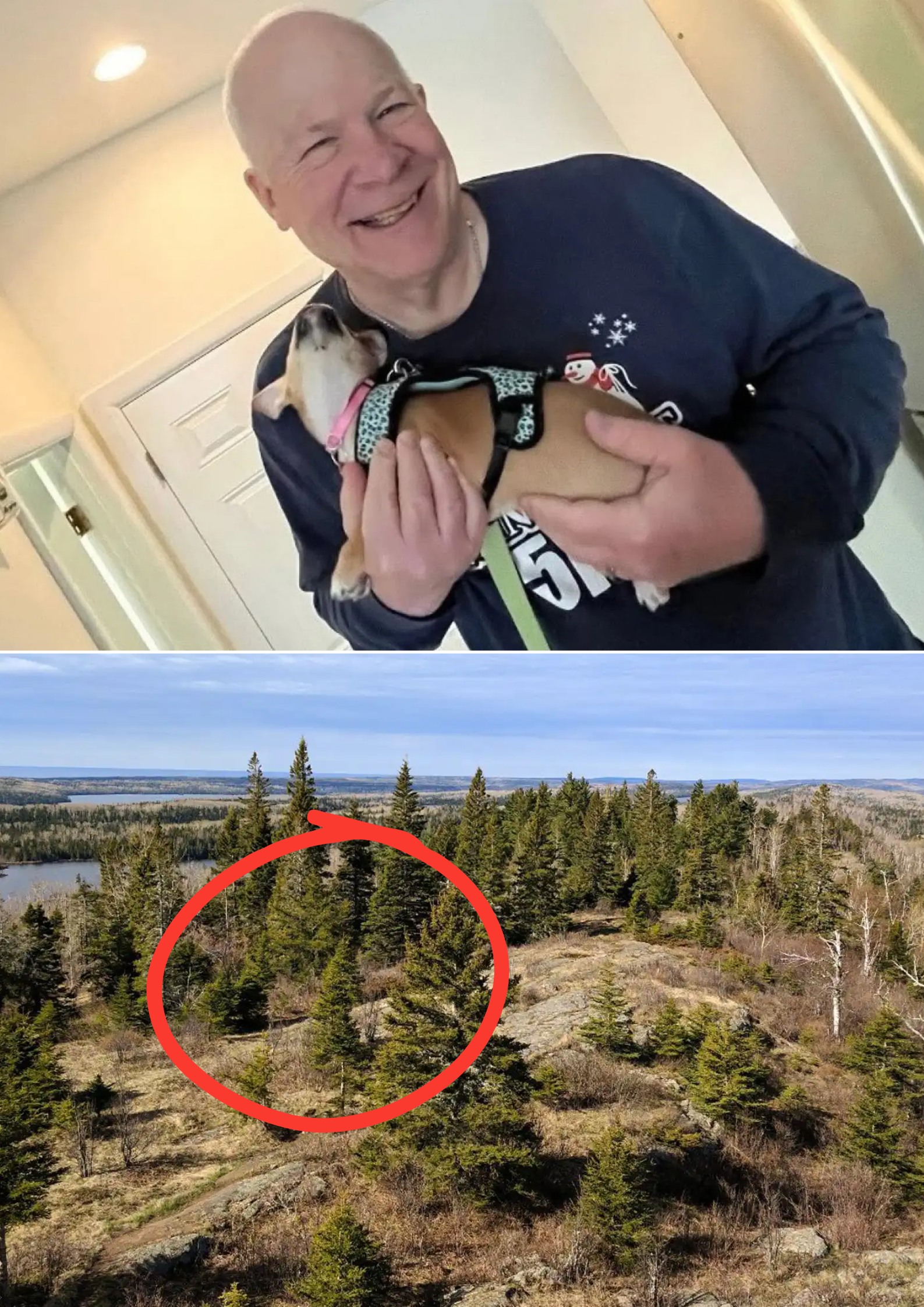
ISLE ROYALE, MICHIGAN — For 11 terrifying days, 70-year-old Craig Berg was alone in the remote wilderness of Michigan’s Isle Royale National Park, with no phone, dwindling food and no way to tell his family where he was.
He survived by rationing freeze-dried meals, collecting and treating water from ponds and wetlands, building makeshift ways to dry himself and even creating a homemade radio antenna.
But throughout those days, he kept doing one thing again and again.
He shouted:
“Help! I’m lost!”
Berg later estimated that he had screamed those words around 10,000 times.
On the 11th day, two kayakers finally heard him.
:max_bytes(150000):strip_icc():focal(749x0:751x2):format(webp)/craig-berg-1-092226-f9dbf292562446ccb9b4cba0ea3b0339.jpg) A SOLO HIKING TRIP TAKES A TERRIFYING TURN
A SOLO HIKING TRIP TAKES A TERRIFYING TURN
Berg, a retired engineer from Royal Oak, Michigan, arrived at Isle Royale National Park on August 27, 2026, planning a week-long solo hiking trip.
He was an experienced hiker and had spent months preparing for the adventure.
He had planned to return home on September 5 and was looking forward to running a 5K with his son, Evan, shortly afterward.
For the first few days, everything went according to plan.
Then, on the fourth day, Berg accidentally left the trail and entered a swamp near Chickenbone Lake.
The ground became extremely difficult to cross.
Berg described the mud as being “like quicksand.”
At one point, he fell into the wetland, soaking his clothing, sleeping gear and food.
His boots came off but he managed to retrieve them.
His phone, however, disappeared into the swamp.
That single loss dramatically changed the situation.
 HE COULD NO LONGER CALL FOR HELP
Without his phone, Berg lost access to his digital maps and his main way of communicating with the outside world.
He spent approximately seven hours trying to find his way back to the trail.
As darkness approached, he realized continuing to walk could make his situation even more dangerous.
He eventually found a small elevated patch of ground surrounded by three trees.
There was not enough space to pitch his tent.
So he spent the night outside in his wet sleeping bag, shivering in the cold.
The following morning, he continued searching for a way out.
At one point, he even walked barefoot because his boots were still wet.
He eventually found a place where he could put up his bright-orange tent.
He flattened nearby vegetation in the hope that rescuers searching from above might be able to see him.
FOOD STARTED RUNNING OUT
As the days passed, Berg realized that conserving energy was critical.
His supply of freeze-dried food was limited.
Eventually, he was eating roughly every other day.
His camp-stove fuel also ran out.
Water became his biggest concern.
Berg collected water from ponds and wetlands and treated it with chlorine tablets before drinking it.
He even dug into a bog until brown water collected, then treated the water and drank it because he had few other options.
He later described some of the water as “the most disgusting water that you could imagine.”
Despite the conditions, Berg continued trying to stay organized.
He kept a small journal and recorded what happened each day.
He labeled the entries “LOST” along with his full name.
Part of the journal was written in case he did not survive and his family eventually needed to understand what had happened.
HE EVEN BUILT A MAKESHIFT RADIO ANTENNA
Berg’s engineering background also helped him improvise.
He had brought an old MP3 player on the trip.
Using wires connected to headphones, he fashioned a makeshift radio antenna.
To his surprise, he managed to pick up a radio station broadcasting from Thunder Bay, Ontario.
Hearing another human voice gave him a small connection to the outside world.
He listened to weather reports and continued documenting his situation.
Meanwhile, back home, his wife Debbie was becoming increasingly frightened.
Berg had been expected to return, but he never arrived.
His family eventually reported him missing, triggering a large-scale search operation.
A MASSIVE SEARCH WAS UNDERWAY
Search teams covered the difficult terrain of Isle Royale, including dense forests, rocky shorelines, wetlands and inland lakes.
Michigan State Police, the National Park Service, search dogs, aircraft, boats and other agencies participated in the operation.
The remote island has extremely limited infrastructure and unreliable cellular coverage, making the search especially difficult.
While rescuers searched the island, Berg had no idea how extensive the operation had become.
He only knew that he needed to make himself heard.
So he kept shouting.
Again and again.
“Help! I’m lost!”
THEN, ON DAY 11, SOMEONE HEARD HIM
On the morning of his 11th day lost, Berg heard sounds coming from a nearby lake.
He moved toward an area where he could see the water.
Then he spotted something in the distance.
Two people were kayaking.
At first, he wasn’t sure whether they were actually people.
Then he realized they were.
Berg began shouting.
“Help! I’m lost!”
The kayakers heard him.
They eventually reached him and contacted officials involved in the search.
The two men were reportedly veterans of the Michigan National Guard and had been kayaking when they unexpectedly encountered Berg.
What had been an 11-day search was suddenly over.
A COAST GUARD HELICOPTER RUSHED TO THE SCENE
Because of the remote location, a U.S. Coast Guard helicopter was sent to evacuate Berg.
An MH-60 Jayhawk crew from Coast Guard Air Station Traverse City reached the area and hoisted him aboard.
He was transported to Marquette Regional Airport before being taken to a local hospital.
Authorities said Berg was found injured and hypothermic.
He was also suffering from dehydration, but his condition was stable enough for doctors to evaluate him and eventually release him.
HIS FAMILY FINALLY HEARD THE WORDS THEY HAD BEEN WAITING FOR
When the National Park Service contacted Debbie with the news, she finally learned that her husband was alive.
She immediately contacted the rest of the family.
Their son Evan later recalled the moment he received the message.
He shouted:
“He’s alive!”
He then went to the hospital to see his father.
The reunion was emotional.
Berg said he cried repeatedly after seeing his family and learning about the enormous effort that had gone into finding him.
He also praised his wife for pushing authorities to continue the search.
“MENTALLY, I’M STILL PROCESSING”
Although Berg survived, the experience has clearly stayed with him.
Speaking after returning home, he said he was physically recovering but still dealing with the emotional impact of spending 11 days alone in the wilderness.
“Physically, I’m okay. Mentally, I’m still processing. Emotionally, I’m getting there, but I have a ways to go still,” he said.
His family has also urged him to stay closer to home for now — although Berg has joked about the experience.
And despite everything that happened, he says he does not intend to give up hiking altogether.
There is just one major change he would make.
Next time, he would probably go with someone.
ELEVEN DAYS THAT ENDED WITH A SINGLE SHOUT
Craig Berg left Michigan for what was supposed to be a week of peaceful solo hiking.
Instead, a wrong turn into a swamp cost him his phone and left him stranded in one of America’s most remote national parks.
For 11 days, he rationed food, searched for drinkable water, endured cold nights and tried every possible way to attract attention.
And he kept shouting the same three words.
“Help! I’m lost!”
He estimates he said them approximately 10,000 times.
It took just two kayakers hearing that cry to finally change everything.
After 11 days alone, Craig Berg was going home.