“HELP! I’M LOST!” — 70-YEAR-OLD HIKER SURVIVES 11 DAYS ALONE IN THE WILDERNESS AFTER SHOUTING FOR HELP 10,000 TIMES
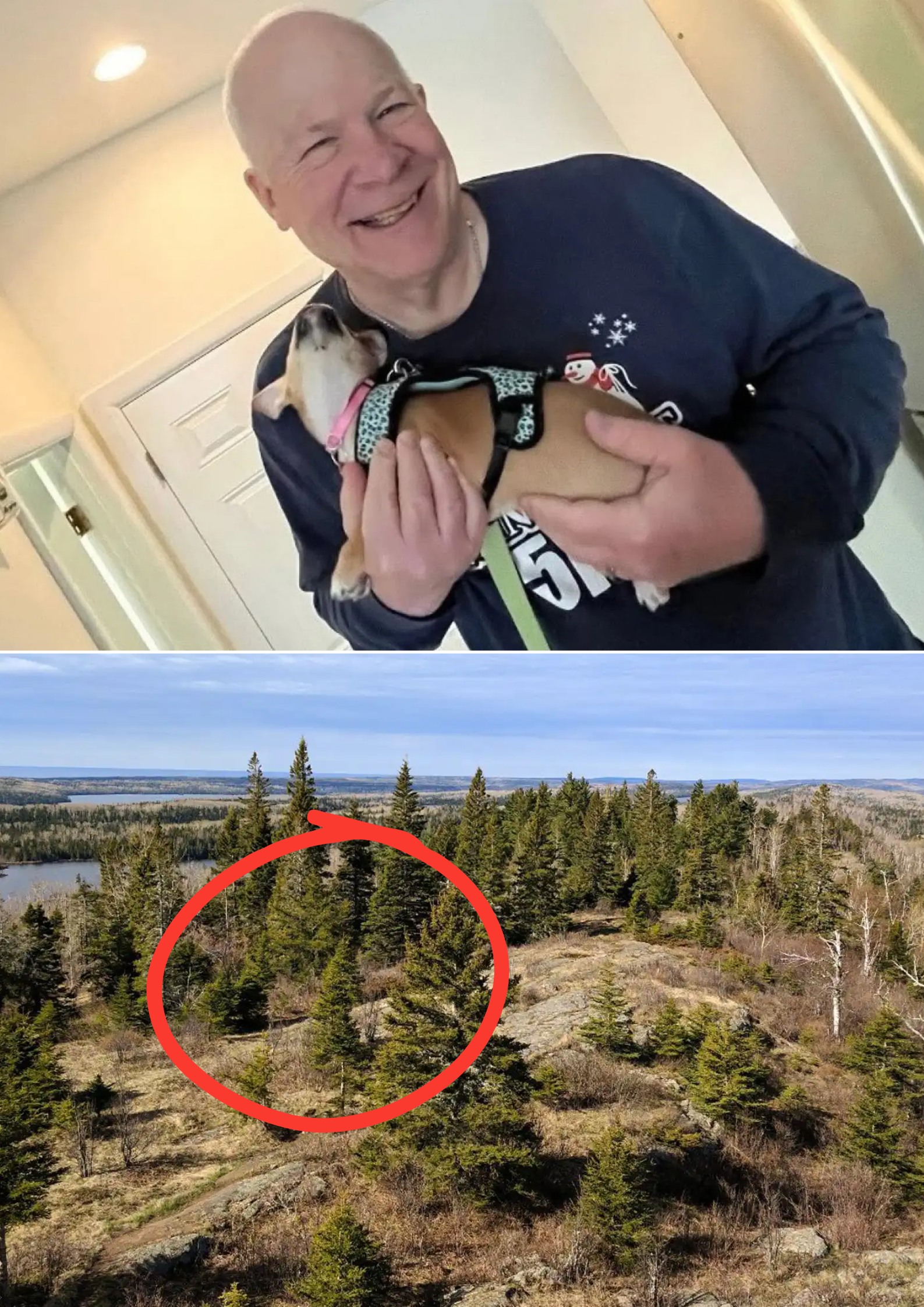
“HELP! I’M LOST!” — 70-YEAR-OLD HIKER SURVIVES 11 DAYS ALONE IN THE WILDERNESS AFTER SHOUTING FOR HELP 10,000 TIMES
ROYAL OAK, MICHIGAN — A 70-year-old hiker who became lost deep inside a remote national park survived for 11 days by rationing his food, treating water from ponds and wetlands, and repeatedly shouting the same desperate words into the wilderness: “Help! I’m lost!”
Craig Berg, of Royal Oak, Michigan, was eventually rescued alive from Isle Royale National Park in Lake Superior after two kayakers heard his cries on September 12.
Berg later estimated that he may have shouted for help around 10,000 times during the ordeal.
After returning home, he said he is physically recovering but is still processing what happened to him.
 A SOLO HIKING TRIP TAKES A TERRIFYING TURN
Berg arrived at Isle Royale in late August for what was supposed to be a roughly week-long solo hiking trip.
He had spent months preparing for the journey. The retired engineer had previously completed another solo trek and believed he was ready for the rugged terrain of the remote Lake Superior island.
His first few days went according to plan.
But on the fourth day, near Chickenbone Lake, Berg said he followed what he believed was a trail and ended up in a swamp.
The ground became so unstable that he described it as being like quicksand.
He fell into the wet terrain, soaking his clothes, backpack and food. His boots came off, although he managed to recover them.
His phone was not so lucky.
It disappeared into the swamp, leaving Berg without the device he had been relying on for navigation and communication.
 HE SPENT HOURS SEARCHING FOR A WAY OUT
Berg said he spent roughly seven hours trying to find the trail again.
As darkness approached, he realized he could no longer continue safely.
He eventually found a small patch of higher ground beneath three trees. The area was too small for his tent, so he spent the night outside in his sleeping bag, still wet and shivering.
The following morning, with his boots still wet, he began walking barefoot.
Eventually, he found a location where he could put up his bright-orange tent. He also flattened vegetation around the campsite in the hope that rescuers searching from the air might be able to see him.
But the wilderness around him was enormous, and help did not come quickly.
Berg later said that he understood he had to conserve as much energy as possible.
FOOD BEGAN TO RUN OUT
As the days passed, Berg’s supply of freeze-dried meals became increasingly limited.
He began eating approximately every other day.
Eventually, he also ran out of fuel for his camping stove.
Water became his biggest concern.
Berg collected water from ponds and wetlands and treated it with chlorine tablets before drinking it. At one point, he drank from a small pond that appeared to have been used by moose.
He also created makeshift rock basins to collect rainwater running from his tent.
The water was far from ideal, but Berg knew he needed it to survive.
HE KEPT A JOURNAL IN CASE HE DIDN’T SURVIVE
Throughout the ordeal, Berg kept a small pocket journal.
He marked his entries with the word “LOST” and continued writing about what was happening around him.
The journal became a way of documenting his situation in case he never made it home.
He also tried to find information about the outside world.
Using wires from headphones and an old MP3 player, Berg managed to create a makeshift radio antenna. He was eventually able to pick up a radio station broadcasting from Thunder Bay, Ontario.
Hearing another human voice gave him some comfort.
He also listened to weather reports, trying to understand what conditions might be coming next.
THE SEARCH WAS UNDERWAY
Back home, Berg’s wife, Debbie, became increasingly worried when he failed to return as scheduled.
Authorities launched a large-scale search involving ground teams, search dogs, boats, drones and aircraft.
The National Park Service said the search was particularly challenging because Isle Royale contains dense forests, rocky shorelines, wetlands and inland lakes, while cellular coverage can be limited.
The island itself is a remote wilderness environment without roads or motor vehicles.
Berg later learned that numerous people had been involved in the effort to find him.
“HELP! I’M LOST!”
On the morning of his 11th day lost, everything changed.
Berg heard noises coming from a nearby lake.
He moved toward an opening where he could see the water.
Then he spotted what appeared to be people in the distance.
He began shouting.
“Help! I’m lost!”
Again and again.
Berg later estimated that he had shouted those words roughly 10,000 times during his time in the wilderness.
This time, someone finally heard him.
Two men kayaking on the lake came into view.
They were Michigan National Guard veterans who had been out on the water when they heard Berg’s cries.
Instead of finding the wildlife they expected to encounter, they had found a missing hiker who had been alone in the wilderness for 11 days.
A COAST GUARD HELICOPTER FINALLY ARRIVED
The kayakers contacted officials involved in the search.
Because of the remote location, a U.S. Coast Guard crew was sent to the area.
A helicopter eventually arrived and lowered a rescue basket.
Berg was lifted from the island and flown to safety before being transported to a hospital in Michigan.
Officials said he was found in an injured and hypothermic condition. Other reports said he was able to walk and communicate with rescuers.
After several hours of medical evaluation, he was released.
HIS FAMILY HAD BEEN PREPARING FOR THE WORST
For Berg’s family, the moment they learned he had been found alive was overwhelming.
The National Park Service contacted his wife, Debbie, with the news.
She then contacted their children and Berg’s elderly parents.
His son Evan later recalled the moment he learned his father was alive, describing it as an extraordinary feeling after days of uncertainty.
Berg and his family were eventually reunited at the hospital.
Reflecting on the experience, Berg said he had been crying frequently since his rescue.
“Physically, I’m okay,” he said, while explaining that he was still processing the experience emotionally.
“I’M STILL PROCESSING”
Now back home in Royal Oak, Berg says the experience has changed the way he thinks about solo hiking.
He has said he wishes he had carried a backup phone or another device capable of transmitting his location if his primary phone was lost.
Despite everything that happened, he has not completely ruled out hiking again.
But there will be one major difference.
He says he would probably go with someone next time.
For 11 days, Berg had been alone in a vast wilderness, unsure whether anyone would find him.
In the end, two kayakers happened to be close enough to hear the words he had repeated thousands of times.
“Help! I’m lost!”
And this time, someone answered.