AILEEN WUORNOS: THE FINAL SIX MINUTES INSIDE FLORIDA’S DEATH CHAMBER
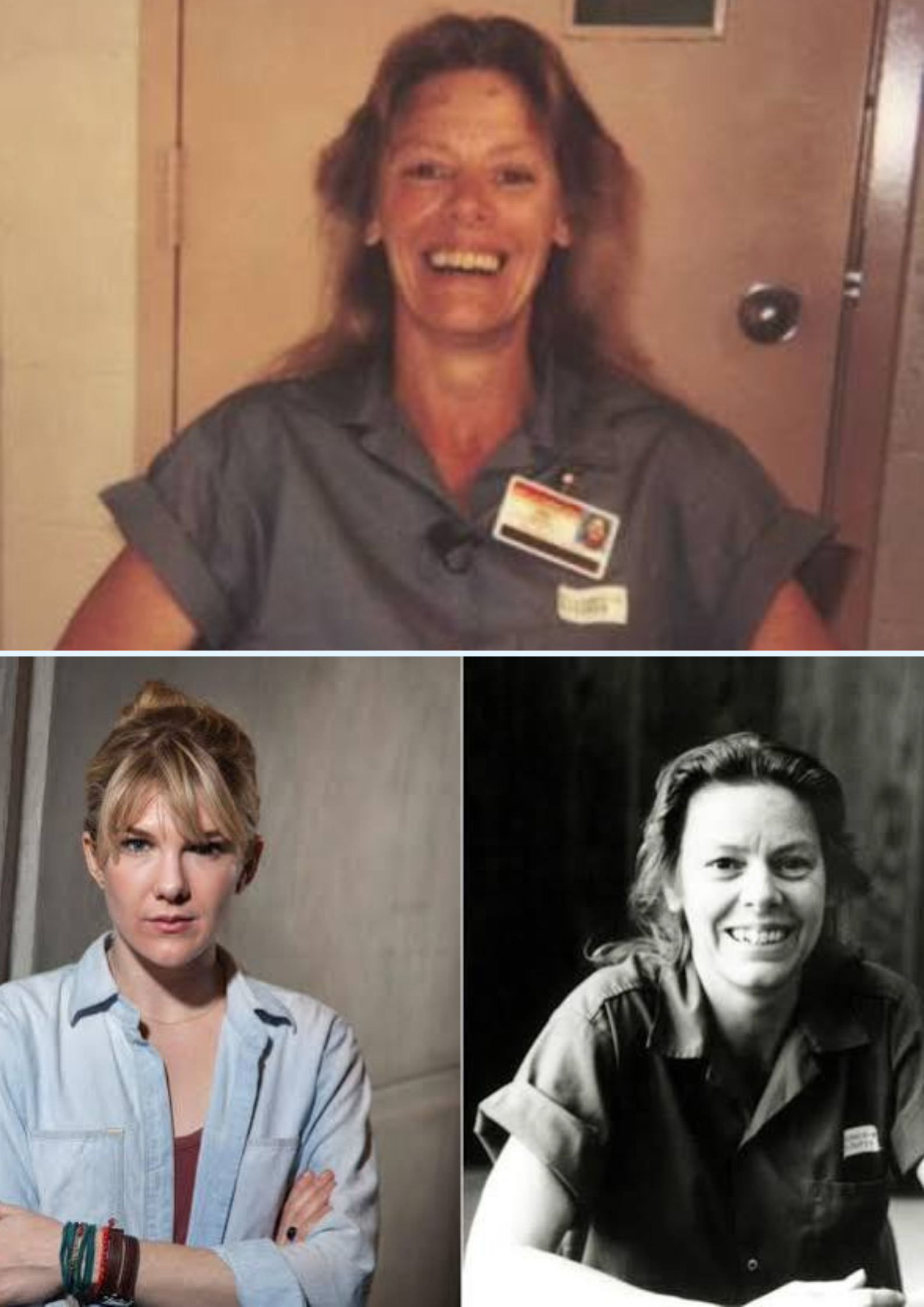
AILEEN WUORNOS: THE FINAL SIX MINUTES INSIDE FLORIDA’S DEATH CHAMBER
She had spent more than a decade on death row. On the morning of October 9, 2002, Aileen Wuornos walked into Florida’s death chamber knowing exactly what was about to happen. She had fired her lawyers, abandoned her remaining appeals and repeatedly said she wanted the execution to go ahead.
Then the curtain opened.
Behind the viewing window were more than two dozen witnesses, including members of victims’ families and journalists. Different contemporary reports gave different counts, with the Washington Post reporting 29 witnesses and another contemporary account reporting 32.
At 9:30 a.m., lethal drugs began flowing into Wuornos’ body.
Seventeen minutes later, she was pronounced dead.
For those inside the chamber, the wait was over.
For the families who had spent years living with the murders, the moment carried a very different meaning.
 THE WOMAN AT THE CENTER OF A NATIONAL SENSATION
Aileen Carol Wuornos was 46 when Florida executed her.
More than a decade earlier, she had been arrested after a string of killings along Florida highways. Wuornos eventually confessed to killing several men during 1989 and 1990.
She had initially claimed that she had killed in self-defense, saying some of the men had attacked or attempted to sexually assault her.
Her legal story changed over time.
By the final years of her imprisonment, Wuornos was openly acknowledging responsibility for the killings. In a 2001 court statement, she said she had killed the men and wanted to “come clean” and make peace with God.
She ultimately received six death sentences.
Her case became one of the most widely publicized criminal cases in America, inspiring books, documentaries, films and intense debate over mental illness, childhood trauma, prostitution, violence and the death penalty.
But on October 9, 2002, none of those arguments could stop what was coming.
HER FINAL MORNING
Wuornos woke at approximately 5:30 that morning.
According to Florida corrections officials, she was calm and cooperative. She had declined a traditional last meal and instead had coffee. She also read the Bible but refused visits from clergy.
Her final hours were strikingly different from the chaotic image that had followed her throughout her years in prison.
There would be no last-minute courtroom drama.
Wuornos had already made her position clear.
She wanted the execution.
Earlier, she had fired her attorneys and dropped her appeals. Her decision created an unusual legal situation because some people outside the prison were still attempting to challenge the execution on mental-health grounds.
Three psychiatrists appointed by the state ultimately found her competent to be executed.
Governor Jeb Bush had signed the death warrant.
The time was set.
9:30 a.m.
THE CURTAIN OPENED
Inside Florida State Prison near Starke, the witnesses waited.
The death chamber was separated from the viewing area by a window and curtain.
When the curtain opened, Wuornos could see the people who had gathered to watch.
The Washington Post reported that she lifted her head and looked toward the witnesses with what appeared to be a surprised expression.
Then she began speaking.
There was no conventional apology.
There was no request for forgiveness.
There was no plea for the execution to be stopped.
Instead, Wuornos delivered one of the strangest final statements in modern American execution history.
“I’d just like to say I’m sailing with the Rock…”
She then referred to Jesus and the 1996 science-fiction film Independence Day, saying she would return aboard a “big mother ship.”
Her statement lasted only around half a minute, according to contemporary reporting.
Then she stopped talking.
9:30 A.M.
At approximately 9:30 a.m., the lethal-injection process began.
Wuornos had been strapped to a gurney and connected to intravenous lines.
The execution itself was conducted behind the death-chamber curtain while witnesses watched from the designated viewing area.
There was no struggle.
There was no last-second attempt to escape.
There was no dramatic interruption.
Just the controlled procedure of a state execution.
Contemporary reports said Wuornos made very little noise after her final statement. A Florida corrections spokesman said she closed her eyes and her heart stopped.
Sixteen to seventeen minutes after the process began, depending on how the exact timing was reported, Wuornos was pronounced dead at 9:47 a.m.
THE FAMILIES WATCHED
Among those witnessing the execution were relatives of some of Wuornos’ victims.
For them, the moment was not simply the final chapter of a famous criminal case.
It was the end of years of grief.
Terry Griffiths, whose father Dick Humphreys was one of Wuornos’ victims, witnessed the execution.
Afterward, she described the lethal injection as an easy death compared with what her father and the other victims had suffered.
Another victim’s relative, Letha Prater, later said witnessing Wuornos’ execution gave her a feeling that a burden had lifted, although it could never bring her brother back.
The witnesses left the prison carrying very different emotions.
For some, there was a sense of closure.
For others, the execution raised difficult questions that had surrounded Wuornos from the beginning.
THE QUESTIONS ABOUT HER MIND
Wuornos’ mental state had remained one of the most controversial aspects of her final years.
Her defense had raised concerns about serious mental illness.
Before the execution, however, state-appointed psychiatrists determined that she understood that she was going to be executed and why.
Her former attorney Raag Singhal had argued that there was evidence of mental illness and questioned whether executing someone in such a condition served any legitimate purpose.
Wuornos herself rejected those concerns.
She repeatedly insisted that she was competent and understood what was happening.
That disagreement continued until the final days.
SHE HAD CHOSEN THE END
Perhaps the most unusual element of Wuornos’ execution was that she had stopped fighting for her own life.
She had fired her attorneys.
She had abandoned her appeals.
She had told authorities that she wanted the process to end.
In a previous statement, she said she wanted to “cut to the chase” and get on with the execution.
That decision did not erase the legal questions surrounding her case.
But it meant that when October 9 arrived, there was no major legal battle taking place inside the chamber.
The final fight had already ended.
THE LAST SIX MINUTES
At 9:30 a.m., the drugs began.
At 9:47 a.m., she was dead.
Those 17 minutes became the final measurable span of Aileen Wuornos’ life.
But the image that remained with many witnesses was not the clock.
It was the woman on the gurney, looking toward the people watching through the glass and delivering a final statement that sounded more like a prediction than a farewell.
She spoke of Jesus.
She spoke of returning.
She spoke of a giant spacecraft.
Then the curtain closed on one of the most notorious criminal stories in modern Florida history.
Aileen Wuornos was buried shortly afterward.
The headlines faded.
The prison gates closed.
The witnesses went home.
But the questions surrounding her life — her childhood, her mental health, her claims of abuse, the killings and the extraordinary public fascination with her — did not disappear with her death.
On that October morning in 2002, Florida carried out the sentence imposed on her.
And in the death chamber, after years of trials, appeals and controversy, there was finally nothing left to say.
Except the strange final words of a woman who knew the end had arrived:
“I’ll be back.”