THE TOXIC PARADOX OF BETRAYAL: LESSONS FROM THE ASHLEY FLYNN CASE

THE TOXIC PARADOX OF BETRAYAL: LESSONS FROM THE ASHLEY FLYNN CASE
Some individuals do not seek genuine love; they crave the ego rush of being chosen over someone else. Ashley Flynn deserved far better than to become the target of two people who bonded over shared contempt. During trial testimony, Alleigha Botner read text messages exchanged during her affair with Ashley’s husband, Caleb. They called Ashley degrading names, discussed needing to get rid of her, and exchanged messages explicitly mentioning a desire to kill her—to which Caleb allegedly concurred.
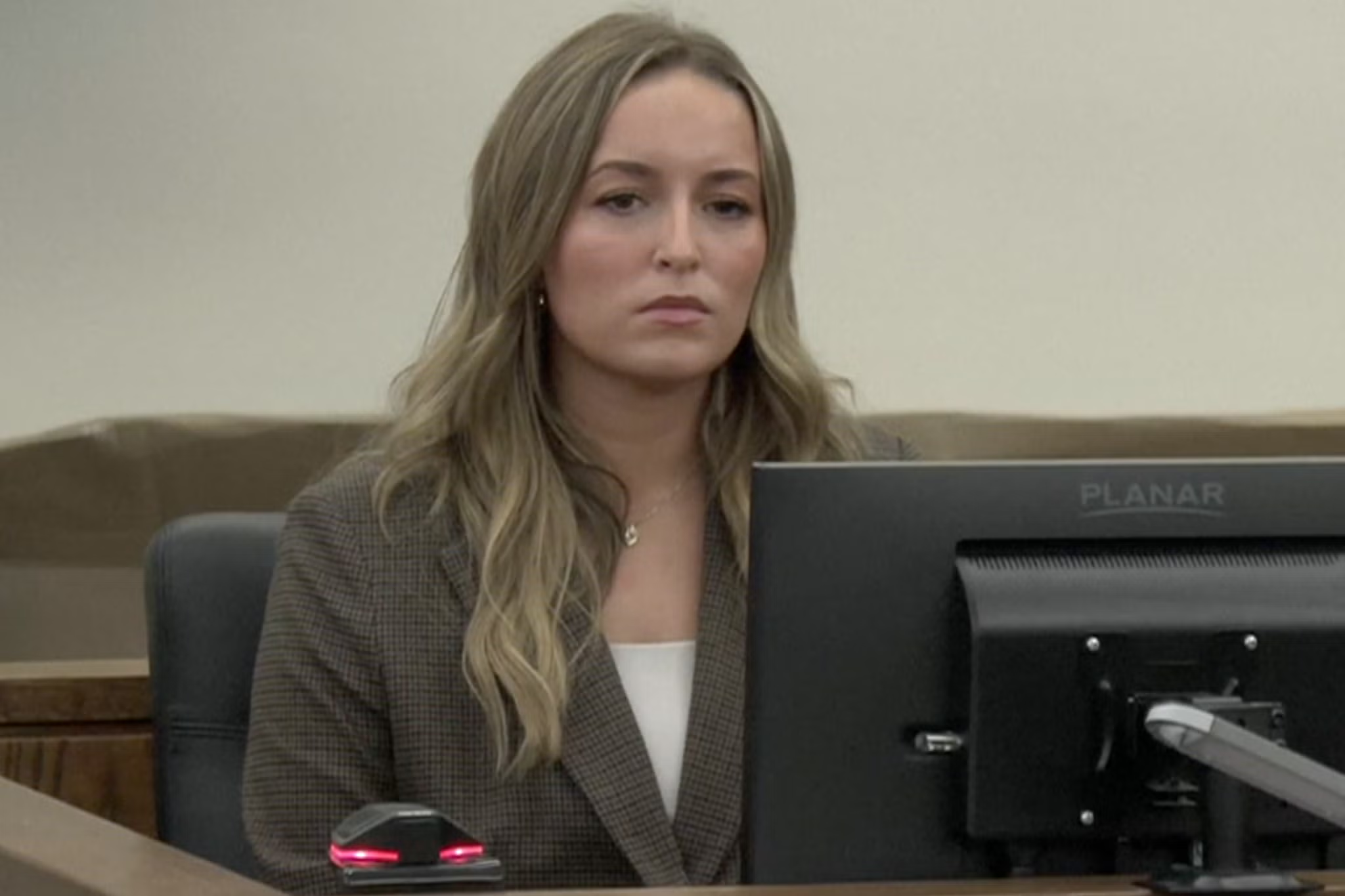
Beyond the legal proceedings, these exchanges reveal a disturbing dynamic. What kind of ego remains in a conversation where a spouse speaks about their partner’s death? What drives someone to vilify a mother simply because her existence obstructs a personal fantasy? Caleb owed his wife loyalty and honor. Instead, he collaborated to build a private dynamic where disrespecting his spouse became a source of intimacy. Faith and religious rhetoric cannot sanctify an affair, nor do they excuse systemic cruelty.

This case highlights a destructive psychological phenomenon: the urge to win another person’s spouse, the belief that personal desire outweighs a family’s peace, and the arrogance of treating another person’s emotional destruction as validation. Pulling someone away from their family is not a sign of power; it merely demonstrates what an individual is willing to destroy to feel chosen.
While Caleb faces trial for murder and Alleigha has not been legally charged in the death, public conscience must reject the trivialization of such toxic behavior. Ashley Flynn deserves to be remembered as a mother and a human being, never as a mere obstacle in someone else’s delusion.