Police Find Woman Unresponsive Behind the Wheel — Then a Possible Medical Emergency Turns Into a DUI Investigation
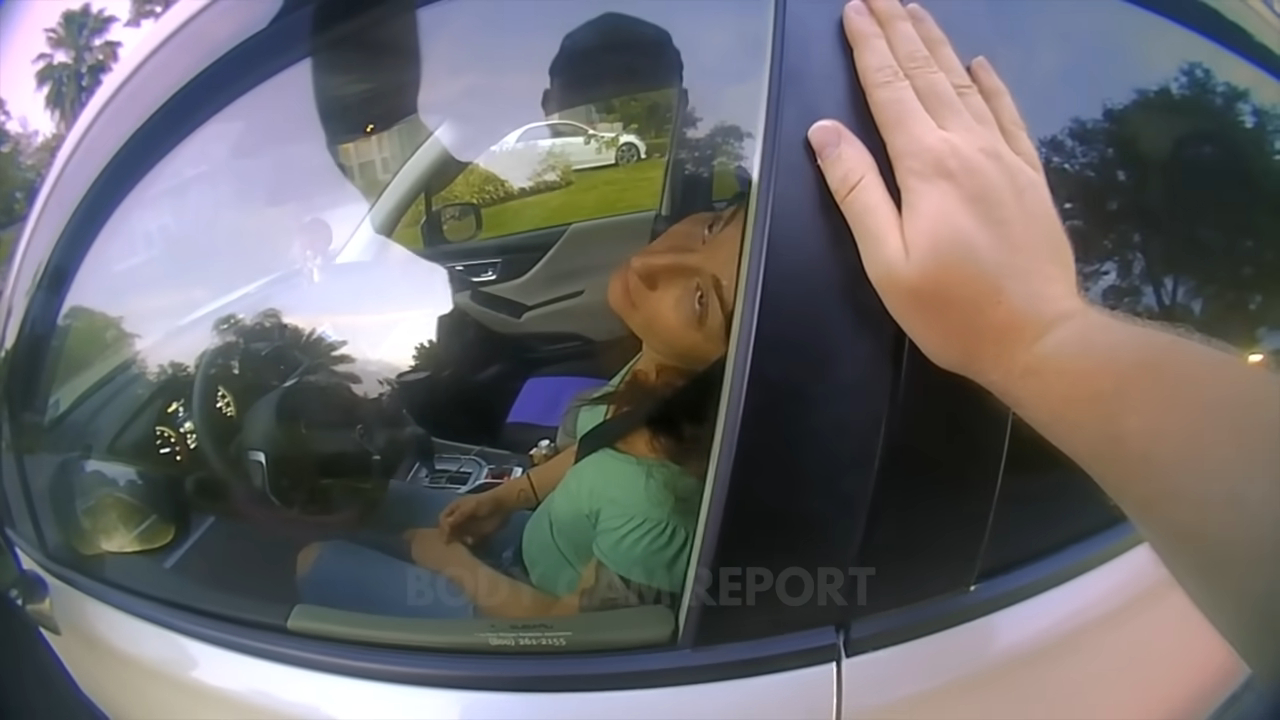
What initially looked like a possible medical emergency quickly became something far more complicated.
On March 25, 2024, police responded to a call about a woman who appeared to be passed out behind the wheel of a vehicle. When officers arrived, they found her unresponsive inside the car and began trying to wake her.
“It’s the police. Wake up,” an officer called.
Again and again, officers knocked, shouted and tried to get some kind of reaction.
“Ma’am, wake up.”
There was still no obvious response.
At that point, nobody could be certain what they were dealing with.
Was the woman simply sleeping?
Had she suffered a medical episode?
Was she intoxicated?
Or was something else preventing her from responding?
The uncertainty made the encounter immediately more serious.
Police Struggle to Get a Response
As officers continued trying to wake the woman, they learned that the vehicle was reportedly seen parked in the area frequently.
One officer said he had been told that the car was there almost every day, leading him to suspect that the woman might live in one of the nearby homes.
That information could help explain why the vehicle was there.
It did not explain why she would not wake up.
Officers kept calling to her.
“Wake up.”
“Hello.”
The lack of response prompted requests for additional assistance.
Then a family member appeared — and introduced a possible medical explanation.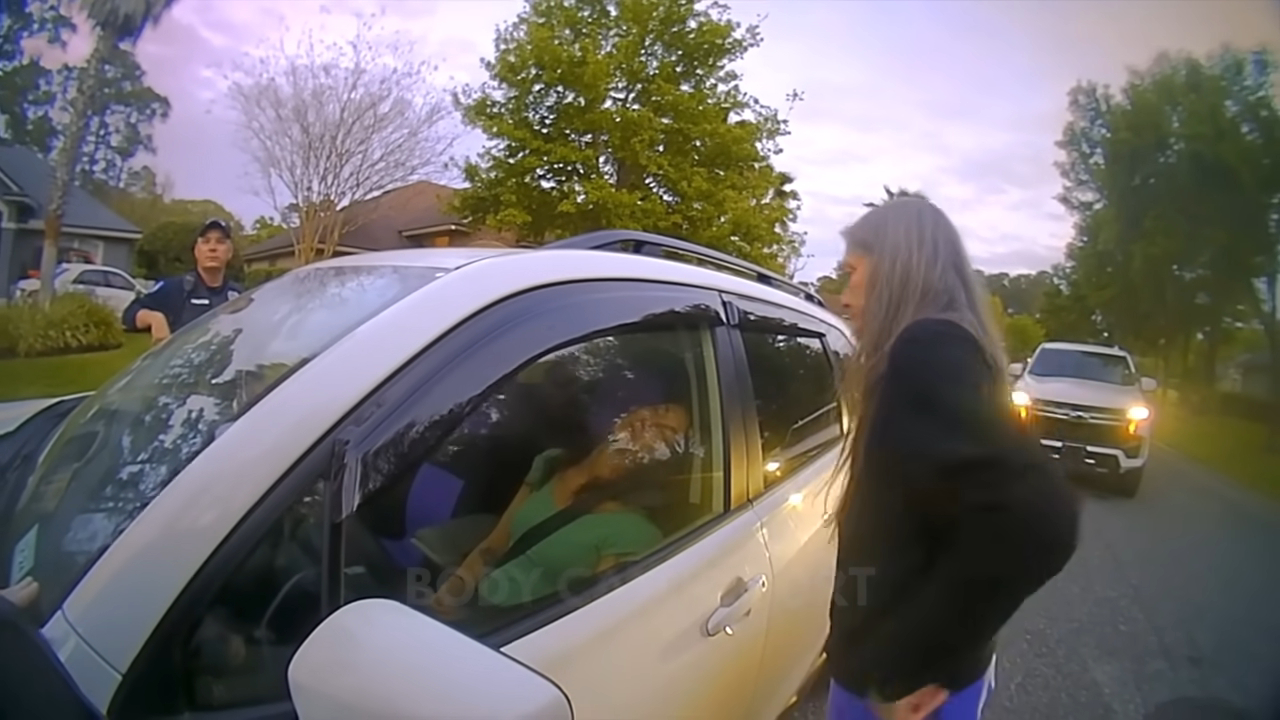
Family Says She May Be Having a Seizure
When officers asked whether the woman had any medical problems, a relative said she had a history of seizures.
“She could be having one,” the family member explained.
Police initially treated that possibility seriously.
One officer noted that she was breathing and said rescue should be called.
Another asked:
“What normally happens when she has a seizure?”
The question mattered because officers were trying to determine whether what they were observing was consistent with her known medical history.
At this stage, police still appeared to be approaching the situation primarily as an emergency involving someone who might need medical help.
Officers and family continued trying to wake her.
A relative called out to her by name.
“Britney.”
“Baby, come on.”
But as time passed, police began noticing details that did not fit neatly with the seizure explanation.
That was when the nature of the encounter started to change.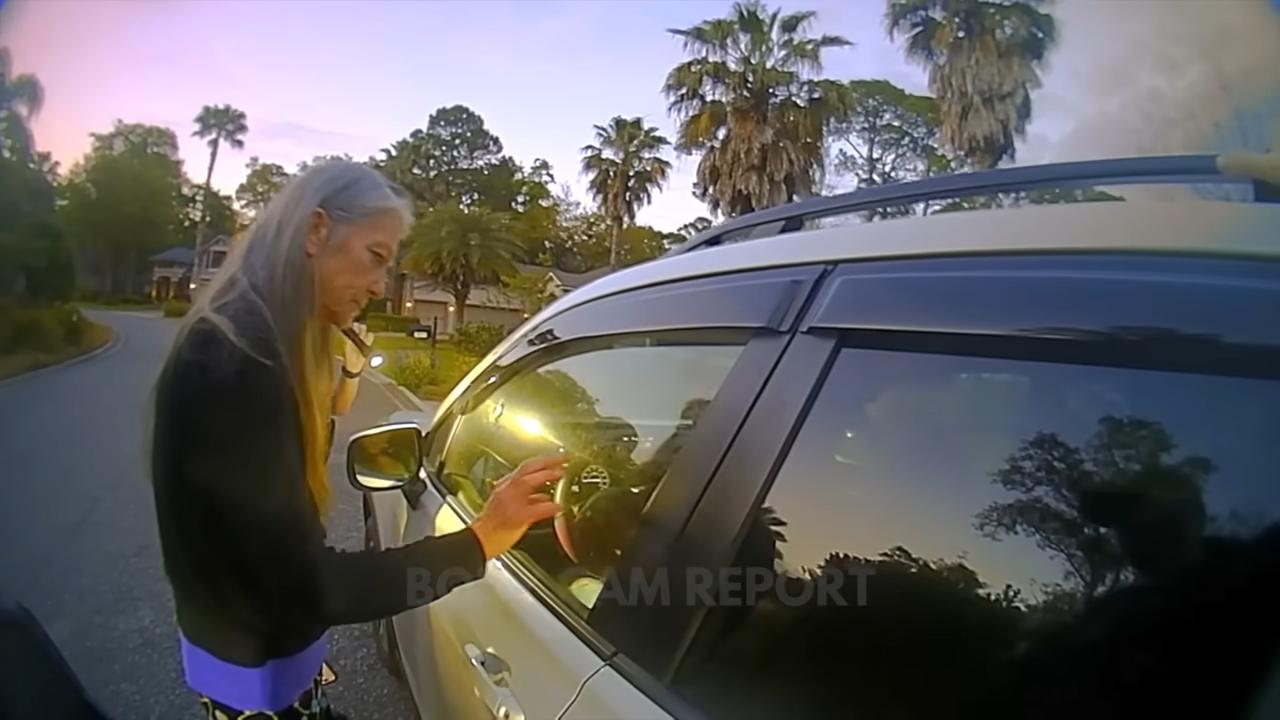
Officers Begin Doubting the Medical Explanation
Around four and a half minutes into the footage, an officer summarized what he had learned.
The woman’s mother had confirmed a history of seizures.
But there was another piece of information.
According to the officer, the woman had apparently opened her eyes earlier and made an obscene gesture toward the person who had initially reported her.
That behavior made the officer question whether she was truly experiencing a seizure.
“I don’t know that she’s having a seizure tonight,” he said.
Soon after, the officer went even further.
“I think mom’s covering for her.”
Police had also been told that the woman had allegedly nearly crashed into another person before arriving at the location.
That detail dramatically raised the stakes.
If accurate, the situation was no longer just about someone sleeping or experiencing a medical episode inside a parked vehicle.
It potentially involved what had happened on the road before police arrived.
The officers now had two competing possibilities in front of them.
The family was describing a woman with a seizure history.
Police were beginning to suspect impairment.
Then, after minutes of attempts, the car door finally opened.
She Finally Responds
At approximately six minutes into the encounter, the woman opened the vehicle.
Officers immediately began asking whether she was okay and whether she had experienced a seizure.
Family members encouraged her to go inside.
But one officer wanted to speak with her directly.
“What’s going on tonight?” he asked.
Her response was not especially helpful.
“I don’t know. You tell me.”
The officer asked whether everything was okay.
Again, she pushed the question back toward him.
Then he made his first direct observation about her condition.
“You seem like you’re very intoxicated.”
The woman responded sarcastically.
The officer then asked her to step out of the vehicle.
Her answer was immediate.
“I would not.”
He asked why.
“Cuz you’re asking me to.”
That exchange marked a major turning point.
Police were no longer simply attempting to wake a potentially ill woman.
An officer was now giving her a direct command as part of what appeared to be an emerging investigation into possible impairment.
And she was openly refusing.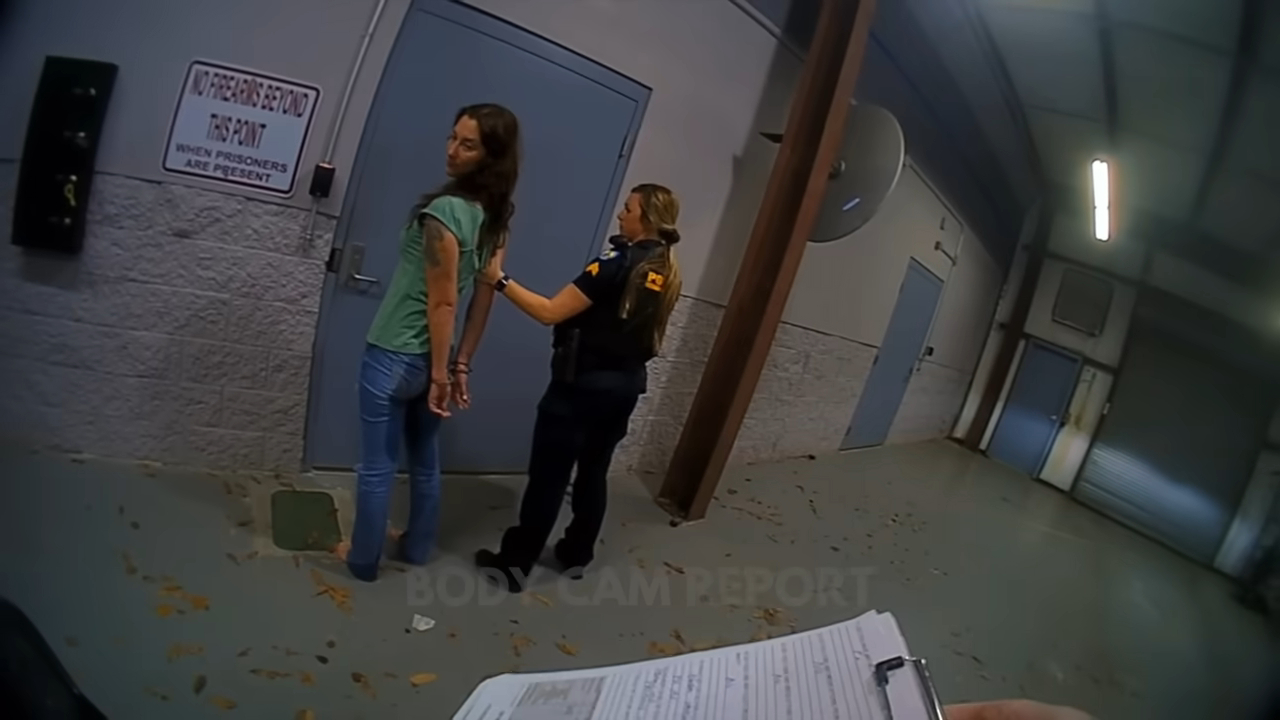
“I’m Giving You a Lawful Order”
The officer told the woman that he was giving her a lawful order to step out of the vehicle.
He asked whether she was deliberately refusing.
“Absolutely,” she replied.
The officer then laid out two options.
She could get out voluntarily.
Or he could physically remove her.
Family members continued trying to defuse the encounter, urging her to go inside and reminding her that she was home.
But the woman remained resistant.
As officers moved closer to the vehicle, she became increasingly focused on one demand:
“Do not touch me.”
She repeated it several times.
“Do not touch me. Do not touch me.”
The officer responded that remaining inside the vehicle was no longer an option.
“You need to get out of the vehicle.”
She again told him not to touch her.
The officer explained that if she refused to comply, he could physically remove her.
Then came another sharp exchange.
“Either you get out of the car or I’m going to throw you on the ground,” the officer warned.
“No, you’re not,” she answered. “I will so sue your ass.”
By that point, the original uncertainty surrounding her condition had been replaced by a direct standoff.
The Officer Says Refusal Could Become Resisting
The officer explained to others nearby that he had given the woman a lawful order to exit the vehicle and that she had refused.
“That’s resisting,” he said.
The woman continued repeating that police were not to touch her.
The officer ordered her out again.
She refused.
Police also warned another person nearby that interfering could create additional legal problems.
Despite repeated commands, the woman remained in the vehicle while insisting officers keep their hands off her.
What had begun with officers knocking on a window and wondering whether someone needed emergency medical care had now become a confrontation over compliance.
The sequence had changed rapidly:
A woman appeared unconscious behind the wheel.
Family members raised the possibility of a seizure.
Police began questioning whether that explanation matched what witnesses had reported.
An officer believed she appeared intoxicated.
And when he asked her to step out, she openly refused.
The question was no longer simply whether the woman was medically okay.
Police were now trying to determine what had happened before she parked there — and whether they had grounds to investigate her for driving under the influence.
But first, they still had to get her out of the vehicle.
And that would prove far more difficult than the officer’s initial request suggested.