LUCY LETBY CASE FACES FRESH QUESTIONS AS MEDICAL EVIDENCE AND HOSPITAL RECORDS COME UNDER SCRUTINY
LUCY LETBY CASE FACES FRESH QUESTIONS AS MEDICAL EVIDENCE AND HOSPITAL RECORDS COME UNDER SCRUTINY
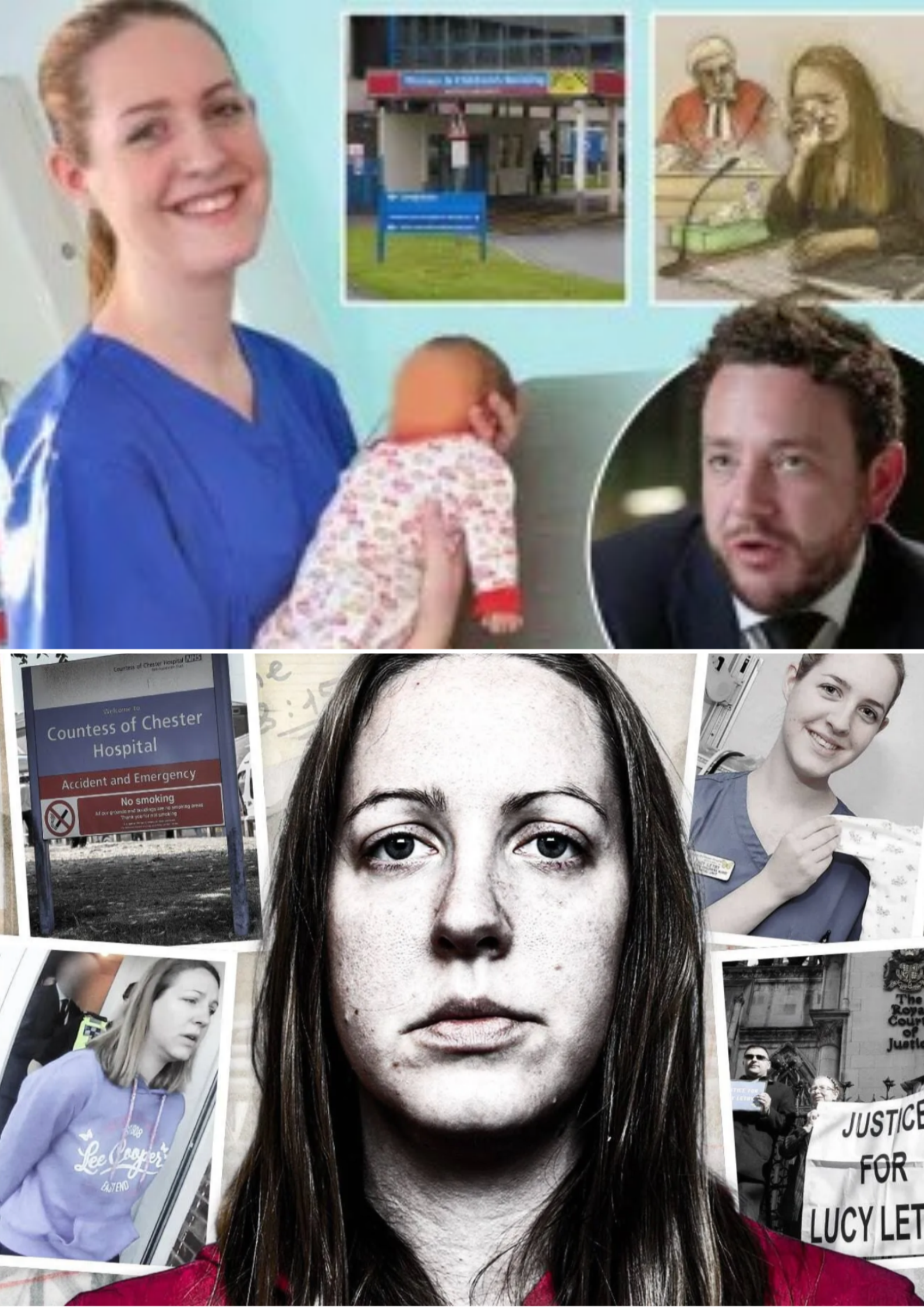
The case of former neonatal nurse Lucy Letby is facing renewed scrutiny as her legal team continues its challenge to her convictions and fresh questions emerge over some of the evidence presented at her trials.
Letby remains in prison serving 15 whole-life sentences after being convicted of murdering seven babies and attempting to murder seven others at the Countess of Chester Hospital in 2015 and 2016.
She continues to deny the offences.
At the centre of the latest developments is the Criminal Cases Review Commission (CCRC), which is examining new evidence and arguments submitted on Letby’s behalf.
The commission has made clear that it is not deciding whether Letby is innocent or guilty. Its role is to determine whether new material creates a real possibility that her convictions would not be upheld if referred back to an appeal court.
THE REVIEW THAT COULD BECOME A MAJOR LEGAL TEST
The CCRC received Letby’s preliminary application in February 2025.
Since then, her legal team has submitted expert reports, further arguments and defence material, with additional submissions arriving as recently as January 2026.
The commission said its review remains ongoing and stressed that it makes decisions independently and on the evidence rather than external pressure.
That means there has been no decision to overturn Letby’s convictions and no finding that she should be released.
But the volume of material being examined has kept the case under intense public and professional scrutiny.
 QUESTIONS OVER THE MEDICAL EVIDENCE
One of the biggest areas of disagreement concerns the medical evidence used at trial.
In 2025, an international group of experts publicly challenged parts of the prosecution’s interpretation of the medical records, particularly evidence concerning alleged insulin poisoning.
Some experts argued that the medical findings could have alternative explanations.
The prosecution has maintained the case presented at trial, and the Court of Appeal previously rejected Letby’s attempt to challenge her convictions.
More recently, two experts who had been involved with Letby’s defence withdrew from the legal team over concerns about the scientific credibility of some arguments being advanced.
Importantly, those experts continued to stand by their position that it was very unlikely that two babies had been poisoned with insulin, while objecting to broader claims they considered scientifically unsupported.
THE MATERNITY RECORDS THAT WERE NOT GIVEN TO THE DEFENCE
Another major issue emerged in a BBC investigation published in July 2026.
Maternity records belonging to babies involved in the case had been seized by Cheshire Police.
But according to the investigation, those records were not reviewed by the prosecution’s principal medical expert and were not disclosed to Letby’s defence before the trial.
The records contained information about the mothers’ pregnancies, labour and deliveries.
Several medical experts told the BBC that such information can be important when assessing why a newborn baby deteriorated or died.
Professor Phil Bennett, an obstetrics and gynaecology specialist, argued that maternity and neonatal records should normally be considered together.
However, prosecution expert Dr Dewi Evans said he did not believe the missing obstetric records would have changed his conclusions.
The CPS has also pointed out that Letby was convicted following two jury trials and that the Court of Appeal rejected her previous arguments concerning flaws in the prosecution evidence.
 A PUBLIC INQUIRY FOUND SERIOUS HOSPITAL FAILURES
Meanwhile, the Thirlwall Inquiry published its long-awaited report in September 2026.
The inquiry examined events at the Countess of Chester Hospital between 2015 and 2018, including the hospital’s response to concerns about Letby and the deaths and collapses of babies.
The report identified serious failures in management, leadership and the response to concerns raised by medical staff.
The inquiry, however, was not a retrial of Lucy Letby.
Its findings do not overturn her convictions or establish that she was wrongly convicted.
Instead, the report examined how hospital management responded to warning signs and concerns surrounding the neonatal unit.
EVEN DOCTORS INVOLVED IN THE ORIGINAL CASE HAVE SPOKEN OUT
Dr John Gibbs, a consultant paediatrician who worked at the Countess of Chester Hospital during the period covered by the case, told the BBC after the inquiry report that he wished doctors had acted more decisively when suspicions arose.
But Gibbs also said he had not changed his view that Letby was guilty.
At the same time, he said that because respected medical experts had raised questions about the evidence, it was important that the CCRC examine those issues properly.
That distinction is important.
There is currently a public dispute over parts of the evidence, but there is no court ruling that Letby’s convictions are unsafe.
ANOTHER QUESTION ABOUT A KEY PROSECUTION EXPERT
In March 2026, The Guardian reported that Professor Peter Hindmarsh, a prosecution expert who gave evidence concerning alleged insulin poisoning, was under a General Medical Council investigation during Letby’s trial.
The investigation involved concerns about his fitness to practise.
A medical tribunal had imposed restrictions on his professional work while the investigation continued, although it permitted him to continue giving expert evidence.
The GMC investigation eventually ended after Hindmarsh voluntarily removed himself from the medical register, meaning there was no final regulatory finding against him.
The Guardian reported that the jury was not told about the investigation.
The significance of that information to Letby’s convictions remains a matter for the legal process.
WHAT HAPPENS NEXT?
For now, Lucy Letby remains convicted and imprisoned.
The CCRC has not announced that it will refer her case back to the Court of Appeal.
It has also not concluded that she is innocent.
But the commission is examining a substantial body of new material, while separate investigations and expert reviews have generated further questions about the medical evidence, maternity records and the handling of concerns at the hospital.
The case therefore remains far from settled in the public debate.
The ultimate legal question is whether any of the new evidence or arguments meets the CCRC’s threshold for referral to an appeal court.
Until that happens, Letby’s convictions remain in force.
And as the review continues, the focus is increasingly shifting toward one crucial question:
Could evidence that was not fully considered at trial change how the case is understood nearly a decade after the babies died?