JON VENABLES: JAMES BULGER’S FAMILY PUSHES FOR PUBLIC PAROLE HEARING AS NEW REVIEW LOOMS
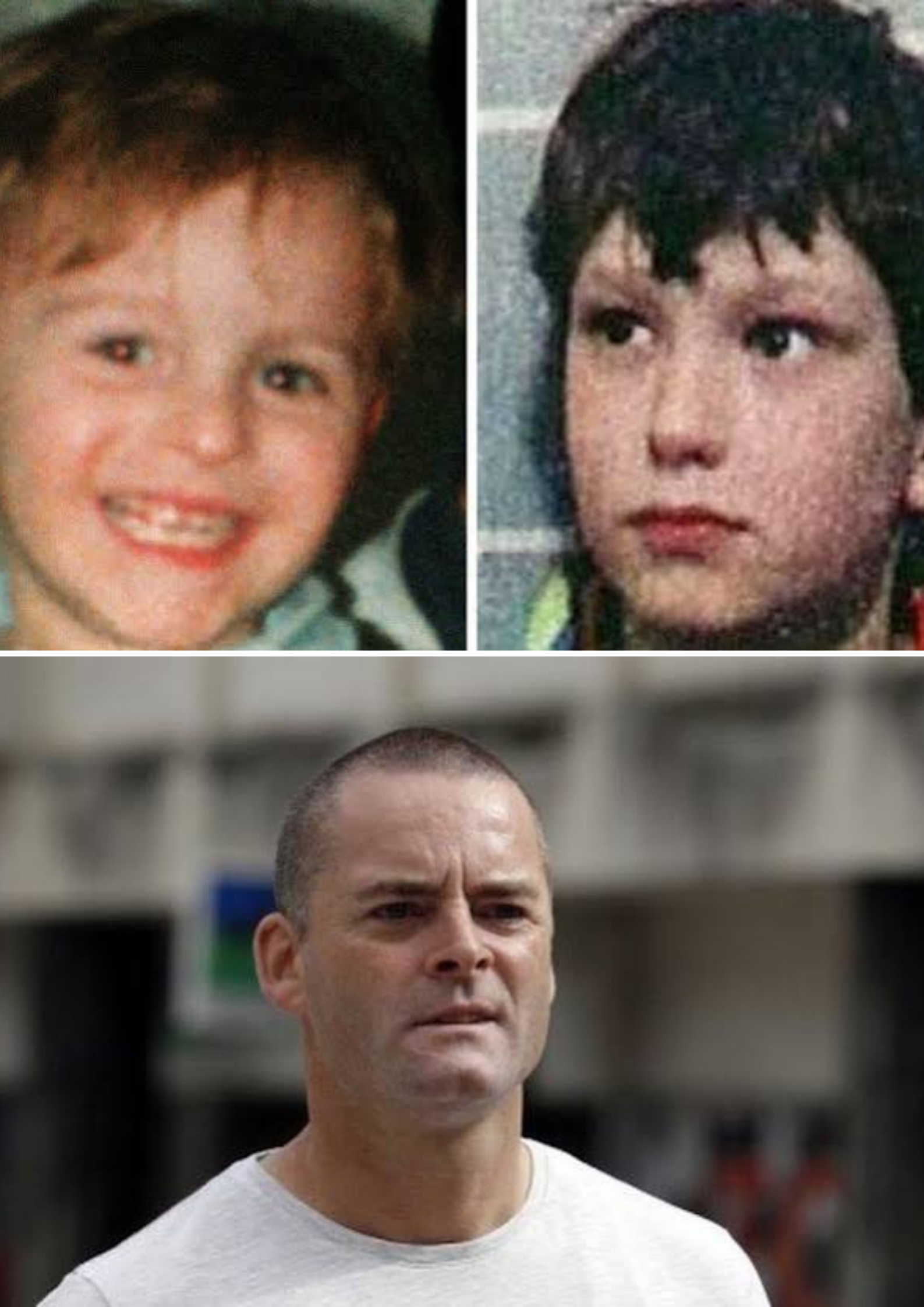
JON VENABLES: JAMES BULGER’S FAMILY PUSHES FOR PUBLIC PAROLE HEARING AS NEW REVIEW LOOMS
More than three decades after two-year-old James Bulger was abducted and murdered in Merseyside, the case surrounding one of his killers has entered another significant chapter.
Jon Venables, who was 10 when he and Robert Thompson were convicted of James’s murder in 1993, is facing another parole review. The latest process has also prompted James’s family to make a fresh application for the hearing to be held in public.
The Parole Board confirmed in August 2026 that it had received applications from James’s mother Denise Fergus and her husband Stuart Fergus, as well as from representatives of James’s father Ralph Bulger and his uncle Jimmy Bulger. Both applications argue that the exceptional circumstances of the case justify greater transparency.
 A NEW PAROLE REVIEW
Venables, now 43, has been in prison since being recalled in 2017 after he was convicted of possessing indecent images of children.
He had previously been released on licence in 2001, after serving the minimum period imposed for the 1993 murder. In 2010, he was recalled to prison after indecent images of children were found on his computer.
He was released again in 2013, but was recalled for a second time in 2017 following another offence involving child-abuse images.
His previous parole bid was rejected in 2023. According to ITV, the Parole Board at that time concluded that he continued to pose a danger to children and could go on to offend again.
A new oral hearing was subsequently arranged. In January 2026, ITV reported that the hearing was expected to take place later that year, although the exact date had not initially been confirmed publicly.
JAMES BULGER’S FAMILY WANTS THE HEARING OPENED TO THE PUBLIC
In August, the Parole Board formally published details of the applications seeking a public hearing.
Denise and Stuart Fergus argued that the case has exceptional public interest and that greater transparency could help the public understand how parole decisions are made.
Their application also referred to the continuing impact of social-media discussion surrounding the case and argued that a public hearing could help address misinformation.
The application from representatives of Ralph Bulger and Jimmy Bulger similarly pointed to the unusual circumstances surrounding the case, including the original murder, Venables’ later offending, his repeated recalls to prison and the complex questions surrounding anonymity and risk management.
The applications do not mean that the parole hearing has automatically become public.
The Parole Board states that the normal position is for parole hearings to remain private. A public hearing can be allowed when the Chair considers that it is in the interests of justice.
As of the latest official information available, Venables’ 2026 public-hearing application remains listed as pending.
 WHY THE CASE REMAINS SUBJECT TO LIFELONG ANONYMITY
Despite the intense public interest, Venables remains protected by a lifelong anonymity injunction.
A 2023 Parole Board decision explained that the High Court originally imposed an injunction protecting his identity in 2001 and that the protection was later extended for his lifetime.
That means information that could identify him beyond the name already publicly associated with the case remains legally restricted.
The anonymity order is one of the reasons the question of a public parole hearing is complicated.
In its previous decision, the Parole Board noted concerns that details discussed during an open hearing could inadvertently reveal information capable of identifying Venables. It also said sensitive matters could need to be dealt with privately.
THE CRIME THAT SHOCKED BRITAIN
James Bulger was two years old when he disappeared from the New Strand shopping centre in Bootle on February 12, 1993.
CCTV footage captured Venables and Thompson leading the toddler away from the shopping centre.
James was later taken to an area near a railway line in Walton, Liverpool, where he was assaulted and killed.
His body was discovered two days after his disappearance.
Venables and Thompson were arrested and subsequently convicted of murder following their trial in 1993.
Both boys were 10 years old when they committed the offence, making the case one of the most closely scrutinised examples of serious offending by children in modern British criminal history.
RELEASE — AND TWO RECALLS TO PRISON
The boys were eventually released on licence in 2001 under new identities and with extensive protections surrounding their identities.
Venables’ subsequent history differed significantly from Thompson’s.
In February 2010, Venables was recalled to prison after indecent images of children were discovered on his computer.
He was released again in August 2013.
Four years later, he was recalled once more after another offence involving child-abuse images. He has remained imprisoned since that recall.
The repeated recalls have become an important part of the discussion surrounding his current parole review.
The Parole Board’s role, however, is not to retry the original murder. Its task is to assess whether the risk posed by a prisoner can be safely managed in the community. Official guidance says panels can consider prison behaviour, release plans, previous offences, sentencing information, victim statements and medical, psychiatric and psychological evidence.
WHAT HAPPENS NEXT?
The public-hearing question is separate from the underlying parole decision.
The Parole Board must first determine whether the hearing should be opened to the public. The official application page published in August gave different deadlines for representations from the respective applicants, with the latest deadline set for September 10, 2026.
The official Parole Board collection continues to list the Jon Venables public-hearing application under pending applications, rather than among cases where a public-hearing decision has already been announced.
If the hearing remains private, the victims’ families can still participate through the parole process and victim statements. If a public hearing is authorised, safeguards would be required to protect legally protected information.
The Parole Board has previously rejected a request to make Venables’ hearing public, in October 2023. At that time, the Chair concluded that the application should not be granted, citing concerns including the protection of his identity and the ability of witnesses to give evidence freely.
A CASE THAT CONTINUES TO REOPEN OLD WOUNDS
For James Bulger’s family, another parole review means returning once again to a case that began more than 30 years ago.
For the parole system, the case presents a complicated combination of factors: an exceptionally serious offence committed when Venables was a child, subsequent adult convictions, repeated recalls to custody, lifelong anonymity and the question of how risk should be assessed after decades.
The upcoming proceedings will therefore concern not only whether Venables can be released, but also how the parole system balances public protection, victims’ participation, evidence about current risk and the legal protections surrounding the prisoner.
For now, the official record shows that the public-hearing applications remain pending.
The next major development will be the Parole Board’s decision on whether the hearing itself can be opened to public observation.