LUCY LETBY CASE FACES FRESH QUESTIONS AS KEY DOCTOR SAYS HE IS NO LONGER CERTAIN
LUCY LETBY CASE FACES FRESH QUESTIONS AS KEY DOCTOR SAYS HE IS NO LONGER CERTAIN
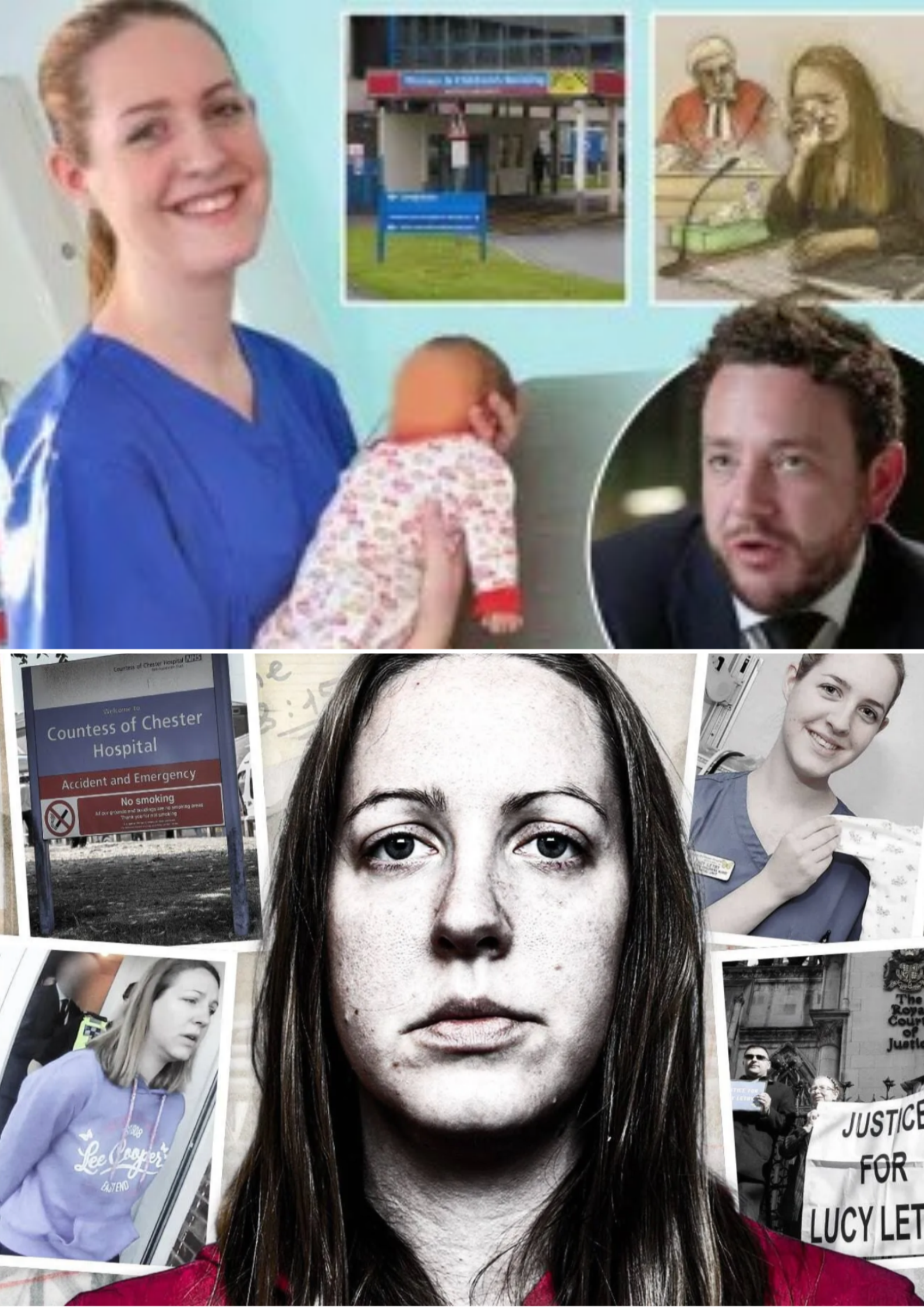
Fresh questions are being raised over the Lucy Letby case after Dr. John Gibbs, the consultant whose concerns helped trigger the investigation, said he is no longer certain about some aspects of the case.
Letby, a former neonatal nurse at the Countess of Chester Hospital, was convicted of murdering seven babies and attempting to murder seven others between 2015 and 2016.
She is serving 15 whole-life sentences and continues to deny the offences.
Her convictions have already survived two attempts to obtain permission to appeal. But her legal team has now taken new evidence to the Criminal Cases Review Commission (CCRC), which is examining whether the case should be referred back to the Court of Appeal.
 DR. JOHN GIBBS NOW SAYS HE IS “NO LONGER CERTAIN”
Dr. Gibbs was one of the doctors who raised concerns about the sudden deterioration and deaths of babies on the neonatal unit.
In a recent interview, however, he acknowledged that the continuing questions surrounding the medical evidence deserve serious examination.
The Sun reported that Gibbs had become uncertain enough about aspects of the case to support the possibility of a retrial.
But his position is more nuanced than claims that he has declared Letby innocent.
Speaking to the BBC after the publication of the Thirlwall Inquiry report, Gibbs said he had not changed his mind that he believed Letby was guilty.
At the same time, he said the calibre of experts questioning aspects of the evidence meant the material should be properly examined by the CCRC.
That distinction is important because the CCRC has not concluded that Letby was wrongly convicted.
NEW MEDICAL EVIDENCE IS AT THE CENTRE OF THE FIGHT
Letby’s defence has submitted expert reports challenging some of the medical conclusions presented at her trials.
A panel of international medical experts has argued that some of the babies’ collapses and deaths could have resulted from natural causes or problems with medical care rather than deliberate harm.
Those experts have particularly questioned evidence concerning insulin and air embolism.
Their conclusions are disputed, and they have not overturned the jury verdicts.
The CCRC is now considering the competing evidence as part of its review.
 MATERNITY RECORDS RAISE ANOTHER QUESTION
A separate development has added another layer to the debate.
The BBC reported in July that maternity records relating to babies involved in the case had been seized by Cheshire Police but were not reviewed by the prosecution’s chief medical expert or disclosed to Letby’s defence before trial.
The records contained information about pregnancy, labour and birth.
Several experts told the BBC that this information can be important when trying to determine why a premature or seriously ill baby deteriorated.
However, prosecution expert Dr. Dewi Evans said he did not believe the full maternity records were relevant to the conclusions reached in the case.
The existence of those records therefore does not by itself establish that the convictions were unsafe.
WHAT ABOUT THE “SUPPRESSED” LABORATORY DATA?
Claims circulating online have suggested that hidden laboratory evidence proves the original causes of death were impossible.
There is currently no established finding supporting that claim.
One of the major areas under scrutiny is the interpretation of laboratory results, particularly evidence concerning insulin.
The Thirlwall Inquiry heard that a blood-test result suggesting insulin poisoning had initially been overlooked by hospital staff. Gibbs himself described this as a collective failure by the medical team.
The question now is how such evidence should be interpreted alongside the other medical records and expert opinions.
That is precisely the kind of issue the CCRC can examine.
CPS HAS DROPPED FURTHER CHARGES — BUT THAT DOES NOT OVERTURN THE CONVICTIONS
Another development has added to public debate.
In January 2026, the Crown Prosecution Service decided not to bring additional charges against Letby relating to other babies.
After families requested reviews of six of those decisions, the CPS announced in August that an independent prosecutor had reconsidered the evidence and upheld the decision not to charge her with six further attempted-murder offences.
However, the CPS decision concerns new allegations, not the convictions for which Letby is already serving her sentence.
It therefore does not, by itself, invalidate the original verdicts.
THE THIRLWALL INQUIRY FOUND SERIOUS HOSPITAL FAILINGS
The final Thirlwall Inquiry report, published in September, found serious failures in the management and governance of the Countess of Chester Hospital.
The inquiry examined how concerns about Letby were handled and why hospital management did not respond more quickly to warnings from doctors.
It did not, however, decide whether Letby was guilty or innocent.
That question remained outside the inquiry’s remit.
Dr. Gibbs has acknowledged failures within the medical team, including the failure to properly act on a laboratory result that suggested insulin poisoning.
He has also said he wished doctors had escalated their suspicions to police earlier.
THE CCRC IS STILL INVESTIGATING
The CCRC confirmed that it received a preliminary application concerning Letby’s convictions in February 2025.
Since then, the commission has received numerous expert reports, legal submissions and defence materials.
Its review remains ongoing.
The CCRC has stressed that it does not decide whether someone is innocent or guilty. Its role is to determine whether new evidence or legal arguments create a real possibility that a conviction would not be upheld if referred to an appeal court.
For now, no such referral has been announced.
A CASE STILL DIVIDING OPINION
The Lucy Letby case has now entered another unusual phase.
On one side are the original jury verdicts, the previous unsuccessful appeal attempts and medical evidence relied upon by the prosecution.
On the other are new expert opinions, questions about the interpretation of medical evidence, concerns over hospital failures and records that were not available to the defence before the original trial.
Dr. Gibbs’ changing level of certainty has added another significant voice to that debate — although he has not publicly declared Letby innocent.
For the families who lost their babies, the continuing dispute is deeply painful.
For Letby’s legal team, the issue is whether the new evidence is strong enough to justify another examination by the courts.
And for the CCRC, the question is narrower still:
Does the new evidence create a real possibility that the convictions would not be upheld?
That decision has not yet been made.