THE LITTLE BOY WHO DREAMED OF BECOMING AN ASTRONAUT — NEIL HUGHES’ FINAL 70 UP STORY LEAVES VIEWERS EMOTIONAL
THE LITTLE BOY WHO DREAMED OF BECOMING AN ASTRONAUT — NEIL HUGHES’ FINAL 70 UP STORY LEAVES VIEWERS EMOTIONAL
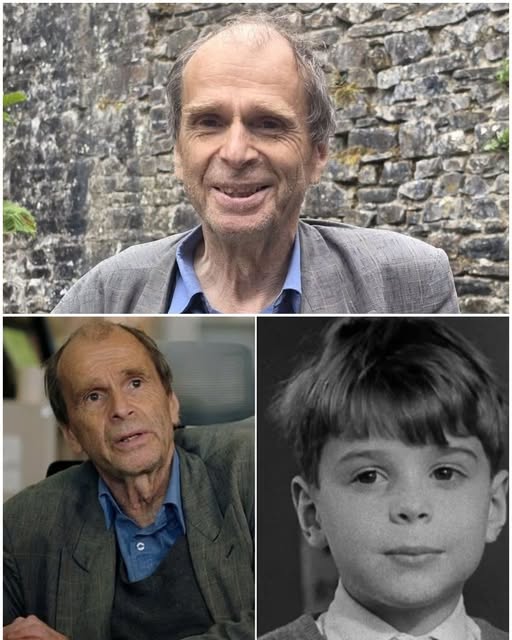
More than six decades ago, a seven-year-old boy named Neil Hughes sat in front of a television camera and talked about his dreams for the future.
One of those dreams was to become an astronaut.
In 1964, Neil was one of 14 British children introduced to viewers in the groundbreaking documentary 7 Up! The programme would go on to follow their lives every seven years, creating one of the longest-running documentary projects in television history.
Now, at 70, Neil has reached the final chapter of that extraordinary journey.
And his story has once again left viewers reflecting on loneliness, friendship, mental health and what it really means to understand another person.
 FROM A SEVEN-YEAR-OLD BOY TO A LIFE NO ONE COULD HAVE PREDICTED
When viewers first met Neil, he appeared to have a relatively stable childhood in Liverpool.
Like the other children selected for 7 Up!, he was filmed as part of an ambitious project examining whether childhood circumstances, social class and environment could shape a person’s future.
But Neil’s life would take a path that was difficult to predict from those early interviews.
As he grew older, he struggled with depression and periods of homelessness. He left university and spent years moving between squats and temporary accommodation.
At one point, he has recalled sleeping in extremely difficult conditions — even describing how he once slept in a bulldozer.
His experiences became one of the most striking stories in the entire Up series.
 “I’M STILL QUITE LONELY AT TIMES”
In the final instalment, Neil spoke openly about his current life.
He is now living in France, where he has inherited a large property from his family.
He told viewers that he and his wife are separated and described himself as someone who has become accustomed to living alone.
Neil also volunteers for part of the week at a small bookshop, something he said gives structure to his days.
But despite having friends he can turn to during difficult moments, he admitted that loneliness remains part of his life.
“I’m still quite lonely at times,” he said, while reflecting on his circumstances and the realities of growing older.
His words resonated strongly with viewers who had watched him grow from a seven-year-old child into a 70-year-old man across more than six decades.
HIS MESSAGE ABOUT MENTAL HEALTH
Perhaps one of the most powerful parts of Neil’s final appearance was his attempt to challenge the way people with mental health difficulties can sometimes be viewed.
Neil made clear that struggling with mental health does not mean someone has deliberately chosen to be isolated or different.
His comments reflected something he has experienced personally throughout his life.
For decades, viewers had watched Neil navigate periods of depression, isolation and homelessness. Yet his final appearance was not simply about those difficult chapters.
It was also about his attempt to understand himself and find a way of living that works for him.
Neil told the programme that he was “as happy as I could be given my life”, while acknowledging that loneliness was still something he experienced.
A LIFE FAR FROM THE ONE PEOPLE EXPECTED
Neil’s story has often stood out because it challenged the assumptions behind the original 7 Up! project.
The programme began with the idea that a child’s background might provide clues about the adult they would eventually become.
But Neil’s journey demonstrated how unpredictable a human life can be.
The seven-year-old boy viewers first met could not have known that his future would include university, homelessness, depression, political work, religious service and eventually a quiet life in France.
By the time of 63 Up, Neil had become involved in local politics and served as a district councillor. He had also worked as a lay Baptist preacher.
His life had changed repeatedly — and the cameras continued to document those changes.
SIX DECADES OF BEING WATCHED
Neil has also had complicated feelings about the documentary series itself.
After being filmed throughout much of his life, he has questioned whether viewers ever truly saw the person behind the television portrayal.
He has suggested that the programme sometimes focused heavily on the difficult periods of his life and that there was more to him than what appeared on screen.
In an interview surrounding 70 Up, Neil explained that he did not watch television and did not even regularly watch the Up programmes themselves.
For him, staying away from the series was partly a form of self-protection.
VIEWERS COULDN’T HELP BUT FEEL FOR HIM
After the final episode aired, viewers took to social media to talk about Neil.
Some expressed concern about his solitary lifestyle and wondered whether there was a way to let him know how many people had followed his journey over the years.
Others reflected on how unusual it felt to say goodbye to someone they had first seen as a seven-year-old child more than 60 years ago.
For many viewers, Neil had become more than just a participant in a television programme.
They had watched him grow up.
They had seen his hopes, setbacks, difficult years and moments of renewal.
And now they were seeing him at 70, looking back on a life that had taken a very different path from the one that little boy might once have imagined.
THE END OF AN EXTRAORDINARY TELEVISION JOURNEY
The Up series began in 1964 with 14 seven-year-old children from different backgrounds.
Every seven years, the cameras returned.
The project eventually became an extraordinary record of changing British society — but more importantly, it became a record of individual human lives.
The series was directed for most of its history by Michael Apted, who died in 2021. For the final instalment, Oscar-winning filmmaker Asif Kapadia took over as director.
Several participants have died over the decades, including Lynn Johnson and Nick Hitchon, making the final chapter even more poignant.
The surviving participants, now around 70, have brought the project to its conclusion.
THE LITTLE BOY WHO DREAMED OF SPACE
More than 60 years after Neil first appeared on television, the image of that young boy remains part of his story.
He once dreamed of becoming an astronaut.
Instead, life took him through experiences that no seven-year-old could have predicted.
He faced periods of hardship, found his own way through them, built a life in different places and ultimately became one of the most memorable figures in the entire Up series.
His final appearance was not a simple story of triumph or tragedy.
It was something much more human — an older man looking honestly at the life he had lived, acknowledging the loneliness that remains while also finding a degree of peace in the person he has become.
And perhaps that is why Neil’s final words have stayed with so many viewers.
After more than six decades of being followed by cameras, his story was finally allowed to end on his own reflection: life may not have turned out the way he once imagined, but it was still his life — complicated, imperfect and deeply human.