CHRISTA PIKE STILL UNCONSCIOUS AFTER FAILED EXECUTION — TENNESSEE PRISON CHIEF RESIGNS
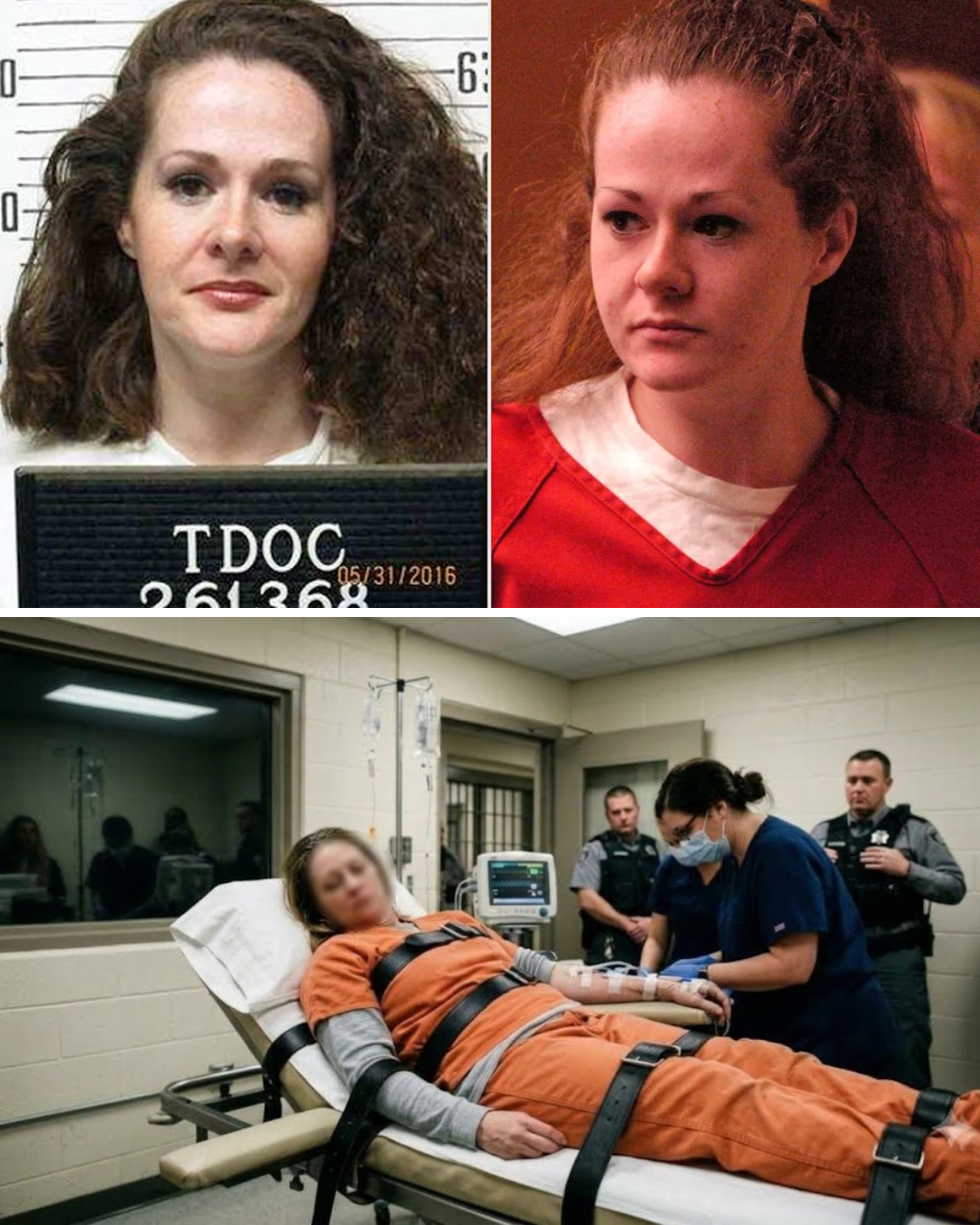
CHRISTA PIKE STILL UNCONSCIOUS AFTER FAILED EXECUTION — TENNESSEE PRISON CHIEF RESIGNS
Days after Tennessee’s attempt to carry out Christa Pike’s death sentence went disastrously wrong, the convicted woman remains critically ill and unconscious in a hospital as the state’s top prison official prepares to step down.
Christa Pike has still not regained consciousness nearly a week after Tennessee’s failed attempt to execute her by lethal injection.
The 50-year-old death row inmate remains hospitalized, critically ill and on a ventilator, according to her attorney Stephen Ferrell, who said doctors still do not know whether she will fully recover.
Meanwhile, the controversy surrounding the failed execution has already led to a major change inside Tennessee’s prison system.
PRISON CHIEF TO RESIGN
Tennessee Department of Correction Commissioner Frank Strada announced that he will step down from his position later this month.
Gov. Bill Lee accepted Strada’s resignation as the state begins an independent review into what went wrong during Pike’s execution attempt.
Strada maintained that his department had carried out its responsibilities according to established procedures, but said stepping aside was in the best interest of Tennesseans while the review moves forward.
Former U.S. Attorney Ed Stanton has been appointed to lead the independent review.
The investigation will examine whether Tennessee’s execution protocol was followed and whether changes are necessary.
:max_bytes(150000):strip_icc():focal(999x0:1001x2):format(webp)/christa-pike-092526-d0b0aac5324040a7bfd2a77432d3a8cb.jpg) TWO DOSES OF THE DRUG WERE ADMINISTERED
TWO DOSES OF THE DRUG WERE ADMINISTERED
Pike’s execution was scheduled for September 30 at Riverbend Maximum Security Institution in Nashville.
The state administered two doses of pentobarbital, but the procedure did not result in her death.
According to court documents filed by her attorneys, Pike experienced serious complications during the procedure.
Her lawyers said both of her arms were swollen, burned and blistered when she was taken to hospital.
They also alleged that multiple attempts were made to establish IV access and that the drug may have entered tissue in her arms rather than flowing properly into her bloodstream.
Witnesses reported hearing Pike breathing after the drugs had been administered.
The execution was ultimately halted, and she was transported to hospital.
:max_bytes(150000):strip_icc():focal(742x452:744x454):format(webp)/Frank-Strada-Christa-Pike-100526-tout-44b2ea9c78b64b459294a881cc3b955d.jpg) HER LONG-TERM CONDITION REMAINS UNCERTAIN
HER LONG-TERM CONDITION REMAINS UNCERTAIN
Pike’s attorney Stephen Ferrell said doctors still cannot determine what her long-term prognosis will be.
He said it could take several more days before they know whether she will regain consciousness and whether she will suffer lasting physical or cognitive consequences.
At present, Pike remains unconscious and dependent on a ventilator.
Her legal team has argued that what happened was not simply an unsuccessful execution, but evidence of deeper problems within Tennessee’s death-penalty system.
They have called on Gov. Lee to commute Pike’s death sentence to life imprisonment.
TENNESSEE HAS PAUSED EXECUTIONS
The failed attempt has had consequences beyond Pike’s case.
Gov. Bill Lee has ordered a halt to scheduled executions in Tennessee for the remainder of 2026 while the independent review takes place.
It was also the second failed execution attempt in Tennessee in 2026.
In May, the state halted the scheduled execution of Tony Carruthers after officials were unable to establish the required IV access.
The repeated failures have intensified scrutiny of Tennessee’s execution procedures.
WHY WAS CHRISTA PIKE ON DEATH ROW?
Pike was sentenced to death for the 1995 killing of 19-year-old Colleen Slemmer, a fellow participant at the Knoxville Job Corps Center.
Pike was 18 at the time.
She was convicted of first-degree murder and conspiracy to commit first-degree murder and received a death sentence.
Her former boyfriend, Tadaryl Shipp, was also convicted in connection with Slemmer’s killing and received a life sentence with the possibility of parole.
Pike has spent decades on Tennessee’s death row.
Her lawyers had mounted several last-minute legal challenges before the scheduled execution, including arguments concerning her history of childhood abuse and whether her mental-health history had been adequately considered during sentencing.
The U.S. Supreme Court ultimately allowed the execution to proceed.
NOW, THE QUESTIONS ARE ONLY GROWING
Pike survived the state’s attempt to carry out her sentence, but she is now fighting for her life in a hospital.
Her condition remains uncertain.
The prison commissioner is leaving his position.
The governor has halted executions for the rest of the year.
And an independent investigation is now underway to determine exactly what happened inside the execution chamber.
For now, there is no clear answer about Pike’s long-term medical condition — or what the investigation will ultimately conclude.
But one thing is certain: the failed execution of Christa Pike has triggered one of the most serious examinations of Tennessee’s execution procedures in recent years.