LUCY LETBY CASE ERUPTS AGAIN: NEW MEDICAL EVIDENCE PUTS CONVICTIONS UNDER FRESH SCRUTINY
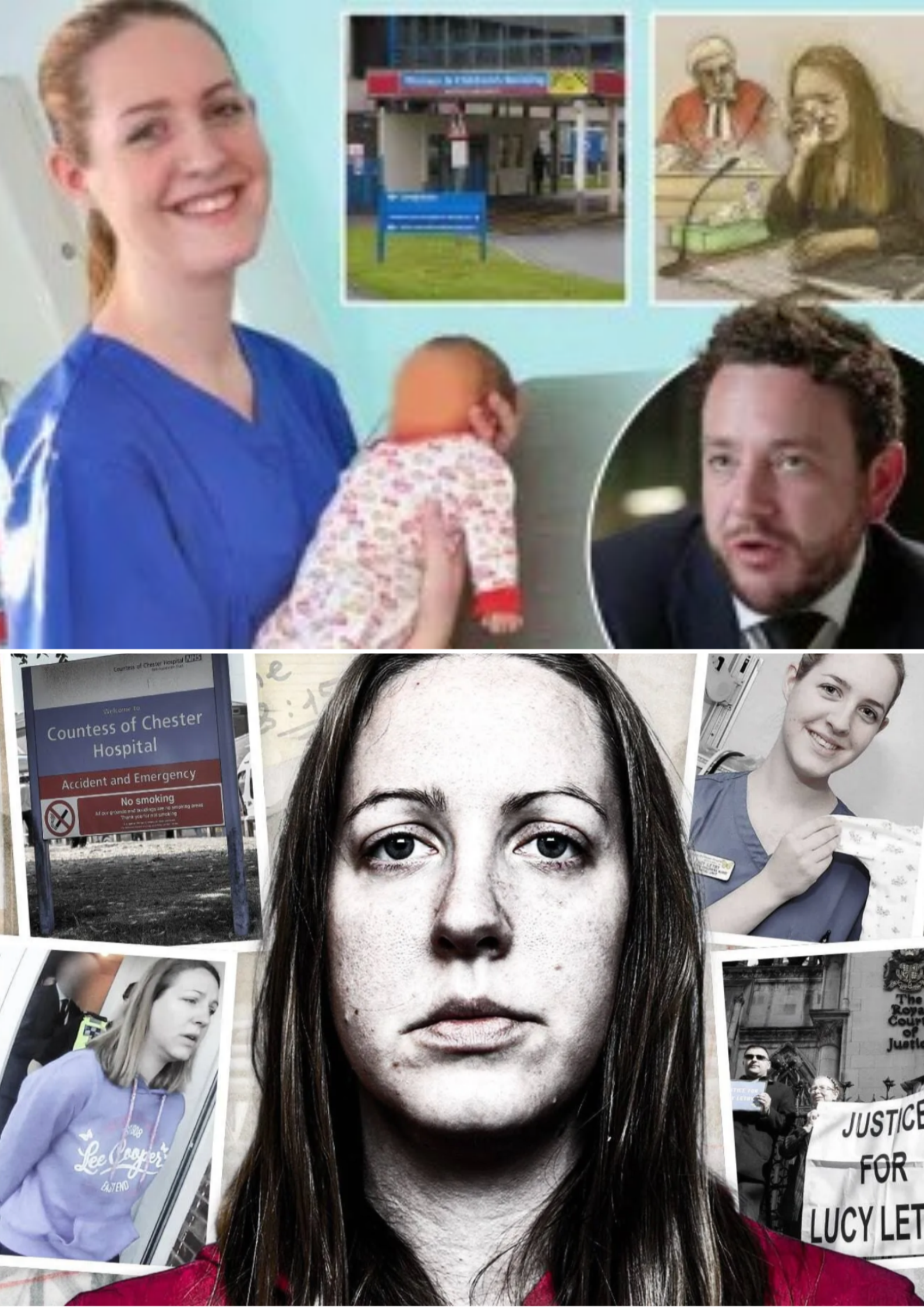
LUCY LETBY CASE ERUPTS AGAIN: NEW MEDICAL EVIDENCE PUTS CONVICTIONS UNDER FRESH SCRUTINY
Britain’s most controversial criminal case has entered another extraordinary chapter as international medical experts challenge parts of the evidence used to convict former neonatal nurse Lucy Letby.
The Lucy Letby case is back in the spotlight — but this time, the controversy is centered not on a new criminal charge, but on a growing battle over the medical evidence behind her convictions.
Letby, the former neonatal nurse at the Countess of Chester Hospital, remains behind bars serving 15 whole-life orders after being convicted of murdering seven babies and attempting to murder seven others.
She has always maintained her innocence.
Now, new expert assessments, questions surrounding maternity records and an ongoing review by the Criminal Cases Review Commission (CCRC) have placed parts of the case under renewed scrutiny.
But despite the increasingly fierce debate, Letby has not been released and her convictions have not been overturned.
 THE REVIEW THAT COULD CHANGE EVERYTHING
The CCRC received an application on Letby’s behalf in February 2025.
Its role is not to decide whether Letby is innocent. Instead, the commission examines whether new evidence or legal arguments could create a real possibility that a conviction would not be upheld if the case returned to an appeal court.
The commission is continuing to examine the material submitted on Letby’s behalf.
That means one of Britain’s most closely watched criminal cases remains legally unresolved from the perspective of the new review.
INTERNATIONAL EXPERTS CHALLENGE THE MEDICAL CASE
One of the biggest developments has involved an international group of medical experts assembled by Canadian neonatologist Dr Shoo Lee.
The panel has challenged parts of the medical interpretation used during Letby’s trials, arguing that some of the babies’ collapses or deaths could have alternative explanations, including natural causes or problems with medical care.
Dr Lee has also argued that his earlier research into air embolisms was misinterpreted during the prosecution case.
Those claims are being considered as part of Letby’s legal challenge — but they remain disputed and have not been accepted by a court as grounds for overturning her convictions.
 THE MATERNITY RECORDS QUESTION
Another major development emerged in July 2026.
The BBC reported that maternity records belonging to babies involved in the case had been seized by Cheshire Police but were not reviewed by the prosecution’s chief medical expert and were not disclosed to Letby’s defence before trial.
The records contained information about pregnancy, labour and birth.
That has prompted questions from independent medical experts about whether the circumstances surrounding each baby’s delivery were fully considered when the causes of their later collapses were assessed.
One case receiving particular attention is Baby O, one of the triplets involved in Letby’s convictions.
The prosecution argued that Baby O had been born in good condition before suddenly deteriorating.
However, Professor Phil Bennett of Imperial College London reviewed the available material for the new defence and proposed an alternative medical explanation involving a liver injury associated with the baby’s difficult Caesarean delivery.
Bennett said access to the full maternity records would help him better understand what happened.
The prosecution’s former expert, Dr Dewi Evans, has disagreed with the suggestion that the missing obstetric material would have changed his conclusions.
TWO EXPERTS THEN WALKED AWAY
The controversy became even more complicated in September.
Two experts who had been involved with Letby’s defence team — chemical engineering expert Helen Shannon and bioengineering professor Geoff Chase — withdrew from the team.
Importantly, they continued to stand by their assessment that it was very unlikely two babies had been deliberately poisoned with insulin.
But they said they could not support other arguments being advanced by the defence because they believed those arguments were inconsistent with available evidence and established scientific principles.
Their decision highlighted just how divided the scientific debate surrounding the case has become.
THE DEFENCE SAYS THE CASE HAS BEEN FUNDAMENTALLY CHALLENGED
Letby’s barrister, Mark McDonald, has strongly rejected the idea that the withdrawal of the two experts undermines the wider legal challenge.
He has argued that new evidence from international specialists in areas including insulin, endocrinology and laboratory medicine raises fundamental questions about the scientific evidence relied upon during the original trials.
The defence position is that the strength of the new case does not depend on a single expert, but on what it describes as a broader convergence of medical evidence.
The prosecution case, however, remains legally intact unless and until an appeal court rules otherwise.
THE THIRLWALL INQUIRY ADDS ANOTHER LAYER
The controversy has unfolded alongside the publication of the Thirlwall Inquiry report into events at the Countess of Chester Hospital.
Published on September 15, 2026, the inquiry examined how hospital management responded to concerns about events on the neonatal unit between 2015 and 2018.
The report found serious failures by hospital management, including delays in responding to concerns raised by doctors and delays in involving police.
However, the inquiry was not established to determine whether Letby’s criminal convictions were correct, and its findings do not overturn those convictions.
NO RELEASE — NO OVERTURNED VERDICT
That distinction is crucial.
Despite claims circulating online about a secret legal file or an imminent release, there is currently no verified announcement that Lucy Letby is being released.
She remains imprisoned.
Her convictions remain in force.
And the CCRC has not announced that it will refer her case back to the Court of Appeal.
At the same time, the existence of a continuing CCRC review means the legal debate has not ended.
WHAT HAPPENS NEXT?
The next major development will depend on the CCRC’s assessment of the new evidence and legal arguments.
If the commission concludes that the case meets its statutory test, it could potentially refer one or more convictions back to the Court of Appeal.
If it does not, Letby’s convictions would remain in place unless another legal route became available.
For now, neither outcome has been decided.
What is clear is that the Lucy Letby case remains one of the most fiercely contested criminal and medical controversies in Britain.
The original jury verdict remains legally valid.
But questions surrounding medical evidence, maternity records and alternative explanations continue to fuel an extraordinary debate over whether every part of the case has truly been tested.
And as the CCRC continues its work, the question hanging over the case is no longer simply what happened inside the Countess of Chester Hospital — but whether the new evidence is strong enough to change what Britain’s courts have already decided.