LUCY LETBY CASE UNDER FRESH SCRUTINY: UNDISCLOSED MATERNITY RECORDS AND A CONTROVERSIAL DOCTOR’S ACCOUNT RAISE NEW QUESTIONS
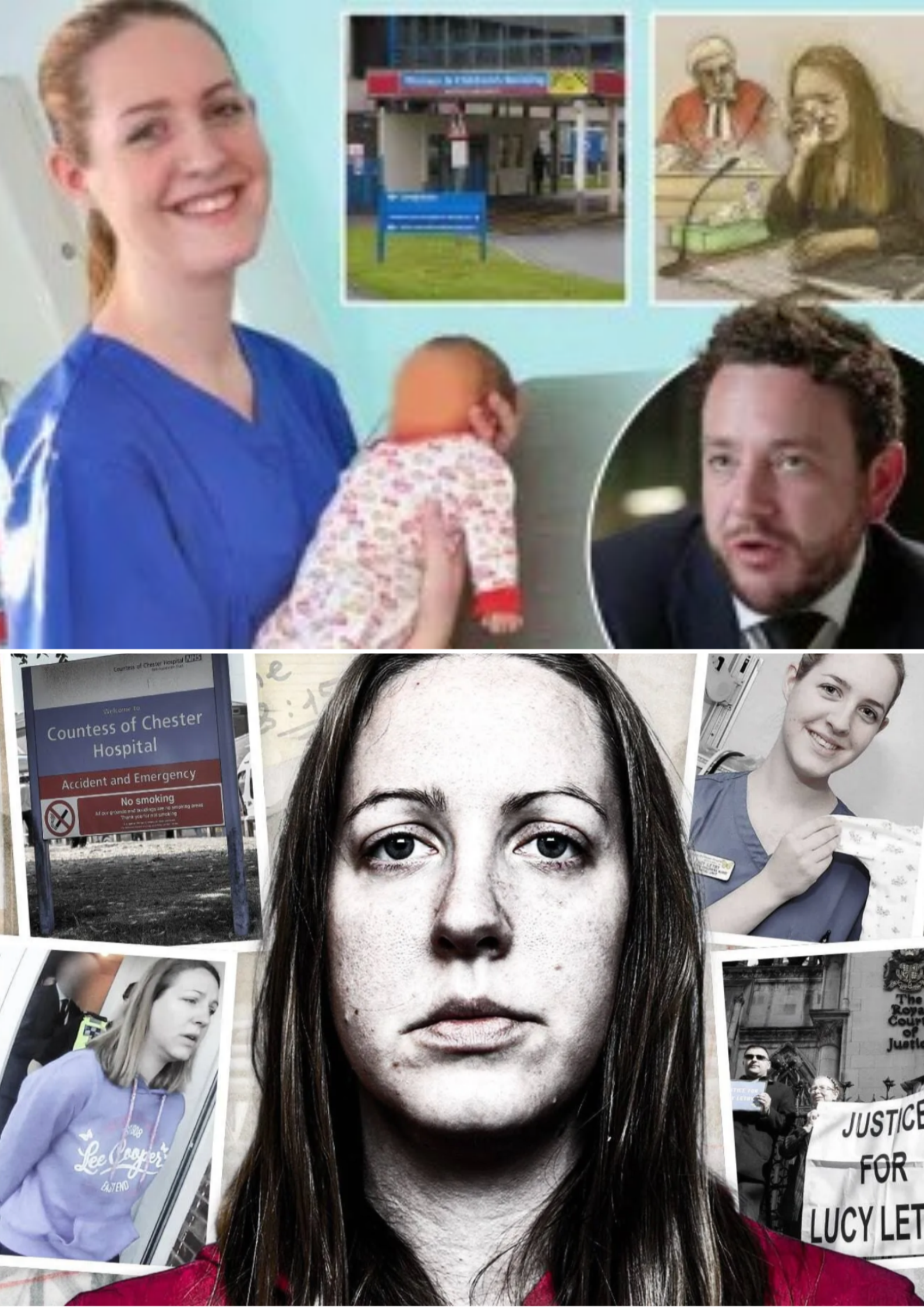
LUCY LETBY CASE UNDER FRESH SCRUTINY: UNDISCLOSED MATERNITY RECORDS AND A CONTROVERSIAL DOCTOR’S ACCOUNT RAISE NEW QUESTIONS
The Criminal Cases Review Commission is examining the former neonatal nurse’s convictions as reports reveal that maternity records were not disclosed to her defence and two experts have withdrawn from her legal team. A separate report has also raised questions about a doctor’s earlier account of an incident involving Baby K. But Letby’s convictions remain in place, and no court has ruled that the new material overturns the case.
The case of former British neonatal nurse Lucy Letby has come under renewed scrutiny following reports about previously undisclosed maternity records, disagreements among experts and questions surrounding evidence given by a doctor who testified at her trial.
Letby, 36, is serving 15 whole-life prison terms after being convicted of murdering seven babies and attempting to murder seven others at the Countess of Chester Hospital in England in 2015 and 2016.
Her legal team has asked the Criminal Cases Review Commission (CCRC) to examine her convictions, arguing that new expert evidence raises serious questions about the prosecution’s case. The commission confirmed in February 2026 that its review was under way.
The latest developments have intensified an already contentious public debate. However, the existence of disputed evidence does not, by itself, establish that a conviction was unsafe or that Letby was wrongly convicted.
 MATERNITY RECORDS THAT WERE NOT DISCLOSED TO THE DEFENCE
One of the most significant developments emerged from a BBC File on 4 Investigates report published on July 22, 2026.
According to the investigation, maternity records relating to babies in Letby’s case had been seized by Cheshire Police but were not reviewed by the prosecution’s chief medical expert or provided to the defence before trial.
The records included information about the mothers’ pregnancies, labour and deliveries — details that medical specialists say can be important when investigating why a newborn baby became critically ill or died.
The BBC reported that the defence had requested the maternity notes but did not receive them. The Crown Prosecution Service reportedly considered the records irrelevant because the prosecution had not relied on them when building its case.
The discovery has prompted questions about whether all potentially relevant medical information was adequately considered before the jury reached its verdicts.
Professor Phil Bennett, an obstetrics and gynaecology specialist at Imperial College London, told the BBC that maternity and neonatal care should be assessed together when investigating a baby’s death.
Dr Dewi Evans, the prosecution’s chief medical witness, said he had not seen the full obstetric records, although he had reviewed brief maternity summaries included with the babies’ neonatal notes. He maintained that the full records would not have changed his understanding of the cases.
The disagreement highlights a central issue in the continuing debate: whether alternative medical explanations were sufficiently examined during the original investigation and trials.
The records’ absence from the defence case has not, however, resulted in any conviction being overturned. Their significance remains a matter for further examination.
 NEW QUESTIONS ABOUT THE DOCTOR WHO TESTIFIED IN THE BABY K CASE
A separate controversy concerns consultant paediatrician Dr Ravi Jayaram, whose evidence featured in the case involving Baby K, an extremely premature infant.
A report published by The Sun in September 2026 described a previously unseen email written by Jayaram in May 2017, before the police investigation had fully developed.
According to the report, the email recorded that Letby had called Jayaram to inform him that the baby’s oxygen saturation levels were falling. This differs from the account he gave at Letby’s 2024 retrial, where he said he had not received a call for help from her.
The discrepancy has attracted attention because Jayaram was the key eyewitness to the incident involving Baby K.
The prosecution argued that Letby had interfered with the premature infant’s breathing tube. Jayaram testified that he entered the nursery and found the baby deteriorating while Letby was present.
The reported email raises questions about how the incident was documented before the case reached court and how the information was presented to investigators.
However, the report concerns an email, not a newly discovered audio recording. The material reported so far does not establish that the email alone disproves the prosecution’s case or overturns the jury’s verdict.
Any assessment of its significance would need to consider the full documentary record, the testimony given in court and the wider evidence relating to Baby K.
TWO EXPERTS WITHDRAW FROM LETBY’S DEFENCE TEAM
Another development came in September, when engineering expert Helen Shannon and bioengineering professor Geoff Chase withdrew from Letby’s defence team.
The pair had produced a report challenging the prosecution’s evidence concerning allegations that two babies had been poisoned with insulin.
In a letter reported by The Guardian and covered by ITV News, they expressed concerns about the scientific credibility of some broader arguments being advanced by the defence, describing certain issues as having “fundamental unresolvable problems.”
Their withdrawal generated headlines because the experts had previously questioned aspects of the insulin evidence.
Letby’s barrister, Mark McDonald, disputed the suggestion that their departure undermined the overall application. He said the experts’ concerns related to particular arguments and maintained that other expert evidence supporting Letby’s challenge remained available to the CCRC.
The distinction is important: the experts’ withdrawal did not amount to a declaration that every challenge to the convictions was invalid. Equally, their earlier report does not independently establish that Letby was wrongly convicted.
The CCRC must assess the evidence and arguments as a whole rather than relying on any single expert opinion.
WHAT DID THE THIRLWALL INQUIRY FIND?
The controversy has unfolded alongside the publication of the Thirlwall Inquiry’s report on September 15, 2026.
The public inquiry examined how hospital management responded to concerns about Letby and whether earlier intervention could have prevented harm to babies.
Its chair, Lady Justice Kathryn Thirlwall, identified serious failures in hospital leadership, governance and safeguarding. The report criticised delays in escalating concerns and in involving the police.
However, the inquiry was not established to determine whether Letby’s criminal convictions were safe. Its terms of reference focused on the hospital’s response and the circumstances that allowed the events to continue.
Consequently, the inquiry’s findings about institutional failures should not be confused with a judicial decision on the validity of Letby’s convictions.
The report has renewed debate about how the hospital, police and medical experts interpreted the events, but it did not overturn Letby’s sentences.
THE CCRC REVIEW: WHAT HAPPENS NEXT?
The Criminal Cases Review Commission is an independent body that investigates potential miscarriages of justice. If it concludes that there is a real possibility a conviction would not be upheld on appeal, it can refer a case back to the appeal courts.
The commission has confirmed that it received Letby’s preliminary application in February 2025 and subsequently received further submissions and expert reports. Its February 2026 statement said the review was continuing and stressed that determining guilt or innocence is a matter for the courts. \
The commission has not announced a decision to refer Letby’s convictions back to the Court of Appeal.
That means the legal position remains unchanged: her convictions stand, even as the defence’s arguments continue to receive public attention.
The case has become a wider debate about expert evidence, disclosure obligations, the interpretation of complex medical events and the safeguards needed to prevent miscarriages of justice.
For the families of the babies involved, the continuing dispute also carries profound emotional consequences. Any review must carefully examine the evidence while respecting the children and families at the centre of the case.
The central question now is whether the new material will meet the legal threshold for a fresh appeal. Until the CCRC reaches a decision — and any subsequent court rules on the evidence — claims that the case has been overturned or that a decisive secret has been exposed remain premature.
\