NOAH WOODS, 3: INQUEST HEARS NEW DETAILS ABOUT HIS FINAL JOURNEY — FAMILY STILL AWAITS ANSWERS
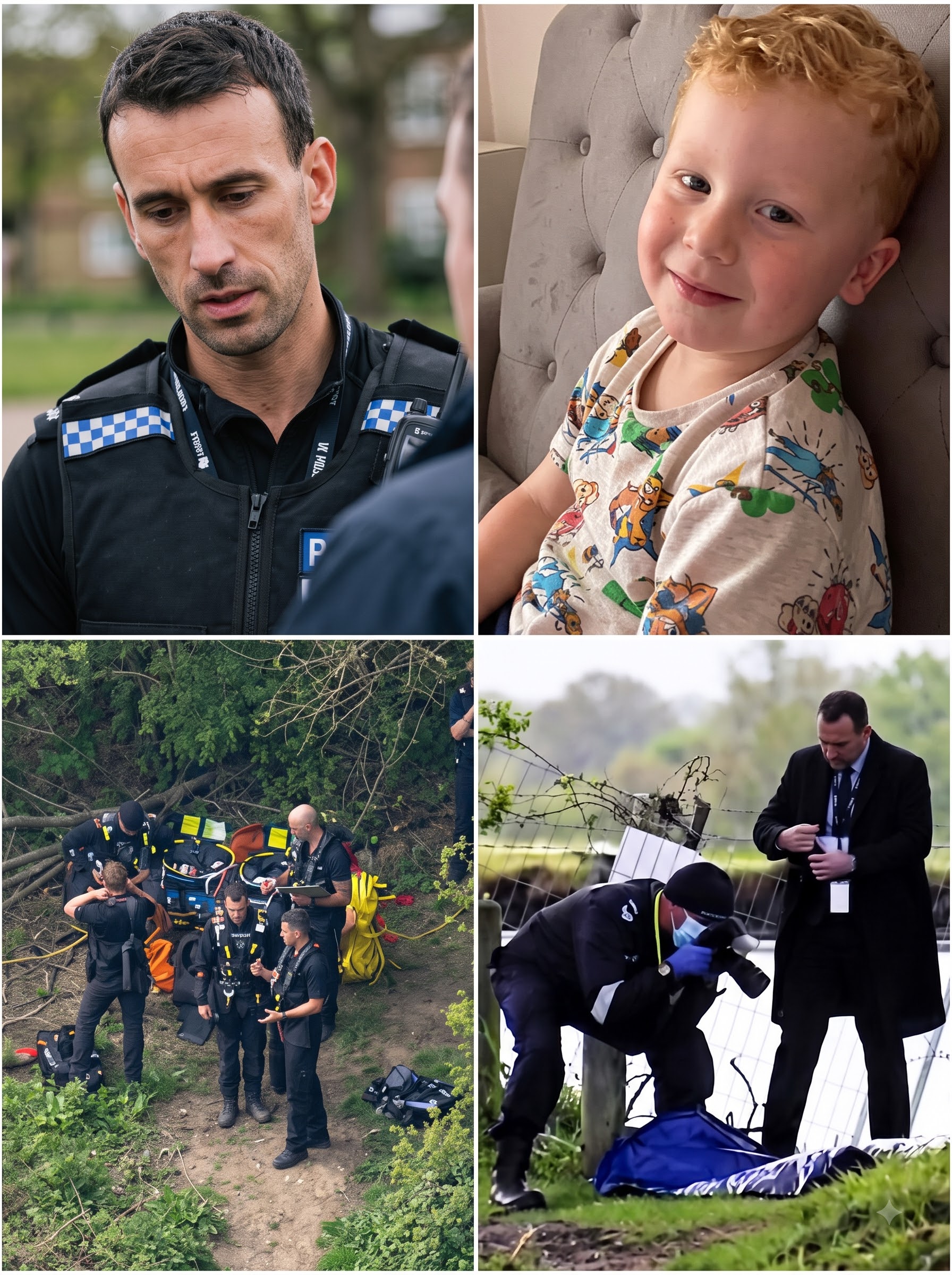
NOAH WOODS, 3: INQUEST REVEALS HEARTBREAKING DETAILS OF HIS FINAL HOURS — FAMILY STILL WAITING FOR ANSWERS
The death of three-year-old Noah Woods has devastated his family and left a close-knit community grieving. As an inquest examines the circumstances surrounding his disappearance, new details have emerged about his final known movements — but important questions remain unanswered.
BRANTHAM, SUFFOLK — The family of little Noah Woods continues to face an unimaginable loss after the three-year-old was found in Decoy Pond following a major search that brought together emergency services, specialist search teams and approximately 1,300 members of the public.
Noah disappeared on the afternoon of September 15, 2026, after visiting an under-fives play area in Merriam Close, Brantham, with a relative. What began as a routine outing quickly became an urgent search when the little boy could no longer be found.
The following day, specialist divers from the Metropolitan Police recovered the body of a child from Decoy Pond. The child was later formally identified as Noah.
His death has since been examined at an opening inquest hearing, where the court heard details about the route he took after leaving the playground and the efforts made to follow him.
Yet, while the hearing has provided a clearer account of Noah’s last known movements, it has not delivered every answer his family is waiting for. The medical cause of death was recorded as pending further investigation, and the inquest was adjourned to a date to be fixed.
 WHAT DID THE POST-MORTEM EXAMINATION REVEAL?
Questions surrounding Noah’s final hours remain at the centre of the ongoing proceedings.
At the opening hearing at Suffolk Coroner’s Court in Ipswich on September 25, Detective Chief Inspector Matthew Connick outlined details gathered during the police investigation. The court heard that a post-mortem examination had been carried out at Addenbrooke’s Hospital mortuary in Cambridge.
However, the medical cause of death had not been finalised at that stage. It was recorded as pending further investigation, meaning the hearing did not establish a definitive medical explanation for how Noah died.
The distinction is important. Although the examination forms part of the process of understanding what happened, the available public information does not support claims that a final autopsy conclusion has already answered every question about his last moments.
Suffolk Police have said Noah’s death is not being treated as suspicious, while enquiries were still required before a file could be submitted to the coroner. No final inquest conclusion was announced at the opening hearing.
For Noah’s loved ones, the wait for answers comes alongside the painful reality of learning more about the circumstances in which their little boy disappeared.
 THE FINAL KNOWN MOVEMENTS BEFORE NOAH WENT MISSING
During the inquest, the court heard that Noah had been visiting the playground with a relative as part of what police described as a normal routine.
Motion-activated CCTV showed Noah playing in the under-fives area. The first footage referred to at the hearing was recorded at approximately 2:13 p.m., while the last recorded sighting of him playing there was at around 2:37 p.m.
Investigators explained that the camera was motion-activated and did not provide continuous footage. As a result, the recordings did not show every moment of the outing.
The court heard that Noah left the play area through a gap in the fence leading into a nearby memorial garden. He then passed through an open gate and continued in the direction of Decoy Pond.
His relative followed closely and tried to keep up with him. Detective Chief Inspector Connick told the hearing that the relative shouted after Noah, but after travelling approximately 200 metres, the child could no longer be seen.
Police were contacted, and a large-scale search operation began.
These details form part of the evidence presented at the opening hearing. They help establish the sequence of events known to investigators, but the inquest has not yet reached a final conclusion about the circumstances of Noah’s death.
A SEARCH THAT BROUGHT THE COMMUNITY TOGETHER
As concern for Noah grew, emergency services and specialist teams worked alongside volunteers in an extensive effort to locate him.
Around 1,300 members of the public joined the search, according to Suffolk Constabulary. Support came from police search teams, the Metropolitan Police Dive Team, the National Police Air Service, HM Coastguard, Suffolk Fire and Rescue Service, ambulance personnel and Suffolk Lowland Search and Rescue.
Other agencies also provided assistance, including the Environment Agency.
People helped in different ways: some searched the village and surrounding areas, while others supported the volunteers by coordinating activity, providing food and drinks, helping with facilities or directing traffic.
The search continued through a deeply distressing period for Noah’s family and those involved. On the afternoon of September 16, Metropolitan Police divers recovered a child’s body from Decoy Pond.
The discovery brought the search to a tragic end. Noah’s identity was subsequently confirmed, leaving his family, neighbours and the wider community to come to terms with the loss of a very young child.
Superintendent Tom Pearse thanked the people who had come forward to help and expressed sympathy for Noah’s family. Police also asked the public to respect the family’s need for time, space and privacy.
THE LITTLE BOY HIS FAMILY WILL NEVER FORGET
In a tribute issued through Suffolk Constabulary, Noah’s family described him as a “happy, cheeky, playful” three-year-old who loved to laugh and giggle and who brought joy wherever he went.
They said he was at the centre of their world and spoke about the special bond he shared with his baby brother.
The family also explained that Noah had been undergoing an assessment for autism, although he had not received a diagnosis. He had mild hearing loss and delayed speech, but they said he was learning every day and had recently begun saying new words.
One of the things they said they would miss most was the sound of his voice — something they described as unique and wonderful.
Their words offered a glimpse of the child behind the headlines: a little boy whose personality, laughter and everyday milestones were treasured by those closest to him.
Noah’s father, Rhys Woods, also paid tribute to his son, remembering him as the “sweetest and most innocent little boy, with nothing but love to give.”
For the family, the loss is not simply about the unanswered questions surrounding one afternoon. It is also about the countless ordinary moments they expected to share with Noah as he grew older — moments that will now remain memories.
WHY THE INQUEST MATTERS
An inquest examines the circumstances surrounding a death and can establish relevant facts based on the evidence available to the coroner. An opening hearing is generally an early procedural stage rather than the final determination of the case.
In Noah’s case, the September 25 hearing set out some of his last known movements and confirmed that the medical cause of death remained under investigation. The proceedings were then adjourned, with a further date to be fixed.
Until further evidence is considered and the inquest reaches its conclusion, it would be premature to present an unconfirmed explanation as the definitive account of what happened.
Police have said the death is not being treated as suspicious. That position should be distinguished from the coroner’s continuing work to establish the relevant circumstances and medical cause of death.
For Noah’s family, the process may provide further information in time, but it cannot undo the loss of a child they described as the centre of their world.
A FAMILY ASKING FOR PRIVACY AS THEY GRIEVE
The public response to Noah’s disappearance showed how deeply the case affected people far beyond Brantham. Hundreds of messages of sympathy followed the search, while residents and volunteers came together to help find him.
Police have acknowledged that outpouring of support while asking people to allow the family privacy as they grieve.
Noah’s relatives have shared memories of his laughter, his growing voice and his love for his baby brother. Their tribute has kept the focus on the little boy they knew and loved, rather than allowing the circumstances of his death to define his entire story.
The inquest remains an important part of understanding what happened, but the publicly available findings from the opening hearing do not yet provide a final medical explanation.
For now, Noah is remembered by his family as a playful, affectionate child who brought happiness to those around him — and whose absence has left an immeasurable space in their lives.
As the family waits for further answers, their message is one of love, remembrance and a request for privacy during an extraordinarily painful time.