BABY GIRL BORN WITH AN ULTRA-RARE FACIAL CONDITION LIVES FOR JUST SEVEN HOURS AS DOCTORS RACE TO GIVE HER A CHANCE
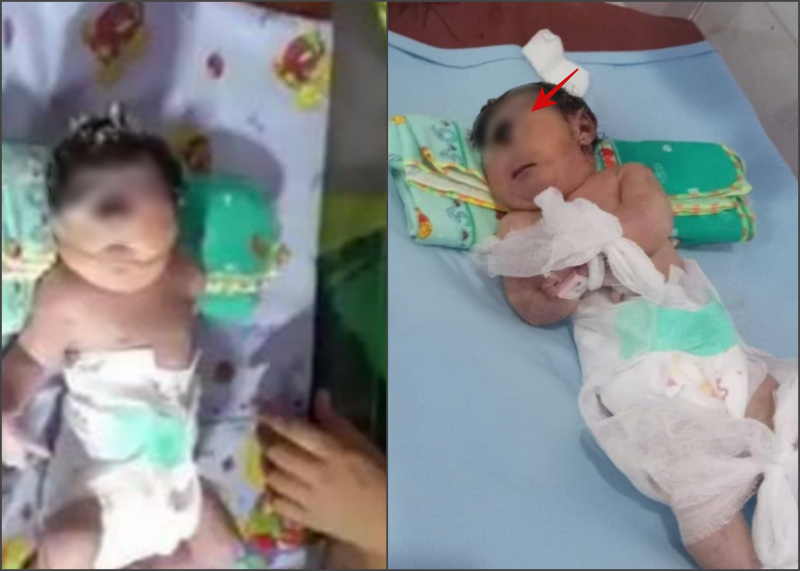
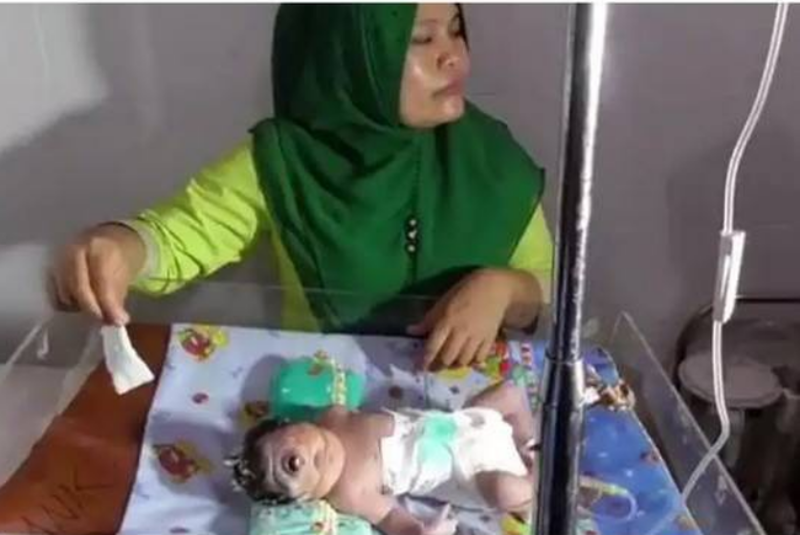
A newborn baby girl in North Sumatra, Indonesia, touched countless hearts after surviving only a few hours following her birth with an extremely rare congenital condition.
Born on September 13 in the Natal region of North Sumatra, the infant arrived with severe facial abnormalities that required immediate medical attention. Doctors quickly placed her on oxygen support while doing everything they could to keep her comfortable and stable.
Medical staff explained that her condition was exceptionally serious, and from the very beginning, her future was uncertain.
According to local health officials, babies born with similar conditions often survive only a very short time. The little girl’s heart rate remained critically low, leaving doctors deeply concerned.
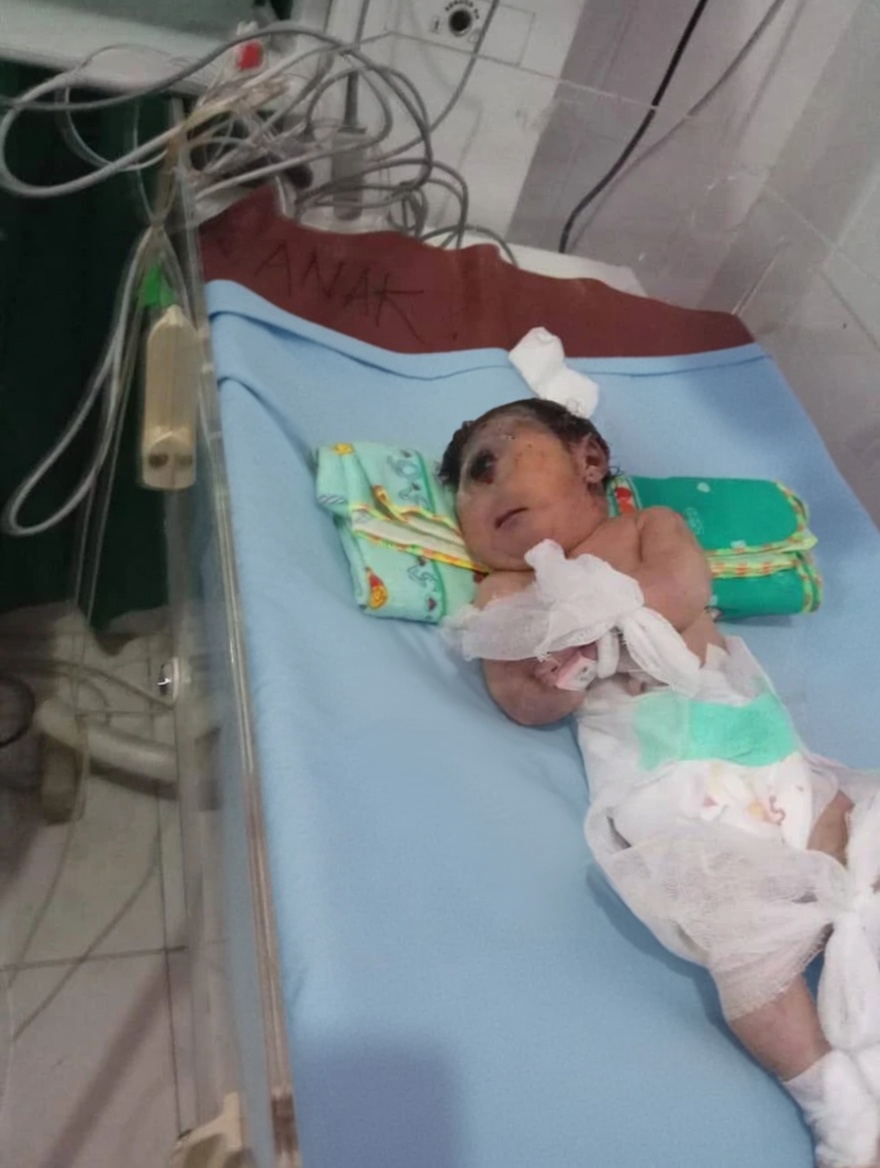
Even so, her medical team refused to lose hope.
They planned to transfer her to a larger specialist hospital in Medan, believing that every possible opportunity should be explored. Sadly, despite their efforts, the baby passed away later that day after spending around seven precious hours with her family.
The heartbreaking loss has left many people asking what may have caused such a rare condition.
During the investigation, officials learned that the baby’s father worked at a small-scale artisanal gold mine, where workers may be exposed to hazardous substances used during the gold extraction process. Investigators suggested that mercury exposure is among the possible factors being considered, although determining the exact cause of a congenital condition is often complex and may involve multiple genetic and environmental influences.
Mercury is a heavy metal known to be harmful to human health. Health experts have long warned that significant exposure during pregnancy may increase the risk of developmental problems in unborn babies, particularly affecting the nervous system.
Environmental specialists note that mercury exposure is not limited to mining communities.
One of the most common ways people can be exposed is through certain types of fish. Mercury released into the environment can enter rivers and oceans, where it accumulates in larger predatory fish over time.
For this reason, the U.S. Food and Drug Administration (FDA) advises pregnant women to avoid fish known to contain higher mercury levels, including swordfish, king mackerel, shark, marlin, and tilefish.
Medical experts also continue to emphasize the importance of reducing exposure to potentially harmful environmental substances during pregnancy whenever possible.
According to the American College of Obstetricians and Gynecologists (ACOG), fetal development is an especially sensitive stage of life, and limiting contact with environmental toxins is an important part of protecting both mother and baby.
Although her life lasted only a few hours, the little girl’s story has become a powerful reminder of how precious every new life is—and of the importance of ongoing research, awareness, and prenatal care that may help protect future families from similar heartbreak.
Source: theAsianparent