The Doctor Who Could Not See or Hear: How Alexandra Adams Defied the Skeptics to Make British Medical History
The Doctor Who Could Not See or Hear: How Alexandra Adams Defied the Skeptics to Make British Medical History
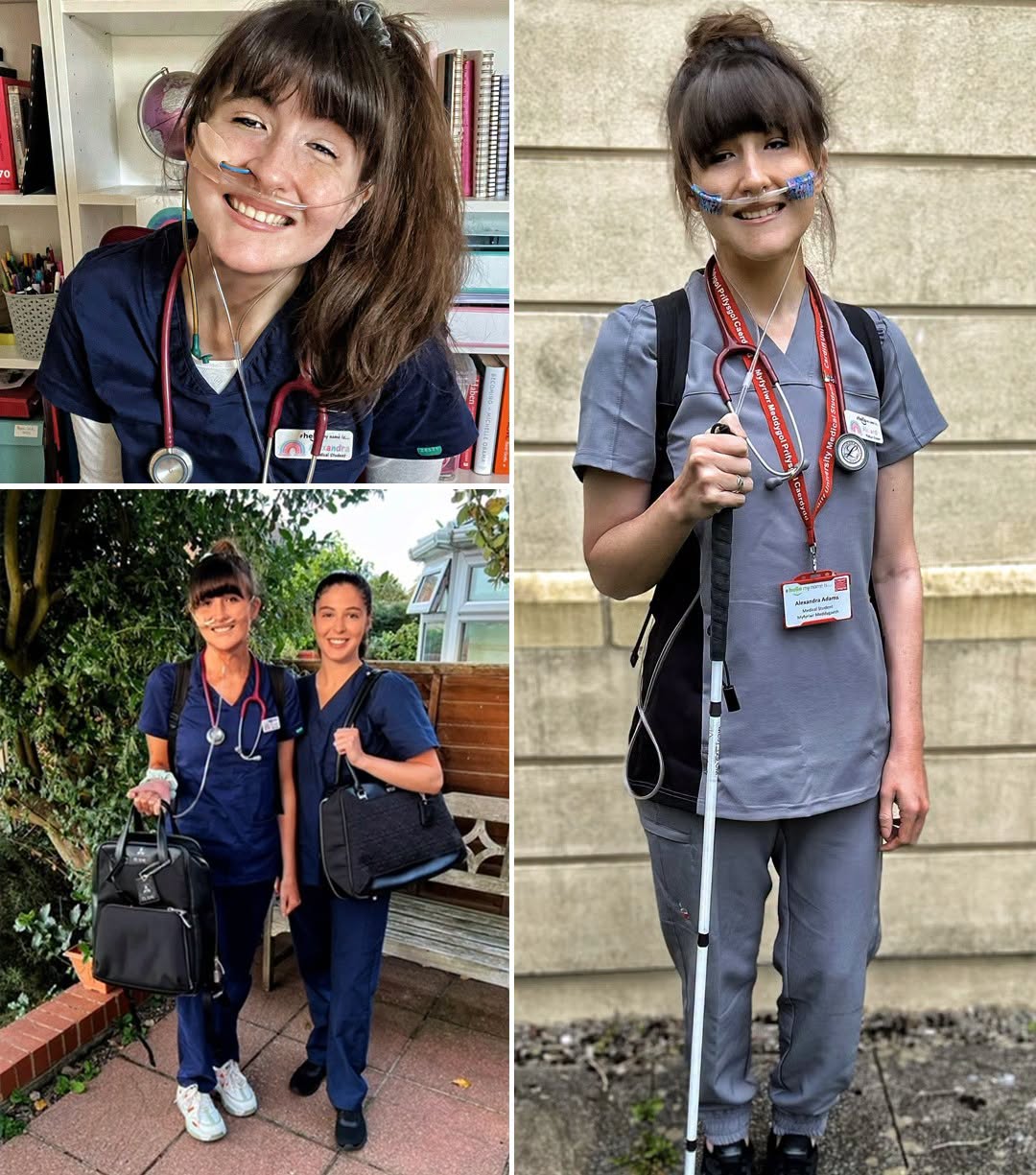
For years, well-meaning teachers, university administrators, and medical professionals told Alexandra Adams the same thing: someone who is deaf and blind could never safely become a doctor. Registered deafblind from birth, Alexandra has severe hearing loss, extremely limited vision, and complex health conditions that require her to use supplemental oxygen. Yet, she refused to let these physical challenges define her capability to heal others.
Her dream was forged at age sixteen during a grueling eighteen-month hospital stay. While most doctors spoke about her as a medical case from the foot of her bed, one young physician took the time to close the curtain, look her in the eyes, and ask if she was okay. Seeing Alexandra cry, the doctor quietly revealed a large surgical scar of her own, offering a silent message of solidarity. That simple act of human connection taught Alexandra that true medicine requires empathy just as much as clinical knowledge.
To turn her dream into reality, Alexandra spent over a decade fighting systemic barriers. One university accepted her, only to abruptly withdraw the offer due to her disabilities. Throughout her medical training, colleagues repeatedly questioned her safety and competence. To adapt, she embraced innovative technology, using a specialized Bluetooth stethoscope that streams heart and lung sounds directly to her hearing aids, and vibrating pagers linked to her phone. When performing delicate procedures like inserting needles, she relies on her highly developed sense of touch.
In July 2026, her relentless determination culminated in her officially receiving her medical degree, making her the first Deafblind doctor in the United Kingdom. Now looking toward a career in geriatrics or palliative care, Alexandra’s journey proves that her greatest obstacle was never her physical limitations, but rather convincing a skeptical world to look past her disabilities and see her extraordinary ability to care.