“I SAW HIM THAT DAY…” — THE WOMAN LAST LINKED TO NOLAN WELLS’ FINAL HOURS BECOMES THE CENTER OF A NEW TIMELINE
“I SAW HIM THAT DAY…” — THE WOMAN LAST LINKED TO NOLAN WELLS’ FINAL HOURS BECOMES THE CENTER OF A NEW TIMELINE
A young man was reportedly seen alive on Horn Island. Minutes later, the timeline becomes increasingly difficult to explain. Now, renewed attention is focusing on the woman Nolan was reportedly speaking with — and on the narrow window between his last known sighting and the departure of the boat that brought him there.
The mystery surrounding the death of 18-year-old Nolan Wells has entered another intense chapter.
For weeks, investigators, family members, volunteers and online observers have tried to reconstruct what happened during the final hours of Nolan’s Fourth of July trip to Horn Island, Mississippi.
Now, a claim circulating online has placed renewed attention on a woman who was reportedly seen talking with Nolan shortly before he disappeared.
The headline spreading across social media suggests that the woman has “broken her silence” and revealed how Nolan died.
But there is an important distinction between the headline and what has actually been independently established.
There is currently no verified public evidence showing that this woman has conclusively explained how Nolan died.
What is documented, however, is a much narrower — and potentially important — piece of the timeline.
Nolan was reportedly seen on Horn Island around 3 p.m. on July 4.
His boat later departed the island at approximately 4:31 p.m.
Nolan was not aboard.
Two days later, his body was found in the water near Horn Island.
And that roughly 90-minute window has become one of the central unanswered questions in the case.
THE LAST PERSON REPORTEDLY SEEN TALKING TO NOLAN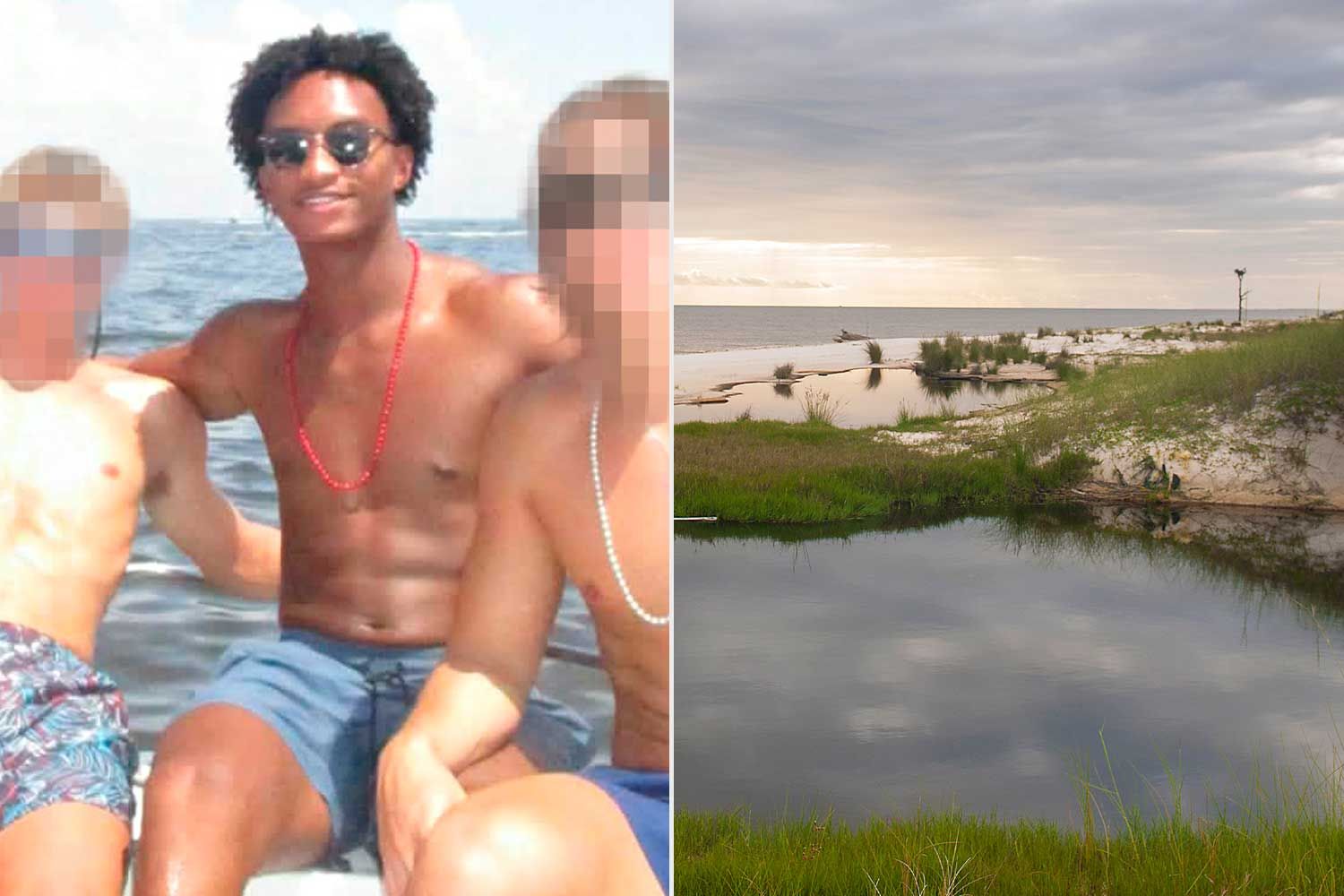
According to accounts that circulated during the search, Nolan was reportedly seen talking to a woman on the island shortly before he disappeared.
That detail immediately attracted enormous public attention.
Who was she?
What did they talk about?
How long were they together?
Did she see Nolan leave?
Did she see him return toward the boats?
Did she notice anything unusual?
And perhaps most importantly:
What happened after their conversation ended?
These questions have become even more significant because the United Cajun Navy’s later report attempted to organize photographs, witness accounts, GPS information, screenshots and social-media material relating to the July 4 timeline.
But the organization itself has warned that much of the material was submitted by members of the public and could not independently verify every photograph, claim or piece of metadata.
That means the report is best understood as a collection of information and leads — not a final reconstruction of Nolan’s death.
THE 90-MINUTE GAP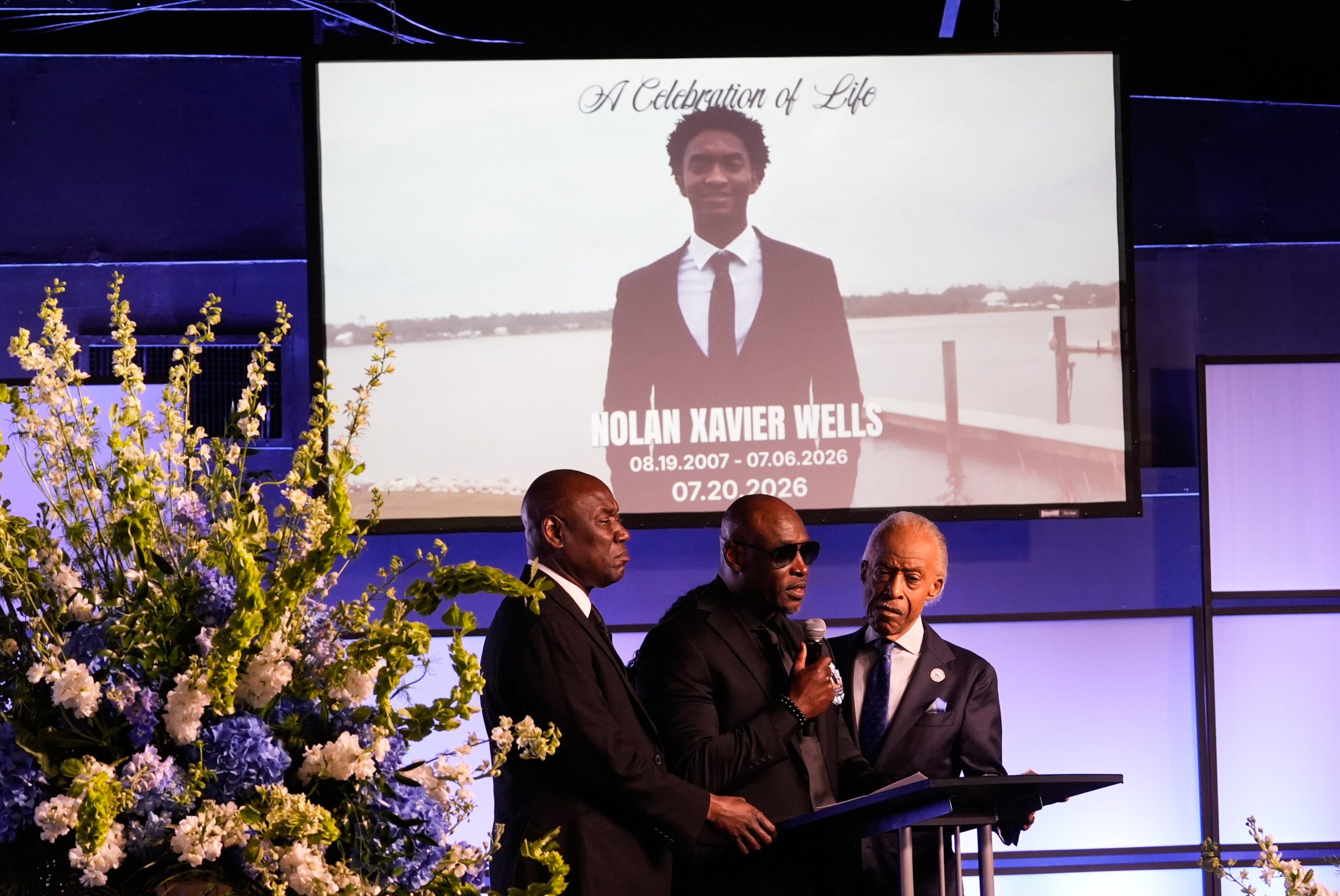
Perhaps the most important question isn’t simply who Nolan was talking to.
It’s what happened afterward.
The United Cajun Navy report highlights the gap between Nolan’s last known sighting and the departure of the boat he had arrived on.
That gap is now one of the most closely examined portions of the timeline.
Imagine the sequence:
Nolan is on Horn Island.
He is reportedly seen talking with a woman.
At some point, the people he arrived with prepare to leave.
The boat departs.
Nolan is not on it.
And sometime after that, something happens that ultimately leaves him dead in the surrounding waters.
The problem is that the publicly available evidence does not yet provide a complete minute-by-minute explanation of what happened during that interval.
And without that missing sequence, there is a dangerous temptation to fill the gaps with speculation.
DID NOLAN PLAN TO RETURN TO THE BOAT?
One of the most intriguing questions raised by accounts circulating online is whether Nolan intended to return to the boat after speaking with the woman.
If that is accurate, investigators would naturally want to establish:
Where was Nolan headed?
Did he actually begin walking toward the boat?
Did someone see him afterward?
Did he change his plans?
Did he remain on the island?
Did he enter the water voluntarily?
Or did an unexpected event interrupt whatever he intended to do?
At this point, none of those possibilities should be presented as established fact.
They are questions.
And the investigation needs evidence capable of answering them.
WHY THE WOMAN’S ACCOUNT MATTERS — BUT CANNOT BE OVERSTATED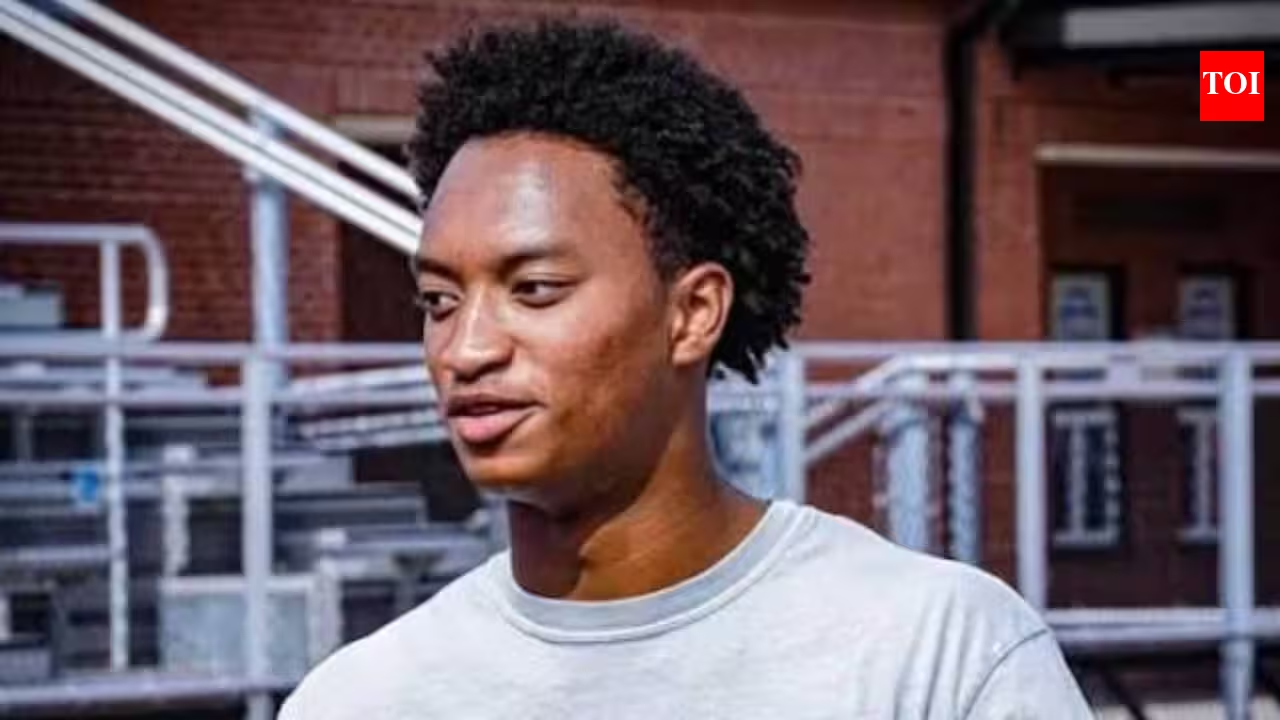
If the woman did speak with Nolan shortly before he disappeared, her account could potentially help investigators establish part of the timeline.
But that does not automatically mean she witnessed Nolan’s death.
Those are two completely different claims.
Someone can be among the last people known to have interacted with a missing person without knowing what happened afterward.
That distinction is particularly important in Nolan’s case because social media has generated an enormous amount of speculation.
The United Cajun Navy itself emphasized that its report was not designed to “point fingers” or determine criminal or civil responsibility.
So the most responsible question isn’t:
“Did this woman reveal who killed Nolan?”
It is:
“What, if anything, can her account independently establish about Nolan’s final known movements?”
That is a much more significant question.
THE CAJUN NAVY REPORT ADDS MORE PIECES — BUT NOT A FINAL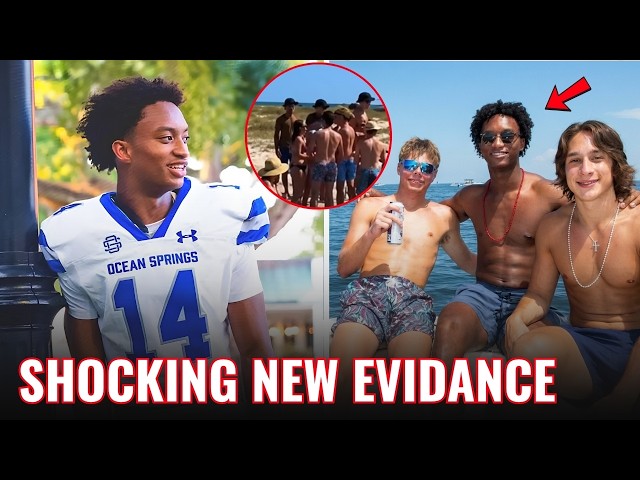 ANSWER
The United Cajun Navy recently released a report containing information gathered during its search for Nolan.
The document reportedly includes photographs, screenshots from videos taken around Horn Island, GPS coordinates, annotations and statements circulating on social media.
The organization provided the material to the Jackson County Sheriff’s Office, the district attorney and Nolan’s parents.
That development matters because it places information that had previously been scattered across social media into one organized document.
But it also comes with a major warning.
The organization acknowledged that it could not verify all details or metadata associated with material submitted to it.
In other words:
A photograph can raise a question without answering it.
A witness statement can provide a lead without proving what happened.
A GPS coordinate can establish a location without establishing what a person was doing there.
And a social-media post can be useful without being reliable.
Investigators must put those pieces together carefully.
THE PHOTOGRAPHS COULD BECOME IMPORTANT
One reason the case continues to attract attention is the existence of photographs and videos taken on Horn Island during the July 4 celebrations.
The United Cajun Navy previously circulated a photograph that it believed might show Nolan in the background and asked the public for help identifying the original photographer and determining the timestamp.
That may sound like a small detail.
It isn’t.
If a photograph can be authenticated and precisely dated, it could potentially establish where Nolan was at a particular moment.
Several photographs could become even more useful.
Together, they might help create a visual timeline:
Where Nolan was.
Who was nearby.
Where boats were positioned.
When people moved.
And how the island’s activity changed during the afternoon.
But again, authentication is essential.
WHAT HAPPENED AFTER THE BOAT LEFT?
This remains the question hanging over the entire case.
Nolan’s disappearance did not happen in a vacuum.
There was a known location.
There were other people on the island.
There were boats.
There were photographs and videos.
There were witnesses.
And there was a specific period between Nolan’s last known sighting and the discovery of his body.
Yet the exact chain of events remains unresolved.
That is why the “White Lady” narrative has become so emotionally powerful online.
People want a single witness who can close the gap.
They want someone who can say:
“I saw what happened.”
But investigators cannot rely on what people want to be true.
They need corroboration.
THE AUTOPSY QUESTION
Another major reason speculation continues is that the cause and manner of Nolan’s death have remained a subject of intense public discussion.
Mississippi Today reported in July that a state autopsy had been completed but that its results, including cause of death and toxicology, had not yet been publicly released at that time.
Other reporting has described an independent examination commissioned by the family as leaving the cause and manner undetermined.
That makes sensational claims about the exact circumstances of Nolan’s death especially difficult to substantiate without official forensic findings.
A witness statement alone cannot replace an autopsy.
A social-media video cannot replace forensic evidence.
And a theory cannot replace a verified timeline.
A CASE FILLED WITH QUESTIONS
Nolan Wells’ family has repeatedly sought clearer answers about what happened to him.
His parents’ concerns have helped drive additional scrutiny, while attorney Ben Crump’s team has conducted an independent investigation.
The public has also demanded transparency.
But alongside genuine questions, the case has attracted misinformation.
Recent reporting specifically noted that AI-generated photographs, videos and documents presented as factual have circulated online in connection with Nolan’s death.
That creates an increasingly difficult environment for anyone trying to determine what actually happened.
Every new “bombshell” has to be tested.
Every alleged screenshot needs context.
Every supposed witness account needs corroboration.
And every dramatic headline needs to be separated from what investigators can actually prove.
THE MOST IMPORTANT QUESTION MAY BE MUCH SIMPLER
Forget the rumors for a moment.
Forget the theories.
Forget the sensational headlines.
There is one basic question investigators still need to answer:
What happened between Nolan’s last confirmed sighting and the moment he was no longer with the people he arrived with?
If the woman he was reportedly speaking with can provide a reliable account of those final moments, it could help fill part of that gap.
If photographs can establish a precise timeline, they could help even more.
If GPS data, phone records, witness statements and forensic findings eventually align, investigators may be able to reconstruct what happened with far greater confidence.
But until that happens, nobody should claim that one woman has definitively explained Nolan’s death.
A YOUNG MAN WHO WAS SUPPOSED TO COME HOME
Behind every timeline, every photograph and every online theory is the same painful reality.
Nolan was 18.
He went to Horn Island for a Fourth of July outing with friends.
He was expected to return.
Instead, his family spent hours searching for him.
His body was eventually found in the waters near the island two days later.
His family is now left with questions that cannot be answered by speculation.
Who saw Nolan last?
Where was he going?
Why wasn’t he on the boat when it left?
What happened during those missing minutes?
And what ultimately put him in the water?
Those are the questions that matter.
THE STORY IS NOT OVER
The latest United Cajun Navy report does not solve the Nolan Wells mystery.
It does something more modest — but potentially valuable.
It puts scattered information into one place and identifies areas that still require answers.
The alleged account from the woman reportedly seen talking with Nolan should be treated the same way:
as a potential lead that requires verification, not as proof of how Nolan died.
Because the biggest development in this case may not be a dramatic confession or a viral headline.
It may be something much quieter.
A timestamp.
A verified photograph.
A phone record.
A witness whose account can be independently confirmed.
A forensic finding.
Or one small detail that finally connects the missing pieces of Nolan’s final afternoon.
For now, one question continues to dominate the case:
What happened in the minutes after Nolan Wells was last seen alive — and before the boat left Horn Island without him?
Until that question is answered with evidence, the mystery remains open.