At 10 Weeks Pregnant, Victoria Glass Learned the Baby Was Fine — The Test Had Found Something Wrong With Her

Victoria Glass expected a prenatal blood test to tell her something about her baby.
Instead, it helped uncover a threat to her own life.
Glass, a 28-year-old content creator from the northern suburbs of Chicago, was only 10 weeks pregnant when she underwent non-invasive prenatal testing, commonly known as NIPT. After struggling with fertility, undergoing IUI and experiencing a previous miscarriage, she and her husband had been thrilled to learn in November 2024 that they were finally expecting.
Two weeks after the blood test, however, Glass received a phone call that changed the course of her pregnancy.
Motherhood Had Been a Dream for Years
Glass had imagined becoming a mother since childhood. Her own mother used to tell her that motherhood seemed to come naturally to her, and Glass carried that idea with her into adulthood.
So the positive pregnancy news meant even more after the road the couple had already traveled.
Early pregnancy brought plenty of discomfort. Glass dealt with constant nausea, exhaustion and a dramatic loss of appetite. Foods she normally enjoyed suddenly seemed unbearable, leaving her largely interested in simple options such as white bread, rice and popcorn.
Then, around 10 weeks, something changed.
She woke up one morning feeling more like herself again. For a moment, it seemed the difficult first-trimester symptoms might finally be easing.
But another problem was already emerging — one that neither Glass nor her family knew existed.
The Prenatal Test Raised a Question About Her, Not the Baby
The NIPT was supposed to screen for possible chromosomal abnormalities in the fetus by examining DNA found in the mother’s blood.
When the geneticist called Glass about the results, her first fear was naturally for her unborn child.
But she soon learned that the baby’s DNA appeared normal.
The problem was that the test could not produce a clear result because there was additional DNA circulating in Glass’s bloodstream that did not appear to belong to her or the fetus.
Then came a question she never expected during a pregnancy appointment: Had she ever been diagnosed with cancer or had a tumor?
She hadn’t.
Glass recalled immediately panicking as the geneticist explained that tumors can release DNA into the bloodstream, potentially interfering with this kind of prenatal testing.
Suddenly, a test centered on her unborn baby had become a clue that something might be happening inside her own body.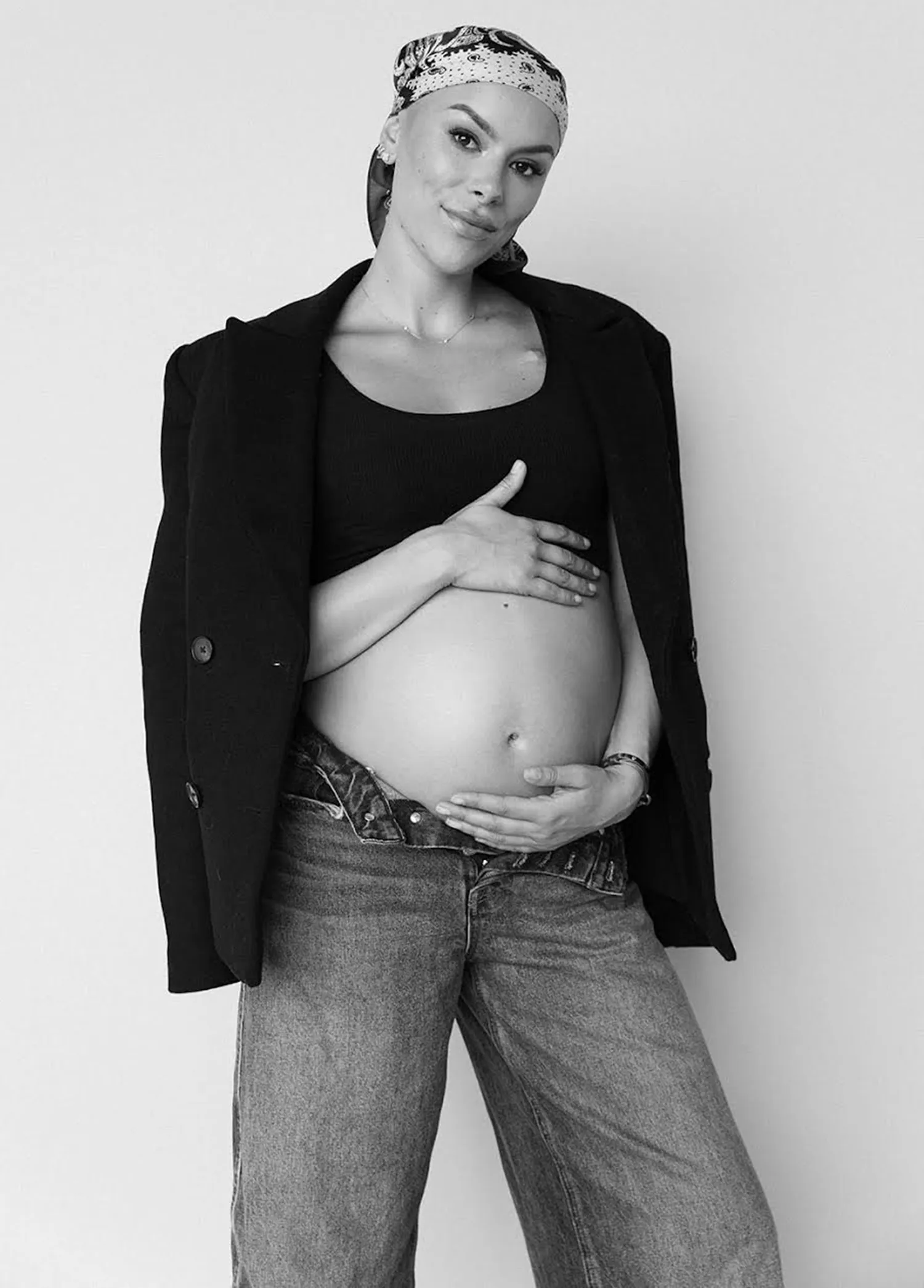
Eight Days Later, She Flew to Maryland Looking for Answers
Glass began researching what an unusual NIPT result could mean and learned about the NIH’s IDENTIFY Study, which follows women whose prenatal blood tests show abnormalities even though fetal testing and ultrasounds appear normal.
She said that among 107 study participants, 52 had been diagnosed with cancer.
Glass did not want to wait.
Only eight days after receiving the alarming call, she traveled to Bethesda, Maryland, where she underwent an extensive evaluation at the National Institutes of Health. Doctors performed blood work, a full-body MRI and an oncology assessment.
Before making the trip, Glass had also examined herself and discovered a lump in one breast.
There was still reason to hope.
Both her gynecologist and an NIH oncologist initially believed the lump could simply be a cyst.
Then the MRI showed a suspicious mass.
The Diagnosis Sent Her Into “Problem-Solving” Mode
A biopsy followed. The next week, Glass underwent additional testing at Northwestern, including a mammogram, ultrasound and more biopsies.
The answer was invasive ductal carcinoma.
Her tumor measured approximately three centimeters. It was grade three and triple-negative breast cancer, an aggressive form that was not being driven by estrogen or progesterone hormones.
Glass was with her mother when the diagnosis came by phone.
Her mother broke down crying.
Glass reacted differently.
Rather than allowing herself to fully absorb what was happening, she immediately began researching treatment and trying to determine what came next. She later described that response as entering a kind of survival and problem-solving mode.
“I didn’t fully process it until I gave birth,” she said.
Part of her believed she was instinctively shielding her unborn baby from the enormous emotional weight she was carrying. She focused instead on the belief that even frightening problems could somehow be worked through.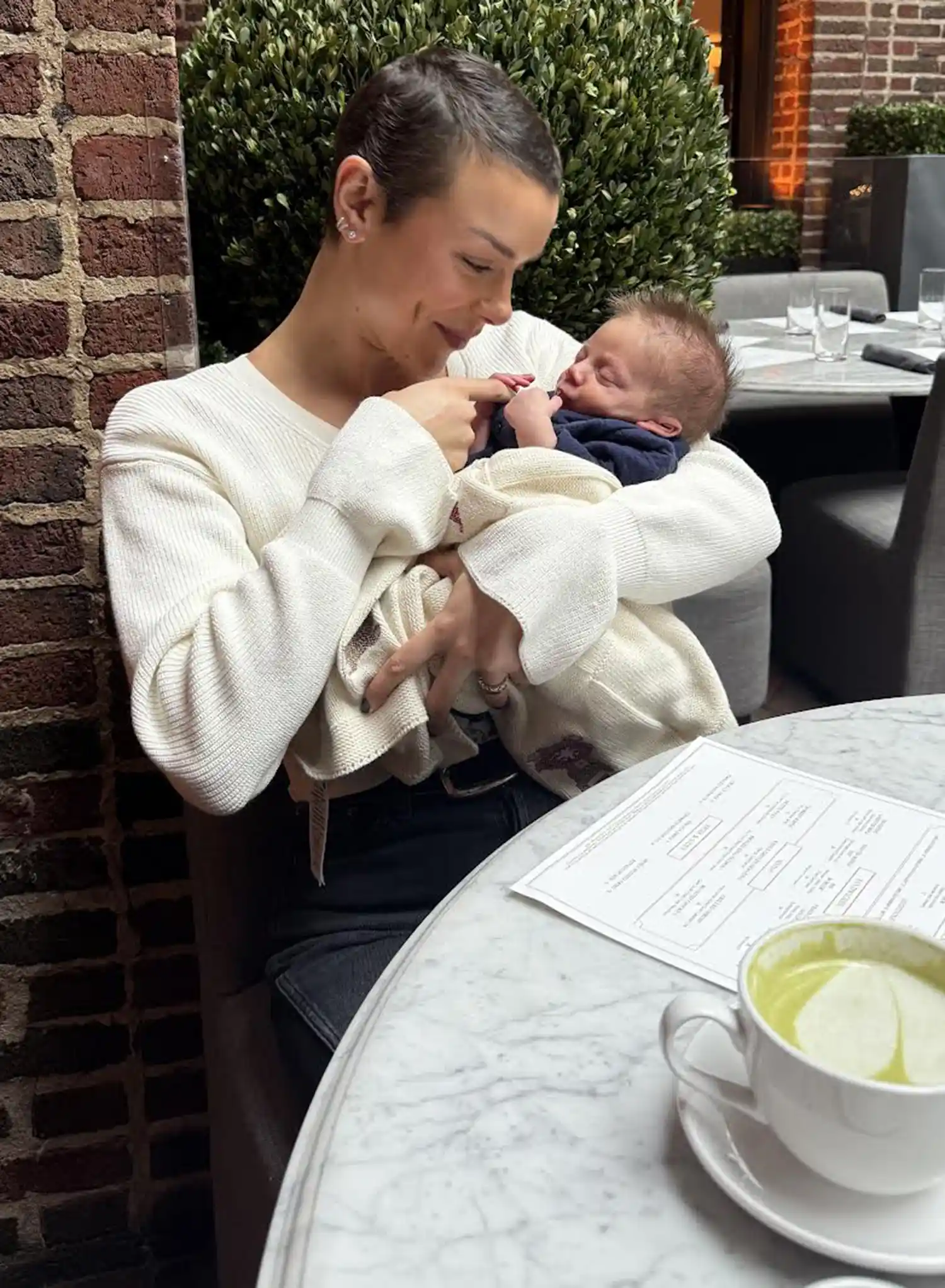
Her Greatest Fear Was for Her Unborn Son
Cancer treatment presented Glass with a decision no expectant mother imagines making.
She would undergo chemotherapy while pregnant.
Her primary fear was not what treatment might do to her. It was what might happen to her baby.
What helped, she said, was knowing that her physicians had previously treated pregnant patients with breast cancer. Their confidence in the plan gave her something to hold onto when fear became overwhelming.
Glass ultimately tolerated chemotherapy relatively well. She experienced fatigue and brain fog, and losing her hair was emotionally difficult, but she said she otherwise handled treatment better than she had feared.
Her support system also became essential.
Friends and relatives stepped in, while Glass described her husband as her “rock,” someone who could still make her laugh every day in the middle of an experience that had transformed their lives.
Cancer also forced her to become more comfortable accepting help — something that did not always come naturally before.
She Had a Mastectomy at 32 Weeks Pregnant
Treatment continued as Glass’s pregnancy advanced.
She completed four rounds of AC chemotherapy before undergoing a single mastectomy at 32 weeks.
Then came one of the most encouraging pieces of news of the entire ordeal.
The surgery achieved clear margins, and doctors found no lymph node involvement.
For Glass, it was an enormous relief.
She ultimately carried her son to 36 weeks before delivering him vaginally on Nov. 11.
They named him August.
Only one week after giving birth, Glass resumed chemotherapy. Because of the mastectomy and her continuing treatment, breastfeeding was not possible, but she said August was doing well on formula.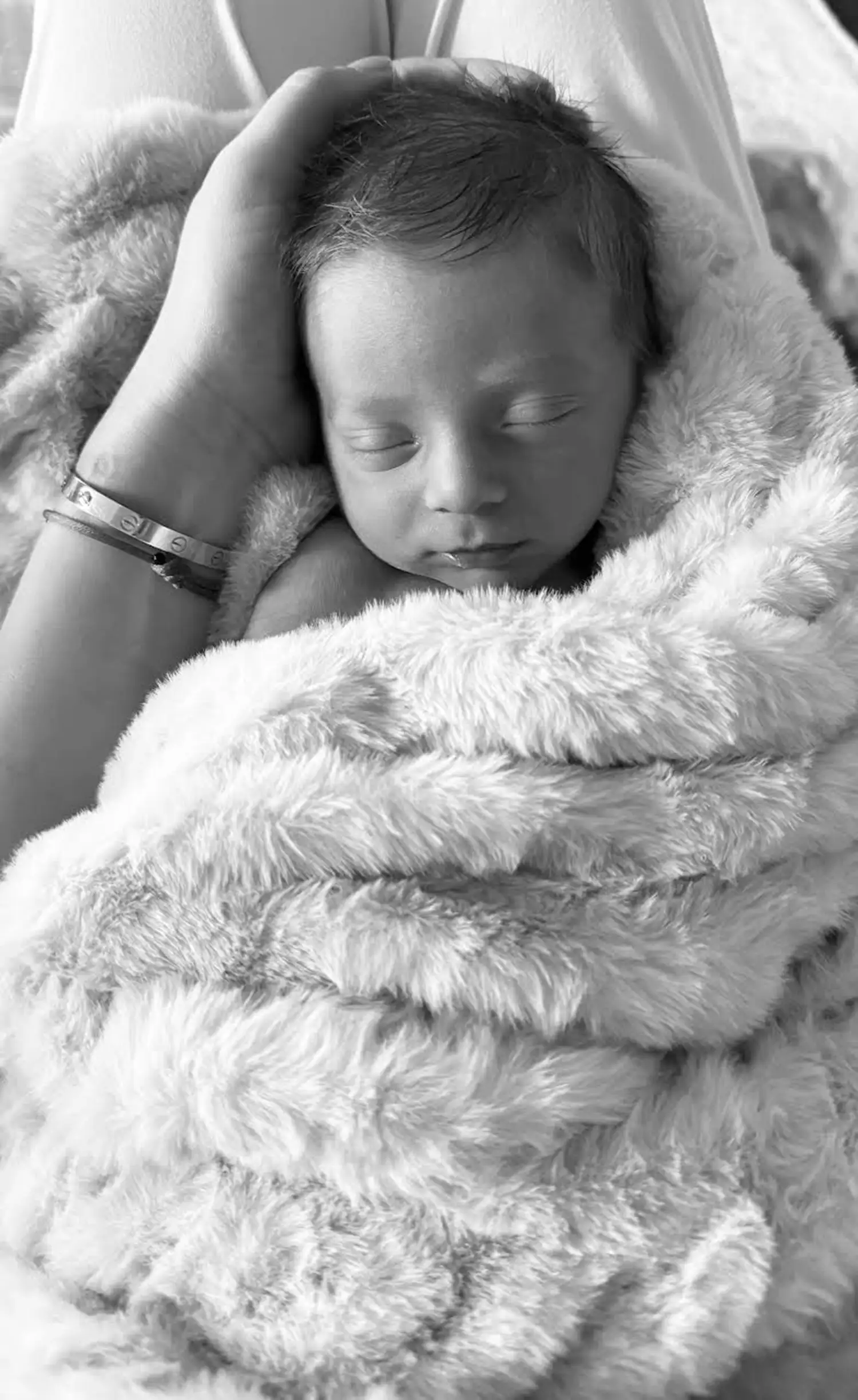
“He’s Saved My Life in a Way”
There is an extraordinary reversal at the heart of Glass’s story.
She had spent years dreaming about becoming a mother. Then, while she was pregnant with the child she had fought so hard to have, a test intended to provide information about him exposed evidence that something might be wrong with her.
Had she not been pregnant, that particular chain of events would not have unfolded in the same way.
“He’s saved my life in a way,” Glass said of August.
Now, one of the things that means the most to her is simply knowing she has the opportunity to watch her son grow.
Sharing Her Story Connected Her With Other Women
During treatment, Glass found comfort in reading about other women living through triple-negative breast cancer. She searched social media hashtags, learned from their experiences and discovered practical and emotional guidance that made her own situation feel less isolating.
Eventually, she began sharing her experience online as well.
Her story reached thousands, including women who had faced breast cancer during pregnancy or shortly after having children.
That connection has continued.
Glass said she now communicates daily with three other pregnant women undergoing breast cancer treatment at Northwestern. They live in the same area, are being treated by the same medical team and understand a situation that few people around them can fully relate to.
For Glass, those relationships have become one of the unexpected sources of strength to emerge from an experience she never would have chosen.
Cancer has also reshaped the way she thinks about ordinary life.
She emphasizes the importance of self-exams and says the experience has deepened her gratitude, strengthened important relationships and shown her how resilient people can be when circumstances demand more from them than they ever expected to give.
Glass does not know what cancer treatment could mean for her future fertility.
For now, that uncertainty is not where she wants to place her attention.
Her focus is the family already in front of her — her husband, the baby she had dreamed of for so long and the everyday moments she once assumed would simply be there.
“We’ll soak up every moment with our son,” she said. “Every day is a gift.”