MELISSA CASIAS AUTOPSY REVEALS A FATAL GU/SHOT — BUT ONE CRUCIAL QUESTION REMAINS UNANSWERED
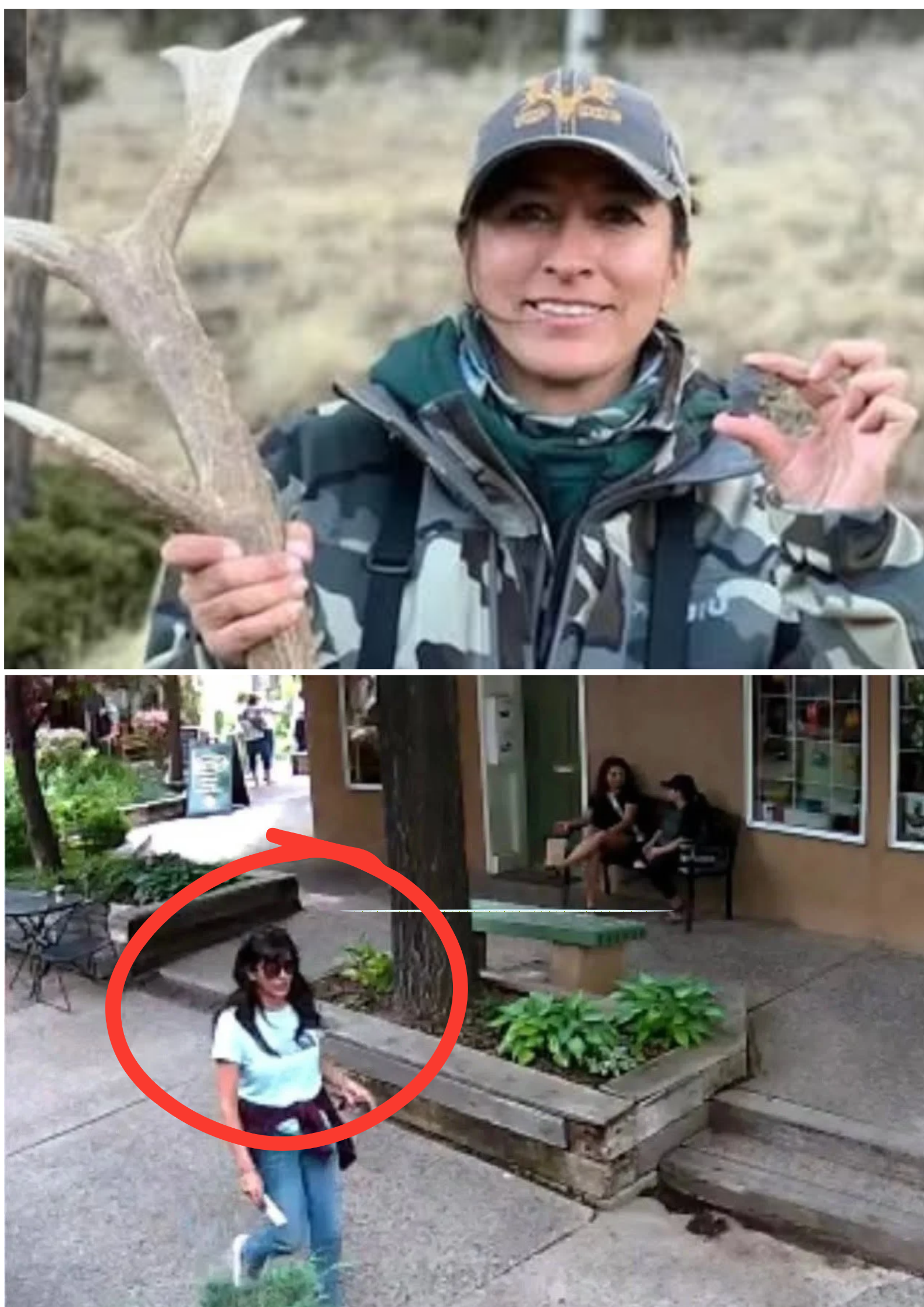
MELISSA CASIAS AUTOPSY REVEALS A FATAL GUNSHOT — BUT ONE CRUCIAL QUESTION REMAINS UNANSWERED
For nearly a year, the disappearance of Melissa Casias, a Los Alamos National Laboratory employee and mother from New Mexico, remained unresolved.
Now, an autopsy has provided one critical piece of information:
Casias died from a gunshot wound to the head.
But investigators still cannot determine whether her death was a suicide, homicide or another manner of death.
Her manner of death has been classified as undetermined.
And that distinction could be the most important part of the case.
 NEARLY A YEAR AFTER SHE VANISHED
Casias was reported missing on June 26, 2025, after she failed to arrive at work at Los Alamos National Laboratory.
Earlier that day, according to accounts from her family, she had driven her husband to work before returning home after realizing she had forgotten her security badge.
She later delivered lunch to her daughter in downtown Taos.
Afterward, Casias disappeared.
Her family eventually discovered that her keys, purse, wallet and two cellphones had been left behind at the family’s home.
Surveillance footage later placed her walking alone along a roadway with a backpack.
Despite extensive searches, investigators did not locate her for almost another year.
 THE DISCOVERY THAT CHANGED THE CASE
On May 28, 2026, a hiker discovered human remains in the McGaffey Ridge area of Carson National Forest.
A handgun was reportedly located near the remains.
New Mexico State Police later confirmed that the remains belonged to Melissa Casias.
The discovery transformed the investigation from a missing-person case into a death investigation.
But it did not immediately answer the most important question:
How did Melissa Casias die?
THE AUTOPSY ANSWERED ONE QUESTION — AND CREATED ANOTHER
According to the information provided in the autopsy findings, Casias suffered a single gunshot wound to the head.
However, because her remains had undergone advanced decomposition and investigators had limited information about the circumstances surrounding her death, the forensic pathologist classified the manner of death as undetermined.
That means investigators have not established that she took her own life.
It also means they have not established that another person killed her.
The classification is not a declaration that one explanation is more likely than the other.
It reflects the limitations of the available evidence.
WHAT WAS FOUND NEAR HER?
According to the family statement you provided, investigators also documented several items near the remains, including:
Her backpack
A firearm holster inside the backpack
A bottle of alcohol
Pieces of paper that investigators believed could potentially be notes
The family says additional forensic examination of evidence is still producing questions for which they are awaiting answers.
Those items should not automatically be interpreted as proof of suicide, homicide or any particular motive.
Their significance depends on the forensic analysis and the conclusions investigators are ultimately able to establish.
THE TWO WIPED PHONES
One of the most unusual details surrounding Casias’ disappearance involves her two phones.
Her family previously reported finding both phones inside the home after she disappeared, with their data wiped.
That detail has naturally generated considerable speculation online.
But the existence of wiped phones does not by itself establish who wiped them, why they were wiped or whether the action is connected to her death.
Those are separate investigative questions.
SURVEILLANCE FOOTAGE MAY ALSO MATTER
Casias’ family says investigators obtained surveillance footage from two separate locations on the day she disappeared.
According to the family’s statement, investigators confirmed that the person shown in both recordings was Melissa.
The family says the footage showed her leaving on her own and walking along Highway 518 in the same clothing in which she was ultimately found.
If confirmed through the official investigative record, that footage could be important in reconstructing her movements during the final hours of her life.
HER FAMILY IS ASKING FOR FACTS — NOT SPECULATION
Casias’ daughters have publicly pushed back against speculation surrounding their mother’s disappearance and death.
Their message is straightforward:
An “undetermined” ruling does not mean that someone has been identified as responsible for Melissa’s death.
It also does not establish that she died by suicide.
For the family, the uncertainty is painful precisely because the investigation has produced some answers while leaving the central question unresolved.
Whoever Melissa was in her final hours, she was more than the circumstances of her death.
She was a mother.
A wife.
A stepmother.
A daughter.
A friend.
And someone whose family spent nearly a year hoping she would come home.
THE BIGGEST QUESTION IS STILL OPEN
The autopsy has now established that Melissa suffered a fatal gunshot wound.
But investigators still have to determine how and why that gunshot happened.
Was it self-inflicted?
Was another person involved?
Can the physical evidence establish what happened at the scene?
And can the remaining forensic examination answer questions that decomposition made impossible to resolve initially?
For now, there is no definitive public answer.
MELISSA CASIAS DISAPPEARED IN JUNE 2025.
HER REMAINS WERE FOUND NEARLY A YEAR LATER.
THE AUTOPSY IDENTIFIED A FATAL GUNSHOT WOUND.
THE MANNER OF DEATH REMAINS UNDETERMINED.
HER FAMILY IS STILL WAITING FOR THE FULL TRUTH.
New Mexico State Police have previously said the investigation remained active and ongoing.
And perhaps the most responsible way to view this case is also the simplest:
An unanswered question is not an answer.
Until investigators establish what happened, Melissa Casias’ death should not be reduced to either a suicide theory or a murder theory simply because one explanation feels more compelling online.
Independent commentary based on publicly available reporting and information provided by the family. Where details have not been independently confirmed by authorities, they are identified as such.