Tracee Ellis Ross Says ‘Girlfriends’ Had the Audience — So Why Was Hollywood Looking Away?
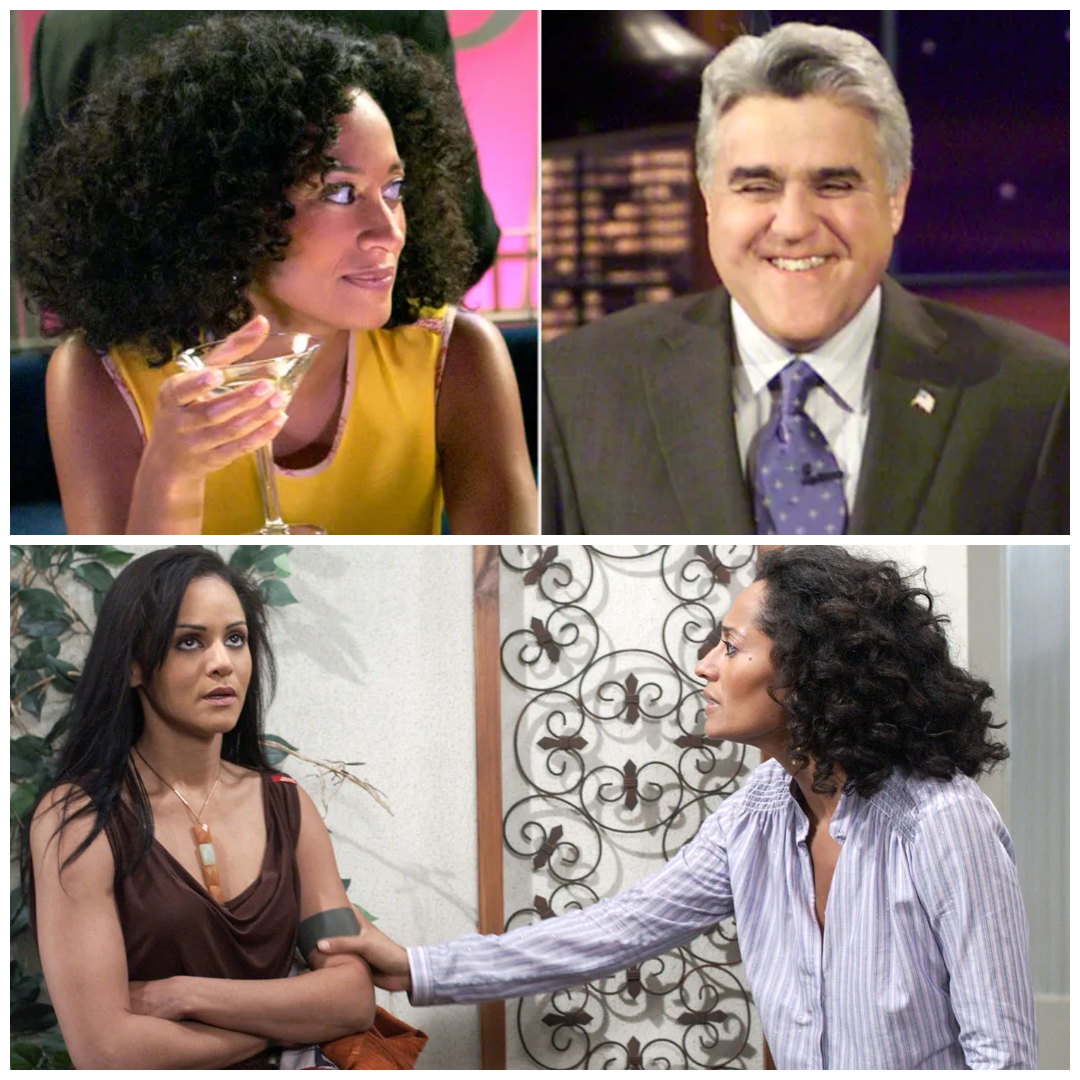
For eight seasons, Tracee Ellis Ross was at the center of a successful television comedy, appearing in more than 170 episodes and building the kind of experience that can transform a performer into a television veteran.
Yet during those years, Ross says something was noticeably missing.
While Girlfriends was on television, she recalls never being invited onto the major late-night programs that regularly helped turn television stars into mainstream celebrities. She also remembers being absent from the Emmy experience entirely.
Years later, the contrast still stands out to her — especially because the series had already proven that people were watching.
Ross revisited that chapter of her career during an Aug. 13 appearance on Trevor Noah’s What Now? podcast, reflecting on the divide between the success Girlfriends enjoyed with its audience and the broader Hollywood recognition that seemed much harder to reach.
Looking back, she described television during that period as deeply segregated and questioned why a popular show could exist for years without receiving the kind of mainstream attention routinely given to other series.
A Hit Show That Still Felt Outside the Mainstream
Girlfriends premiered in 2000 and followed the personal and professional lives of a group of women, with Ross starring as Joan Clayton.
The role became one of the defining parts of her early career.
Over the course of the show’s eight seasons, Ross had the rare opportunity to repeatedly develop a character across hundreds of storylines. By the time the series ended, she had appeared in 173 episodes — an experience she now credits with teaching her the discipline and technical skills required to lead a television comedy.
But professional growth and public recognition were not the same thing.
Ross told Noah that despite her years on Girlfriends, the usual signs of Hollywood acceptance did not arrive. She recalled receiving no invitations to the major late-night shows, including The Tonight Show and David Letterman’s program, and said she had never even attended the Emmys during that period.
For Ross, the absence became difficult to explain.
The show existed. It had lasted for years. It had an audience. She was starring in it.
What more, she wondered, was she supposed to accomplish before the industry’s most visible platforms treated that success as worthy of attention?:max_bytes(150000):strip_icc():focal(799x0:801x2):format(webp)/Tracee-Ellis-Ross-Dior-Cruise-Los-Angeles-County-Museum-Art-081626-46524b89236d4fe5b75b05e8c3762d7d.jpg)
The Jay Leno Response She Never Forgot
One memory in particular stayed with Ross.
She recalled hearing that Jay Leno’s Tonight Show was interested in her personally but wanted her team to come back when she had “something.”
Ross said the response left her confused.
She was already starring in Girlfriends, a series that remained on the air season after season. From her perspective, she did have something — a major television role and a substantial body of work.
That is why the message continued to bother her years later.
“What else do you have to get?” Ross remembered wondering at the time.
Leno hosted The Tonight Show for most of the period when Girlfriends was airing, making the program one of television’s most prominent promotional stages for actors, musicians and other entertainers.
Ross’ frustration was not simply about wanting another interview. It was about what such invitations represented: entry into a larger entertainment conversation that she felt Girlfriends was being excluded from.:max_bytes(150000):strip_icc():focal(749x0:751x2):format(webp)/Persia-White-Tracee-Ellis-Ross-081626-8ae6af652c2b4c72aec2593a5ad9a2b7.jpg)
Another Show Made the Difference Harder to Ignore
Ross said the disparity became even more noticeable when she compared her experience with the treatment of another television series.
She specifically remembered watching Tony Shalhoub, the star of Monk, appearing on late-night television.
That moment confused her because, according to Ross, Monk had roughly one-quarter of the viewership that Girlfriends had at the time.
If audience size was supposed to determine who received broader publicity, the numbers did not seem to explain what she was seeing.
That pushed Ross toward a much more uncomfortable question.
Was race part of the reason?
Ross told Noah that when she tried to make sense of the difference, racism became one of the only explanations she could identify, though she acknowledged that she did not know exactly how to categorize what had happened.
It was less a neatly packaged accusation than a reflection on an industry system she still struggles to understand.
Why could one successful show be treated as culturally central while another successful show remained largely outside those same gates?
Recognition Came Later
Time eventually changed the way Girlfriends was viewed.
Ross said the series has received more of the recognition it deserved in hindsight. But that later appreciation does not erase what the experience felt like while the show was actually being produced.
At the time, she said, that recognition simply was not there.
The series ultimately ran for eight seasons, airing its final episode on Feb. 11, 2008.
Ross’ career continued far beyond Joan Clayton.
She later became the star of Black-ish, playing Rainbow Johnson, a role that brought her five consecutive Primetime Emmy nominations for Outstanding Lead Actress in a Comedy Series — the kind of awards attention that had been absent during her Girlfriends years.
In 2026, she also earned a Daytime Emmy nomination connected to her travel series, Solo Traveling with Tracee Ellis Ross.
That later success makes her memories of the earlier period even more striking.
Ross did eventually receive mainstream awards recognition. She did become a familiar presence far beyond the audience that first knew her as Joan.
But her point is that she should not have needed another successful show for Hollywood to recognize the work she was already doing.
What ‘Girlfriends’ Gave Her Anyway
Despite her criticism of how the industry treated the series, Ross does not speak about Girlfriends as a wasted chapter.
Quite the opposite.
She credits those 173 episodes with helping turn her into a seasoned actress.
Working on a television series week after week required a different rhythm from making movies. It demanded repetition, endurance and the ability to keep building a character while maintaining the pace of episodic production.
Ross described that experience as the work that made her a veteran.
Doing 173 episodes, she emphasized, was serious training.
That may be one of the most revealing parts of her reflection.
Hollywood’s most prestigious platforms may not have celebrated Ross during those years, but she was developing the skills that would help sustain a career long after Girlfriends ended.
And today, the show’s place in her story looks very different.
What once seemed to exist outside mainstream television’s spotlight is now remembered as a major part of Ross’ career and a series whose influence has continued beyond its original run.
Ross can appreciate that legacy while still questioning why recognition arrived so late.
For her, the issue is not simply that people eventually discovered the value of Girlfriends.
It is that millions of viewers were already watching while Hollywood’s most powerful stages seemed not to notice.