WHAT HAPPENED TO CHRIS WATTS’ HOUSE? THE COLORADO HOME AT THE CENTER OF A TRAGEDY HAS A VERY DIFFERENT LIFE TODAY
WHAT HAPPENED TO CHRIS WATTS’ HOUSE? THE COLORADO HOME AT THE CENTER OF A TRAGEDY HAS A VERY DIFFERENT LIFE TODAY
For years, the Frederick, Colorado, home where Chris Watts killed his wife Shanann remained empty, caught in foreclosure and legal complications. The property eventually changed hands — but its history has continued to follow it.
:max_bytes(150000):strip_icc():focal(749x0:751x2):format(webp)/chris-watts-house-081426-ea7a54195d3d40fd8090264deb16f177.jpg) FREDERICK, COLORADO — From the outside, the house on Saratoga Trail looks like an ordinary suburban family home.
FREDERICK, COLORADO — From the outside, the house on Saratoga Trail looks like an ordinary suburban family home.
Inside, however, it became forever associated with one of the most notorious family homicide cases in modern American true crime.
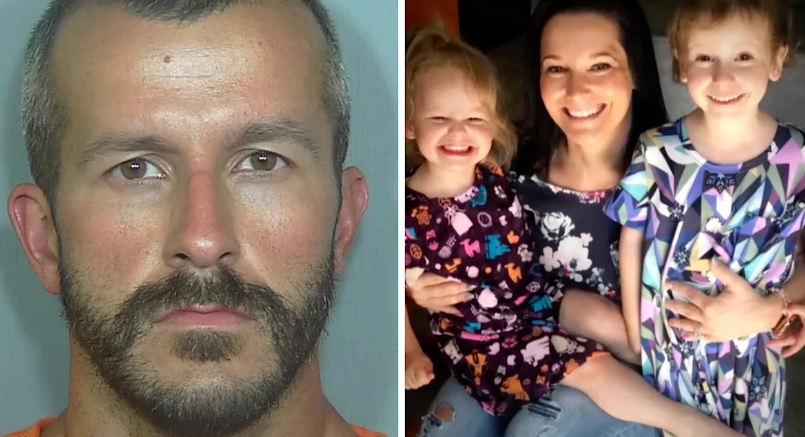
In August 2018, Chris Watts killed his pregnant wife, Shanann Watts, and their daughters, Bella and Celeste, after the family had returned to their Colorado home. Watts later pleaded guilty and received multiple life sentences without the possibility of parole.
Today, the house is no longer sitting abandoned as it did for years after the case.
It has been sold and occupied by subsequent owners — but its extraordinary history has made the property unlike almost any other home in the neighborhood.
THE HOUSE SAT EMPTY FOR YEARS
After the killings, the Watts family home became tied up in a complicated financial and legal situation.
The property was subject to foreclosure proceedings and multiple liens, including a $6 million wrongful-death judgment obtained by Shanann’s parents against Chris Watts.
For years, the house remained vacant.
Neighbors described an uncomfortable situation: tourists and true-crime followers would drive through the neighborhood hoping to see the infamous property.
The attention became so persistent that residents reportedly placed signs asking visitors to stay away from the home.
:max_bytes(150000):strip_icc():focal(995x318:997x320):format(webp)/chris-watts-family-main-081325-0e08a43c43f54d3ca80a4ff7eb743064.jpg) THEN SOMEONE FINALLY BOUGHT IT
THEN SOMEONE FINALLY BOUGHT IT
After years of legal complications, the property was eventually sold in November 2022 for approximately $600,000, according to PEOPLE’s report.
That sale marked an important turning point.
The house was no longer simply an abandoned crime scene connected to the Watts family.
It became a privately owned residence again.
And that raised a question many people found difficult to understand:
WHO WOULD WANT TO LIVE THERE?
For the new owners, however, the property was ultimately a house rather than a museum or tourist attraction.
The property’s history did not disappear — but everyday life eventually returned.
THE HOUSE WAS LATER PUT BACK ON THE MARKET
The property’s story did not end with the 2022 sale.
It was subsequently placed back on the market, attracting enormous attention because of its history.
In 2024, reports indicated that the five-bedroom Frederick residence was listed for hundreds of thousands of dollars and received multiple price adjustments.
The listing itself generated renewed fascination online.
People weren’t simply looking at square footage, bedrooms or the neighborhood.
They were looking at the house where one of America’s most infamous family tragedies unfolded.
WHY DIDN’T THEY TEAR IT DOWN?
That question has circulated for years.
Unlike some notorious crime properties, the Watts house was not demolished.
The structure remained standing, and its physical appearance remained remarkably ordinary.
That is perhaps one of the most unsettling aspects of the story.
There is no obvious visual indication that the property was once at the center of a nationally watched investigation.
It’s still a suburban home.
A garage.
A driveway.
Bedrooms.
A backyard.
But its history cannot simply be erased.
TRUE-CRIME TOURISM BECAME AN ISSUE
The house’s notoriety created problems for the surrounding neighborhood.
Before the property was occupied again, curious visitors reportedly drove through the area, stopped near the home and attempted to photograph it.
Neighbors became frustrated by the attention.
Local residents wanted their neighborhood to return to normal — something that became increasingly difficult as documentaries and online discussions continued to bring the case back into the spotlight.
The Watts case received another major wave of attention through documentaries, including Netflix’s American Murder: The Family Next Door.
That renewed interest also brought more attention to the house.
WHAT HAPPENED TO THE FAMILY?
The home became the last known residence of Shanann Watts and her daughters before their deaths.
Shanann was pregnant with the couple’s third child, a boy they had planned to name Nico.
Watts initially attempted to convince investigators that his family had disappeared.
He eventually confessed.
In November 2018, he pleaded guilty to multiple charges and was sentenced to five life terms without parole, along with additional prison time for related offenses.
He is currently serving his sentence in Wisconsin.
THE HOUSE IS NO LONGER THE SAME SYMBOL IT ONCE WAS
For years, the property represented abandonment, unanswered questions and a crime scene frozen in time.
Now, it is privately owned.
That does not mean the history has disappeared.
For many people who followed the case, the address remains inseparable from the names Shanann, Bella, Celeste and Nico.
But for the people who live in the surrounding neighborhood, there is another reality:
They simply want the area to be a normal place to live.
THE STRANGEST PART OF THE STORY?
The most striking thing about the Watts house may be how ordinary it looks.
There is nothing about the architecture that explains what happened there.
No warning.
No visible sign.
Just another suburban house surrounded by other homes.
Yet behind those walls, a tragedy unfolded that would eventually become an international news story.
And years later, people are still asking the same question:
WHAT HAPPENED TO THE HOUSE WHERE IT ALL BEGAN?
The answer is surprisingly simple.
It wasn’t demolished.
It wasn’t turned into a memorial.
It didn’t remain permanently abandoned.
It was eventually sold and returned to private residential life.
But the history of the Watts family remains permanently attached to the property — making it one of the most recognizable crime-related homes in America.
The house changed owners.
The neighborhood moved forward.
But the story of the family who once lived there remains impossible to forget.