Anthony Michael Hall Says John Hughes Shared One More Breakfast Club Idea in Their Final Phone Call
For more than 40 years, The Breakfast Club has ended with the same unanswered question.
What happened to those five teenagers after they walked out of Saturday detention?
Did Claire and Bender stay together? Did Brian remain the “brain” everyone expected him to be? Did Andrew ever escape the pressure placed on him? And what became of Allison once high school was over?
The 1985 John Hughes classic deliberately leaves its characters at a crossroads. For one unforgettable day, five students who believed they had almost nothing in common slowly realized that the labels separating them were far less meaningful than they seemed.
Then the movie ends.
But according to Anthony Michael Hall, Hughes once imagined checking in on them again — years later, after high school had been replaced by adult life.
And Hall says the idea came up during the final phone conversation he ever had with the filmmaker.
One Last Conversation With John Hughes
Hall, who played Brian Johnson in The Breakfast Club, recently recalled the conversation while appearing on The Rich Eisen Show.
According to Hall, the call took place around 1988, several years after The Breakfast Club became one of the defining movies of the decade.
There was another familiar Hughes collaborator on the line as well: John Candy.
Hall said the three men spent hours talking.
At some point during that conversation, Hughes brought up an idea involving the five students from The Breakfast Club.
Not another Saturday detention.
Not a story set immediately after graduation.
Hughes was apparently thinking much further ahead.
Hall recalled Hughes discussing the possibility of bringing the characters back when they were in their 30s and had entered the workforce.
For anyone who has spent decades wondering what happened after that famous detention, the idea is tantalizing.
Hughes may have been imagining the same teenagers audiences knew — only now confronting careers, adulthood, relationships and the realities of becoming the people they once feared they:max_bytes(150000):strip_icc():format(webp)/htra190_vv281-2000-42f0e52fb3684f3784d5d2237a5b715a.jpg) might turn into.
might turn into.
The Five Characters Would Have Been Adults
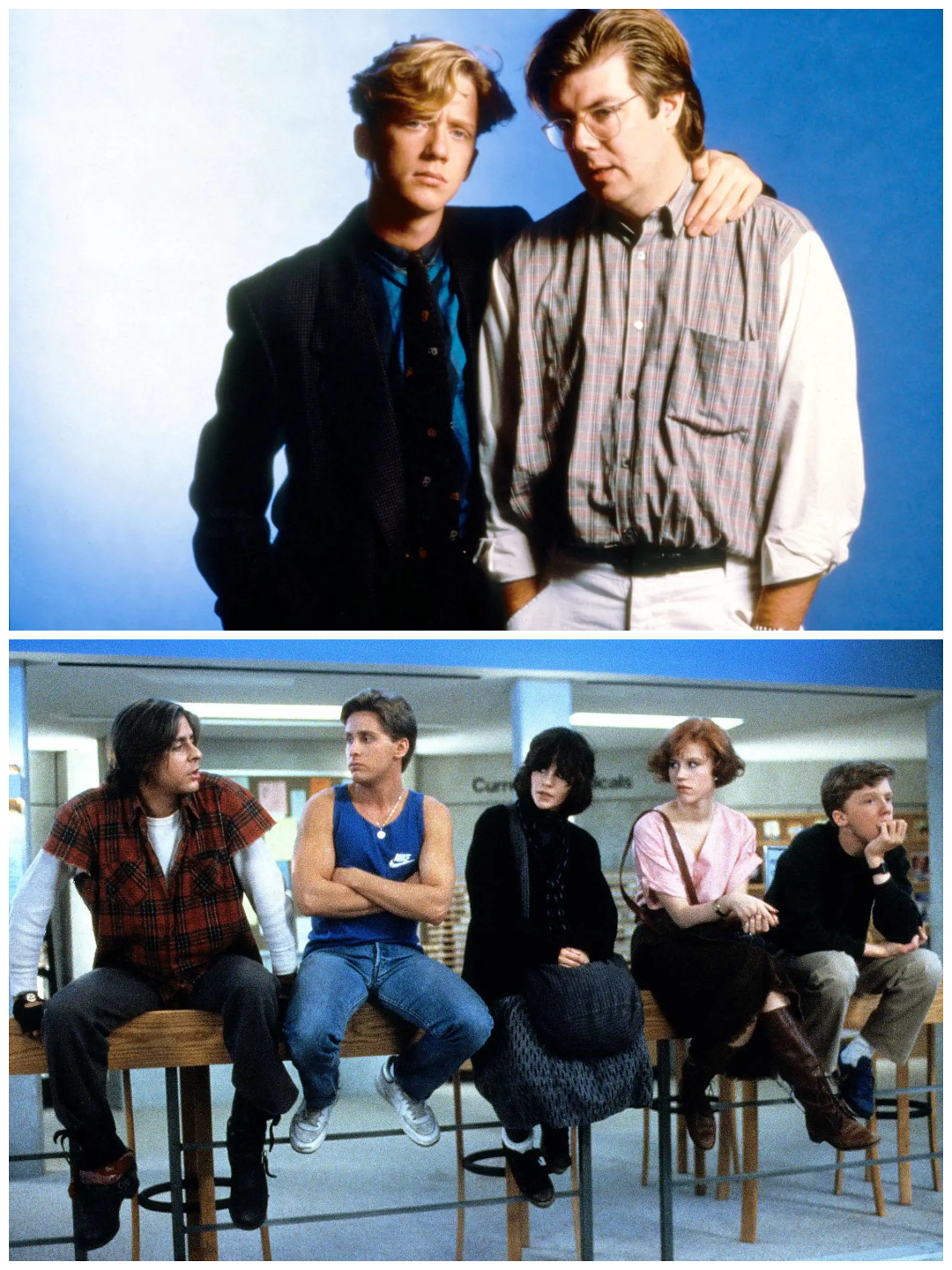
The original film famously reduces its central characters to five high-school stereotypes.
Claire Standish, played by Molly Ringwald, is the princess.
Andrew Clark, played by Emilio Estevez, is the athlete.
Allison Reynolds, played by Ally Sheedy, is the basket case.
John Bender, played by Judd Nelson, is the criminal.
And Hall’s Brian is the brain.
They arrive at Shermer High School believing those categories define them.
By the end of the day, they understand that each of them is more complicated than the others assumed.
That makes Hughes’ reported follow-up idea particularly intriguing.
What happens to those labels when high school ends?
Does the athlete remain successful when there is no team around him? Does the popular girl still hold the same social power in an office? Does the rebellious outsider become another adult with a job and responsibilities?
And does the academically gifted student discover that being the smartest kid in school does not necessarily make adulthood easier?
Hughes never gave audiences those answers.
But Hall’s memory suggests he had at least begun thinking about them.:max_bytes(150000):strip_icc():format(webp)/the-breakfast-club-judd-nelson-emilio-estevez-ally-sheedy-molly-ringwald-anthony-michael-hall-041525-2d2c0ce6435648c5b8de007980a88c10.jpg)
Hall Is Careful Not to Call It a Finished Sequel
There is an important distinction in Hall’s account.
He is not claiming that Hughes had completed a screenplay for The Breakfast Club 2.
He does not even claim to know whether Hughes ever formally wrote the idea down.
Instead, Hall has described it as something Hughes was considering or “playing with.”
That makes the story less like the discovery of a lost sequel and more like a glimpse into Hughes’ creative thinking.
The filmmaker had apparently imagined what it might look like to revisit the characters after enough time had passed for their teenage identities to collide with adult reality.
Whether that concept ever progressed beyond conversation remains unclear.
But for longtime fans, even knowing Hughes thought about the possibility changes the way the original ending can feel.
The five characters did not necessarily disappear from Hughes’ imagination when the credits rolled.

Why a Reunion Would Have Made Sense
Hughes had an unusual ability to make young characters feel as emotionally complicated as adults.
That was a major reason The Breakfast Club connected so deeply with audiences.
The movie is technically about five students sitting in a library for most of a Saturday, yet the conversations they have deal with parental expectations, insecurity, class differences, loneliness, pressure and fear of the future.
A follow-up set in their 30s could have turned those same concerns upside down.
The teenagers who once feared becoming like their parents would suddenly be adults themselves.
They would have jobs.
Some might have families.
Others might have discovered that their teenage plans looked very different from the lives they eventually built.
For the Gen X audience that grew up alongside the movie, such a reunion could have been especially powerful.
Rather than simply repeating the original story, it could have asked whether the emotional connections formed during one extraordinary day survived the ordinary pressures of adulthood.
The Conversation Included Another Hughes Favorite
The presence of John Candy also gives Hall’s memory another layer of nostalgia.
Candy became one of the actors most closely associated with Hughes’ films.
The two worked together on projects including Planes, Trains and Automobiles, one of Hughes’ most beloved movies, as well as other films connected to Hughes’ remarkable run through the 1980s and early 1990s.
Hall, meanwhile, was one of Hughes’ defining young stars.
Beyond The Breakfast Club, he appeared in Sixteen Candles and Weird Science, becoming one of the faces most closely identified with Hughes’ teenage films.
The idea that Hughes, Hall and Candy were spending hours on the phone discussing movies — including a possible future for the Breakfast Club characters — captures a small piece of a creative era that now feels very distant.
The Sequel Never Happened
Hughes eventually stepped away from directing and became increasingly private.
He died in 2009 at the age of 59.
No official Breakfast Club sequel written or directed by Hughes ever followed the original film.
That may be one reason Hall’s recollection resonates so strongly now.
A conventional sequel announcement would be interesting.
But this is something different.
It is a fragment of an unrealized possibility from the person who created the characters in the first place.
For decades, viewers have been free to imagine what happened to Claire, Bender, Allison, Andrew and Brian once they left the school parking lot.
Now they know Hughes apparently wondered about that future too.
And at least once, he imagined finding them again not as teenagers, but as adults in their 30s trying to make their way through the working world.
One Saturday Was Almost Not the End
The Breakfast Club closes with Brian’s famous essay explaining that the students refuse to be reduced to simple labels.
The final image belongs to Bender, walking alone and raising his fist into the air.
It feels definitive.
But perhaps, in Hughes’ mind, it was never completely final.
According to Hall, during the last conversation the two men ever had, Hughes was still thinking about those five students and wondering what adulthood might have done to them.
No one knows exactly what that movie would have looked like.
No one knows whether Hughes ever moved beyond the idea.
But after more than four decades of fans asking what happened after detention, Hall has revealed something almost as fascinating as an actual sequel:
John Hughes was asking the same question.