A 12-Centimeter Branch Was Lodged Behind His Eye and Touching His Brain. Surgeons Chose an Unexpected Way In
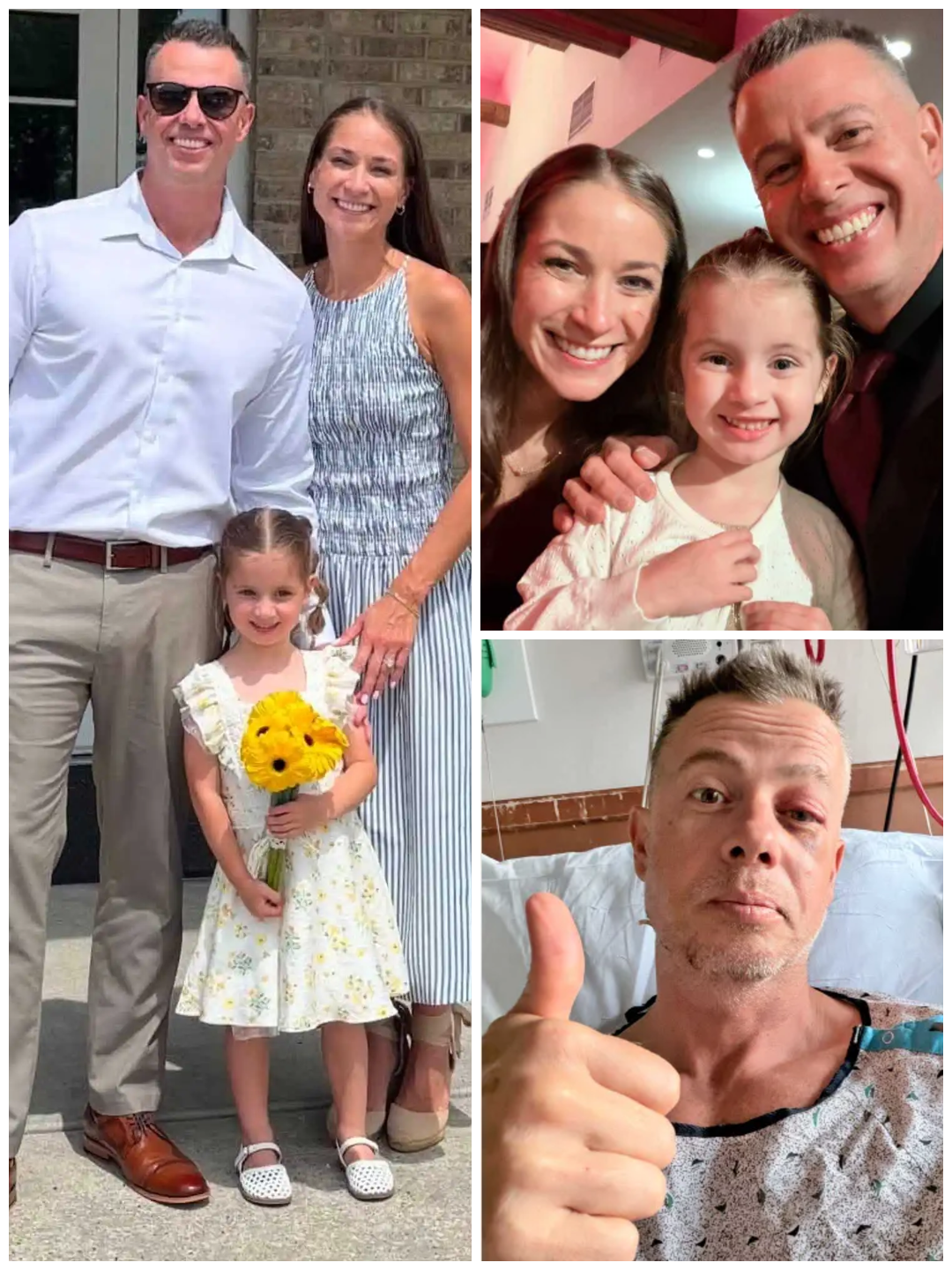
When Troy Hathaway fell from a ladder while trimming trees outside his New Jersey home, he initially thought he had broken his jaw.
The reality was far more serious.
A tree branch more than 12 centimeters long had entered his face, traveled behind his right eye, penetrated his skull and reached the area of his brain.
Yet Hathaway, 45, never lost consciousness.
And when surgeons at Jefferson Health in Philadelphia studied his scans, they made an unusual decision that may have helped save both his life and his vision.
They would not open his skull.
Instead, neurosurgeon Dr. Chris Farrell and skull-base surgeon Dr. Gurston Nyquist planned to reach the dangerous end of the branch through Hathaway’s nasal passage, using techniques similar to those sometimes employed for certain brain tumors.
Four hours later, the branch was out.
Three weeks after the accident, Hathaway was home with remarkably few lasting effects.
He Fell About Eight Feet
The accident happened July 26 while Hathaway was cutting branches near his home in Glassboro, New Jersey.
He was standing roughly eight feet above the ground when the A-frame ladder beneath him suddenly gave way.
Hathaway fell directly onto a broken branch.
At first, he did not understand the severity of the injury.
He remained awake and able to communicate. He was not nauseated and did not feel as though he had suffered a catastrophic head injury.
What he felt most clearly was pain around his jaw.
He made his way back toward his house, where his wife, Michelle, saw what had actually happened.
Part of the branch was protruding from the side of his face.
Michelle, who works as a physician assistant, stayed calm and helped get him to medical care.
It was only at the hospital that the true path of the wood became apparent.:max_bytes(150000):strip_icc():focal(745x258:747x260):format(webp)/Troy-Hathaway-4-081826-a54eb4ee30de437b91dcb7f567b7e764.jpg)
The Scan Revealed How Close the Branch Came
Doctors determined that the branch measured more than 12 centimeters and had traveled behind Hathaway’s right eye.
He was transferred to Jefferson Health’s trauma center in Philadelphia, where specialists saw the most alarming part of the injury on imaging: the wood had penetrated the skull and extended to the brain area.
Removing it created an enormous problem.
The branch had already passed through a narrow region packed with structures that surgeons could not afford to damage.
A wrong movement could cause major bleeding.
It could injure the brain.
It could damage the optic structures and cost Hathaway his sight.
And because the object was a piece of wood driven in from outside, infection was another major concern.
Farrell later described the situation as extraordinarily delicate and potentially life-threatening.
The challenge was no longer simply getting the branch out.
It was removing it without turning an astonishing survival into a catastrophic surgical complication.
Doctors Did Not Want to Open His Skull
A traditional approach might have required a craniotomy — surgically opening part of the skull to gain access to the branch and the structures around it.
Farrell and Nyquist wanted to avoid that if possible.
Instead, they chose a minimally invasive skull-base approach through Hathaway’s nose.
The nasal corridor can provide surgeons access to areas near the base of the skull without making a large opening in the head. Farrell told CBS Philadelphia that similar routes are sometimes used for brain-tumor surgery.
That approach allowed the surgical team to carefully evaluate and control the area around the deepest part of the branch while planning its removal.
For Hathaway, the strategy offered an enormous advantage.
If surgeons could safely remove the wood without opening his skull, they could potentially reduce additional trauma to tissues that had already survived an extraordinary injury.
But there was still no guarantee that the branch would come out cleanly.
The Operation Lasted Four Hours
The specialists assembled quickly.
Farrell received the call while teaching his son to drive. Nyquist, an ENT surgeon specializing in skull-base procedures, had just returned from a flight from San Francisco.
Together with the larger Jefferson team, they prepared for an operation that would last approximately four hours.
The surgeons worked through the nasal corridor to manage the skull-base portion of the injury while carefully extracting the branch along its existing path.
What happened next was extraordinarily fortunate.
The wood had missed critical structures.
It came out without causing catastrophic bleeding or additional neurological injury. CBS reported that the branch could ultimately be removed through the facial entry route without damaging vital tissue.
Farrell later said the procedure could hardly have gone better.
For Hathaway, waking up meant learning that the dangers doctors had warned about — brain injury, blindness and devastating bleeding — had not occurred.:max_bytes(150000):strip_icc():focal(782x609:784x611):format(webp)/Troy-Hathaway-5-081826-593f637b40f24b539bf1e47ae5371dc0.jpg)
His Eyesight Was Still Intact
Considering where the branch had been lodged, one of the most remarkable outcomes was what didn’t happen.
Hathaway could still see.
He could still breathe normally.
He had not suffered the major neurological deficits doctors feared.
The operation left him with some stitches, bruising and swelling rather than the consequences that might ordinarily be expected from an object passing behind the eye and through the skull.
Doctors also watched closely for infection, a particular concern with penetrating injuries involving organic material such as wood.
Hathaway was treated with antibiotics, and early follow-up showed no sign of a serious infection.
Three Weeks Later, the Aftereffects Were Surprisingly Small
When Hathaway spoke with PEOPLE around three weeks after the fall, his remaining symptoms were comparatively minor.
He reported a slight reduction in his senses of taste and smell and some swelling on the left side of his face.
Otherwise, his recovery had been remarkably strong.
He had returned home to his family, including his wife and four children.
His youngest daughter, 4-year-old Sophie, had developed her own simplified description of what happened.
She understood that her father had gotten a “twig” stuck in his face.
Hathaway and his wife had apparently decided there was no need to correct her understanding of just how large that “twig” really was.
The Path of the Branch May Have Saved Him
It is tempting to describe Hathaway’s outcome simply as a miracle, but the medical explanation is more specific.
A branch entered one of the most anatomically dangerous regions of his head.
Yet its exact trajectory somehow avoided structures that could have produced immediate fatal bleeding, destroyed his vision or caused severe brain damage.
Then a surgical team with expertise in both neurosurgery and skull-base ENT surgery was available to plan an approach that minimized additional injury.
A difference of only a small distance in the branch’s path could have produced an entirely different outcome.
Farrell emphasized that the team needed to move quickly but also intelligently because simply pulling the object out without understanding what surrounded it could have triggered disaster.:max_bytes(150000):strip_icc():focal(819x449:821x451):format(webp)/Troy-Hathaway-2-081826-3a981cdb1b2b41b3858454198528c389.jpg)
The Most Surprising Decision Came After the Scan
Hathaway’s accident already seemed almost impossible to survive once doctors saw the CT images.
A branch longer than 12 centimeters was lodged behind his eye.
It had penetrated his skull.
It had reached the brain area.
But the most important decision may have been what the surgeons chose not to do.
They did not immediately open his skull.
Instead, they used his nose as a surgical corridor, applying a minimally invasive technique usually associated with carefully planned skull-base procedures to an emergency no one could have anticipated.
Four hours later, Hathaway still had his eyesight, his brain function and, most importantly, his life.
Weeks later, the father of four was back home.
What began with an eight-foot fall and what felt to him like a broken jaw had turned into a surgical case even his doctors described as extraordinary.
And somehow, the branch that had traveled within millimeters of disaster was removed without doctors ever needing to open the top of his skull.