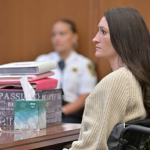
LEGAL EXPERT MAKES STUNNING PREDICTION IN LINDSAY CLANCY CASE: “NO REAL POSSIBILITY” OF A MURDER CONVICTION
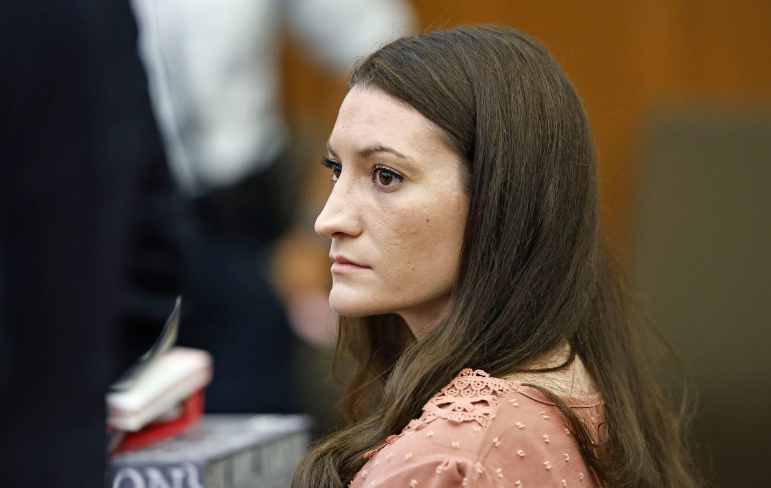
LEGAL EXPERT MAKES STUNNING PREDICTION IN LINDSAY CLANCY CASE: “NO REAL POSSIBILITY” OF A MURDER CONVICTION
PLYMOUTH, Mass. — With the Lindsay Clancy trial approaching its dramatic conclusion, one former federal prosecutor believes the prosecution faces a steep legal hurdle — and predicts the jury could ultimately acquit Clancy or fail to reach a unanimous verdict.
Clancy, 36, is charged with killing her three children — 5-year-old Cora, 3-year-old Dawson and 8-month-old Callan — at the family’s Duxbury home in January 2023.
The central question now before jurors is not simply whether Clancy caused the children’s deaths. The defense has acknowledged her actions but argues that she was suffering from severe postpartum psychosis and therefore was not criminally responsible under Massachusetts law. Prosecutors contend that she acted knowingly and intentionally and remained legally responsible.
:max_bytes(150000):strip_icc():focal(749x0:751x2):format(webp)/lindsay-clancy-court-080426-1-0d554916be174019b004a84bdf0e8019.jpg) FORMER PROSECUTOR SEES A MAJOR PROBLEM FOR THE STATE
FORMER PROSECUTOR SEES A MAJOR PROBLEM FOR THE STATE
Neama Rahmani, a former federal prosecutor and legal analyst who is not involved in the case, gave PEOPLE an unusually strong assessment of the trial.
“I don’t think there is any real possibility” that Massachusetts prosecutors will obtain a guilty verdict, Rahmani told PEOPLE.
His reasoning centers on Massachusetts’ insanity standard and the burden of proof.
According to Rahmani, the prosecution must prove beyond a reasonable doubt that Clancy was not legally insane when the killings occurred.
If jurors find that there is reasonable doubt about her criminal responsibility, they must acquit her.
That puts the mental-health evidence at the center of the case.
:max_bytes(150000):strip_icc():focal(749x0:751x2):format(webp)/lindsay-marie-clancy-012723-2-6be9d7dff9614fe98ad1395daa3bff5b.jpg) THE DEFENSE HAS PRESENTED A VERY DIFFERENT PICTURE OF THAT NIGHT
THE DEFENSE HAS PRESENTED A VERY DIFFERENT PICTURE OF THAT NIGHT
Clancy’s attorneys argue that she was experiencing a severe psychiatric crisis following the birth of her youngest child.
Defense experts have testified that Clancy suffered from postpartum psychosis and experienced hallucinations and delusional thinking.
Among the most significant claims is Clancy’s account that she heard a voice telling her to kill her children and herself.
A defense psychologist and a hospital chaplain testified about statements Clancy later made describing those experiences.
Forensic psychiatrist Dr. Phillip Resnick, a prominent expert who previously testified in the Andrea Yates case, also supported the defense theory.
Resnick testified that Clancy was “frankly psychotic” and described her as experiencing a command hallucination and a delusion of influence.
The defense has also emphasized Clancy’s documented psychiatric history, including treatment, a recent inpatient stay and multiple medications.
PROSECUTORS SAY SHE KNEW EXACTLY WHAT SHE WAS DOING
The prosecution has presented a sharply different interpretation.
Its experts have acknowledged that Clancy suffered from mental-health problems but disputed the claim that she was psychotic or unable to understand the nature of her actions.
Forensic psychologist Dr. Kirk Heilbrun testified that Clancy had a mental illness but nevertheless retained what he described as moral awareness and control.
He said her actions reflected a serious suicide attempt combined with what he characterized as “altruistic filicide,” rather than a psychotic episode that eliminated criminal responsibility.
Another prosecution expert, forensic psychiatrist Dr. Gregory Saathoff, questioned Clancy’s account of the male voice.
Saathoff pointed to what he described as inconsistencies in her statements and behavior, including the timing and nature of the alleged hallucination.
Those disagreements have created two dramatically different narratives for the jury.
THE “VOICE” COULD BECOME A KEY ISSUE
Clancy has reportedly described the voice as directing her to kill the children and then herself.
But prosecution experts have challenged whether the experience was actually a hallucination.
Saathoff testified about the approximately 18-minute period during which Clancy reported hearing the voice and questioned aspects of her account.
Prosecutors have also pointed to inconsistencies surrounding other details of Clancy’s statements as evidence that her recollections may not accurately reflect her mental state at the time.
The defense argues those inconsistencies should instead be viewed in the context of a profound psychiatric crisis.
HER SUICIDE ATTEMPT COULD ALSO INFLUENCE JURORS
Rahmani highlighted another unusual feature of the case: Clancy’s apparent suicide attempt immediately after the children’s deaths.
She reportedly cut herself and then jumped headfirst from a second-story window, suffering injuries that left her paralyzed from the waist down.
Rahmani said multiple suicide attempts are unusual in insanity cases and could support the defense’s argument that Clancy was experiencing a severe psychiatric episode.
The prosecution, however, has offered a different interpretation of the same behavior, arguing that the events demonstrate intentionality rather than a complete break from reality.
AN ACQUITTAL WOULD NOT NECESSARILY MEAN WALKING FREE
One important point could easily be misunderstood outside the courtroom.
If Clancy were found not guilty by reason of insanity, that would not necessarily mean she would simply leave court and return home.
Under the legal process described by experts covering the case, such a verdict can result in psychiatric commitment and continued evaluation rather than an immediate release.
That makes the insanity defense fundamentally different from a conventional acquittal.
BUT A HUNG JURY IS ALSO POSSIBLE
Rahmani believes another outcome could be a hung jury.
Some jurors, he said, could feel strongly that Clancy should be held accountable for the deaths of three children even if they have doubts about her legal responsibility.
He expects those jurors, however, to be a minority.
If jurors cannot reach a unanimous decision, the trial could end without a final verdict.
That possibility has become increasingly relevant as the prosecution and defense have presented sharply conflicting psychiatric interpretations.
THE TRIAL HAS BECOME A NATIONAL DEBATE
Beyond the courtroom, the Clancy case has generated an enormous discussion about postpartum mental illness, psychiatric treatment and the limits of criminal responsibility.
The case has also triggered intense online speculation, including unsupported theories involving Clancy’s husband, Patrick Clancy.
Legal experts have warned that social-media theories can distract from the actual issue the jury must decide: Clancy’s criminal responsibility at the time of the killings.
Meanwhile, supporters of Clancy have held demonstrations focused on postpartum mental-health care and the treatment of women experiencing psychiatric crises.
THE JURY’S DECISION COULD COME DOWN TO ONE QUESTION
The prosecution and defense largely agree on the devastating events themselves.
The battle is over Clancy’s state of mind.
Was she a woman who knowingly and intentionally killed her children?
Or was she experiencing a severe psychiatric disorder that prevented her from understanding the wrongfulness of her actions or controlling her behavior?
That distinction could determine whether she is convicted, acquitted on grounds of criminal insanity or leaves the jury unable to reach a unanimous decision.
Closing arguments are expected this week, with the case now entering its final stage.
After more than three years of investigation and a trial filled with deeply conflicting psychiatric testimony, Lindsay Clancy’s fate may ultimately turn on something jurors cannot see: what was happening inside her mind during those crucial minutes in January 2023.
And according to one veteran legal analyst, that uncertainty could be enough to prevent a murder conviction.