FOUR BODIES FOUND ON JEJU ISLAND AS POLICE MISSING-PERSON SCANDAL DEEPENS
FOUR BODIES FOUND ON JEJU ISLAND AS POLICE MISSING-PERSON SCANDAL DEEPENS
JEJU, South Korea — A major investigation is underway on South Korea’s Jeju Island after four people reported missing were found deceased within roughly 72 hours, intensifying scrutiny of how police handled missing-person cases.
The discoveries have come as authorities investigate a police sergeant accused of prematurely closing missing-person cases and allegedly telling families that their relatives had been found safe when investigators now say there was no evidence those people had actually been located.
A CASE THAT SPARKED THE INVESTIGATION
One of the most closely watched cases involves 37-year-old Jang Mi-ran, who disappeared in May.
Jang was last seen leaving her accommodation on May 12. Her family reported her missing three days later.
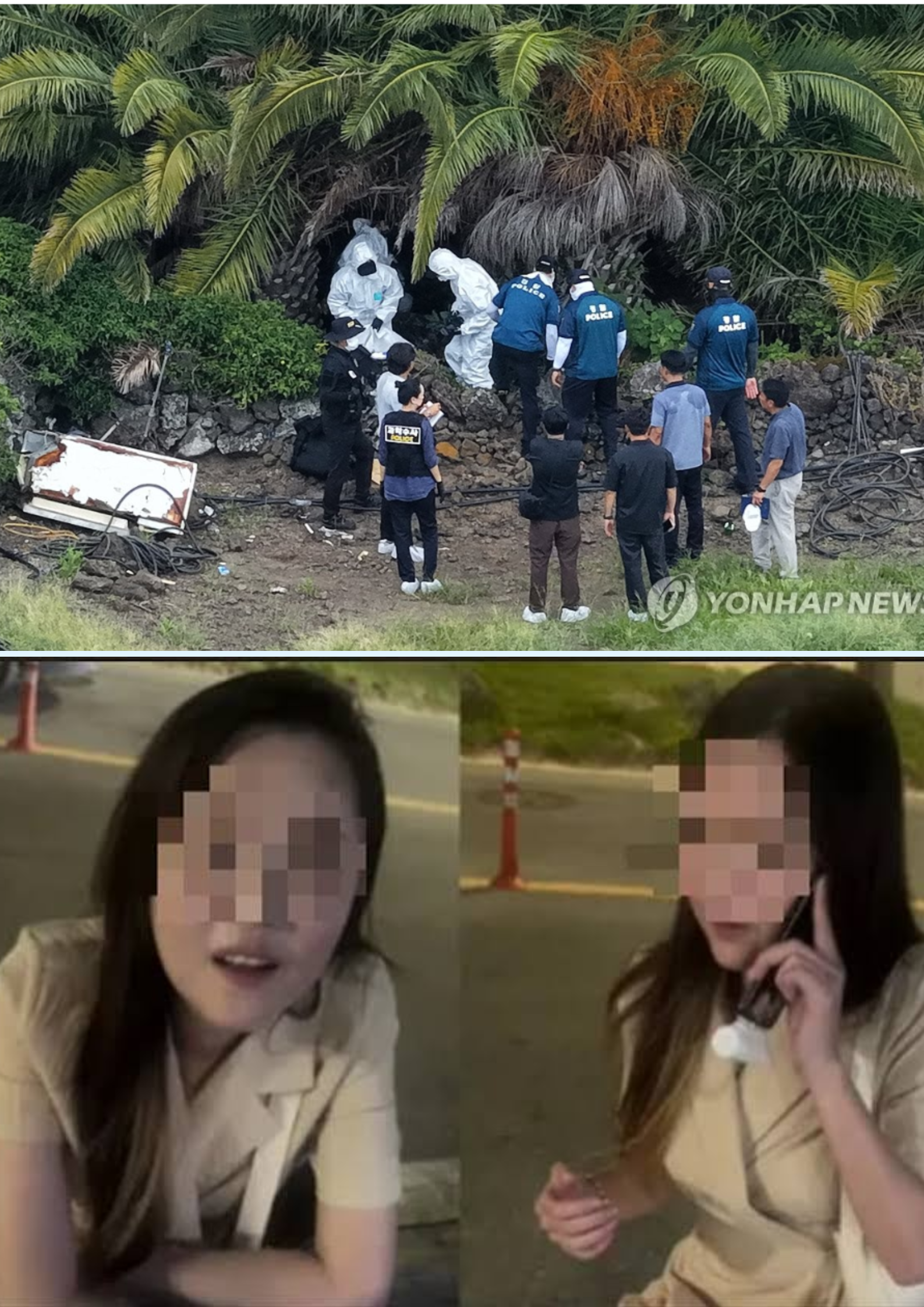
Her body was eventually found on Aug. 24 at a palm farm roughly one kilometer from the accommodation where she had been staying. Police said the remains were badly decomposed, but clothing and personal belongings found at the scene were consistent with Jang’s disappearance.
Authorities said there were no immediate indications of outside involvement, although an autopsy was planned to determine the exact cause and manner of death.
 POLICE OFFICER ACCUSED OF CLOSING HER CASE
Investigators are examining the actions of a police sergeant identified by the surname Bu.
According to authorities, Bu handled Jang’s initial missing-person report and allegedly closed the case shortly afterward, recording that contact had been made with her and that she did not want her location disclosed.
But a subsequent review reportedly found no communication record between Bu and Jang.
Police also allege that her information was removed from the missing-person profiling system.
The officer has been accused of dereliction of duty, falsifying electronic records and obstructing official duties. He has denied the allegations.
ANOTHER FAMILY RECEIVED A SIMILAR ANSWER
Authorities also discovered another case that raised similar concerns.
A man in his 60s reportedly disappeared on June 28, with Bu assigned to the case. His family said they were later told that he had been found safe but did not want to reveal his location.
Instead, his body was discovered 51 days later.
His son told reporters that the family had trusted the police’s assurance that his father was safe, only to eventually receive his body. Authorities said there were no apparent signs of outside involvement in that death.
 NEARLY 300 CASES NOW UNDER REVIEW
The investigation has expanded far beyond the two cases.
Police are reviewing 298 missing-person reports handled by the officer, with roughly 10 reportedly receiving particular scrutiny for possible improper closure. Four officers in his chain of command have also been placed on administrative leave.
Authorities have not said that all of the cases involved misconduct, and there is currently no indication that the officer was responsible for the deaths discovered on Jeju.
The four deaths are being investigated as separate cases, while police examine whether any additional missing-person investigations were improperly closed.
NATIONAL OUTRAGE FOLLOWS
The revelations have triggered widespread criticism of South Korea’s police system.
President Lee Jae Myung has called for a thorough investigation and greater accountability, while senior police officials have apologized and promised reforms.
Police have also ordered supervisory approval for missing-person cases to be closed while the case-management system is reviewed.
The controversy is particularly significant because South Korean police are preparing to take on a greater investigative role following legal reforms that reduce prosecutors’ investigative powers.
THE QUESTIONS NOW FACING POLICE
The central issue is no longer limited to what happened to the four people whose bodies were discovered.
Investigators must also determine:
How many missing-person cases were improperly closed?
Were any searches delayed because families were incorrectly told their relatives were safe?
Did failures in the system contribute to additional tragedies?
And perhaps most importantly, why were safeguards not triggered when cases were closed?
For the families involved, those questions carry enormous weight.
The discovery of four bodies has transformed what began as an investigation into individual disappearances into a much broader examination of police accountability and the systems designed to protect missing people.
Now, nearly 300 cases are under scrutiny — and authorities are racing to determine whether the failures were isolated incidents or evidence of a much deeper problem.