Nicole Kidman and Russell Crowe Waited Decades to Share the Screen — Their First Movie Collapsed Days Before Filming
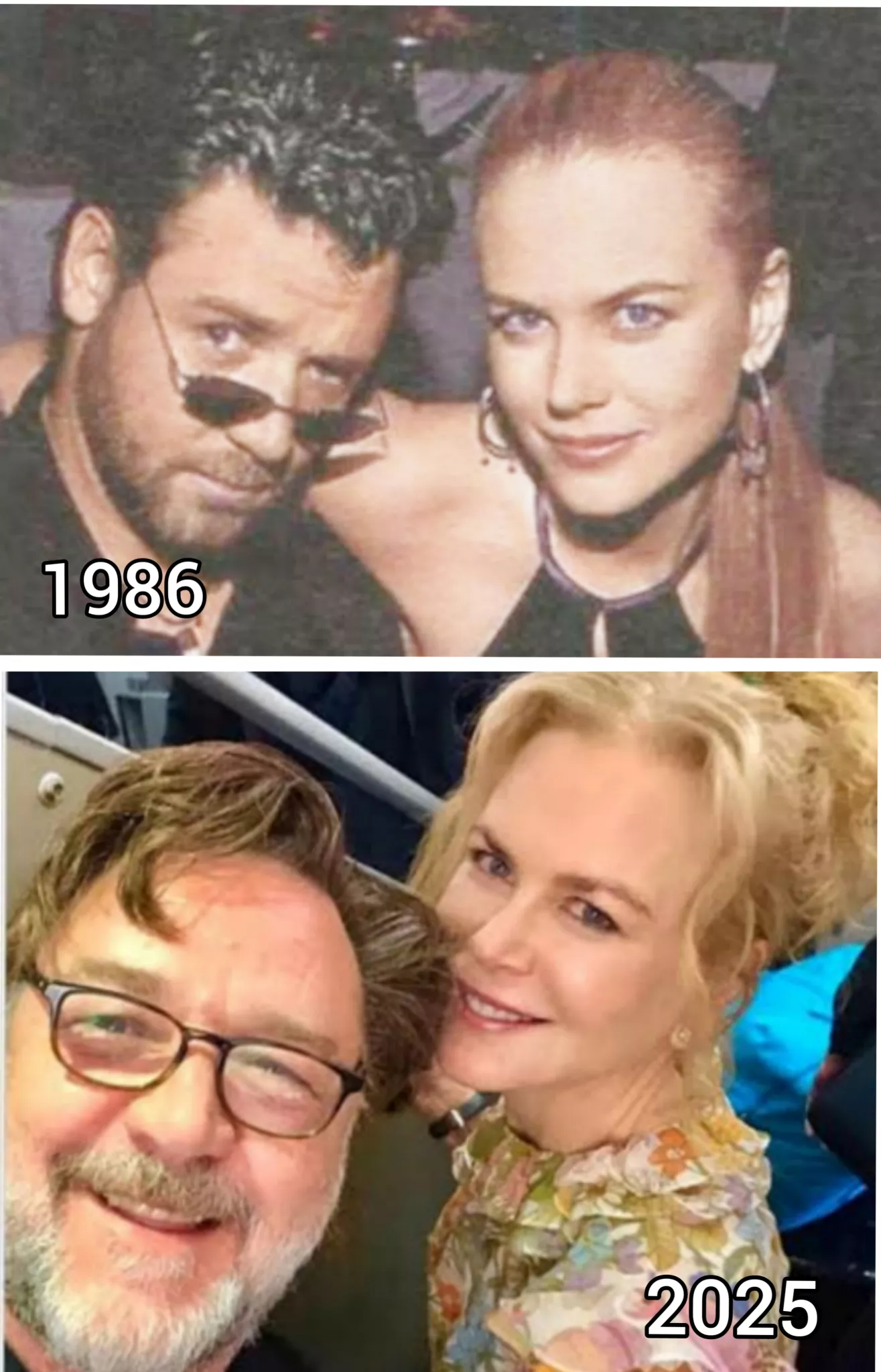
Long before Nicole Kidman and Russell Crowe became two of Australia’s biggest Hollywood exports, they were simply young actors moving through the same crowded social world in Sydney.
Kidman remembers one scene particularly well.
It was a packed house party in Darlinghurst, years before either star had reached the level of international fame that would eventually surround them. Kidman decided she would make paella for the enormous gathering. There was just one problem: the rice was still crunchy.
The ambitious dinner was essentially abandoned in favor of beer. Crowe was there that night, part of the network of young Australian performers whose careers were still taking shape.
Crowe remembered the encounter differently — less for the food than for Kidman herself. Looking back decades later, he recalled that she was around 19 and that he barely managed to say much to her. She had, he said, “held me spellbound ever since.”
Their careers would soon take them in extraordinary directions.
Kidman became an Oscar-winning star through films including To Die For, Moulin Rouge! and The Hours. Crowe became one of the defining leading men of his generation with L.A. Confidential, The Insider, Gladiator and A Beautiful Mind.
They remained friends as their lives expanded far beyond the Sydney parties of their youth. Kidman once reflected on the strange fact that so many people from those early circles — including Crowe — had eventually found themselves working at Hollywood’s highest level.
Yet despite all that shared history, one thing never happened.
Nicole Kidman and Russell Crowe never made a movie together.
In 2005, it seemed that was finally about to change.
The Movie That Almost Brought Them Together
The project was Eucalyptus, an adaptation of Australian author Murray Bail’s acclaimed novel.
Set against the landscape of rural New South Wales, the unusual romantic story revolves around a father who plants hundreds of varieties of eucalyptus trees and establishes an extraordinary condition for anyone hoping to marry his daughter: the successful suitor must correctly identify them all.
Jocelyn Moorhouse was attached to write and direct, with Crowe and Kidman positioned as the central stars. Jack Thompson was also among the announced cast, and the production was preparing to shoot in northern New South Wales.
This was no tentative Hollywood announcement that disappeared before anything substantial happened.
Preparations had moved remarkably far.
Kidman and Crowe had already participated in rehearsals in Sydney. A production base had been established in the region, and a homestead had been constructed on a farm near Bellingen for the film. Local communities were preparing for the arrival of cast and crew.
Weather had already complicated the schedule once, forcing a delay. But by February 2005, filming was expected to begin on Monday.
Then, just days before cameras were supposed to roll, the production stopped.
On Friday, the Movie Suddenly Had No Monday
Fox Searchlight announced on February 11 that Eucalyptus would be postponed because the screenplay still needed work.
The timing made the decision especially striking. This was not a script sitting on an executive’s desk waiting for approval. Actors had rehearsed. Crew members had prepared. Locations were ready.
The start of principal photography was only days away.
Fox Searchlight president Peter Rice said the filmmakers had collectively concluded that the screenplay was not yet where it needed to be. A joint statement attributed to Crowe, Kidman, Moorhouse and producer Uberto Pasolini similarly acknowledged that more work was necessary before shooting could responsibly begin.
There was another major problem: time.
Getting Kidman and Crowe together had required finding a narrow opening in the schedules of two enormously busy international stars. Pre-production had been accelerated in an effort to make that window work.
Once the script required additional development, that carefully arranged opening effectively disappeared.
Reports at the time offered competing theories about tensions behind the scenes, but the publicly confirmed reason for the shutdown remained the screenplay. The production had simply reached the point where everyone was supposed to start filming without having a script the studio considered ready.
For the surrounding communities, the consequences were immediate. Towns in the region had expected the production to bring significant activity and employment, and locals expressed disappointment after the sudden postponement.
For months, there was still hope that Eucalyptus might return.
As late as October 2005, location manager Peter Lawless said Fox was continuing to maintain the purpose-built homestead near Bellingen. As long as the structure remained standing, he felt the project still had some life.
But Kidman and Crowe had already moved on to other work.
The long-promised movie together never materialized.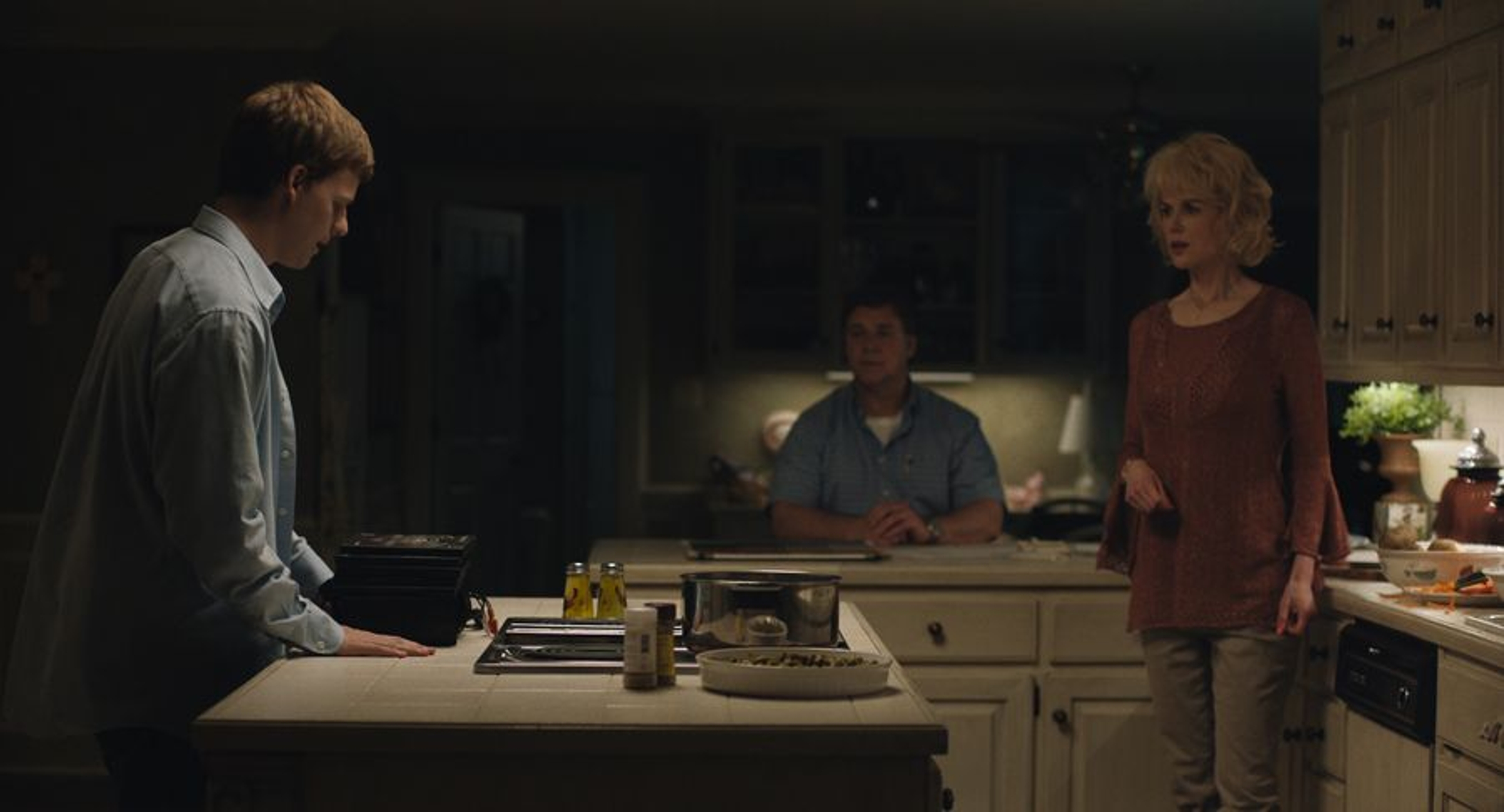
Thirteen Years Later, Another Australian Finally Put Them Together
It would take until 2018 — more than a decade after Eucalyptus disappeared — for audiences to finally see Kidman and Crowe acting opposite each other in a feature film.
The project could hardly have been more different.
Joel Edgerton’s Boy Erased, adapted from Garrard Conley’s memoir, tells the story of Jared Eamons, played by Lucas Hedges, a young man whose deeply religious parents pressure him into attending a conversion-therapy program.
Crowe played Jared’s Baptist pastor father, Marshall. Kidman played his mother, Nancy.
For Edgerton, casting two internationally famous Australians as an American married couple initially carried a risk. He worried that assembling Kidman, Crowe and himself in such a distinctly American story could become distracting.
Then he saw photographs of Conley’s real parents.
The resemblance immediately suggested the actors to him. Edgerton later joked that he felt like an acting “cupid” for finally putting the longtime friends together. More importantly, their existing relationship solved a problem filmmakers often have to manufacture from scratch.
They already had history.
Edgerton said that when Kidman and Crowe arrived on set, their decades of friendship made it seem as though they were “already married.”
Kidman felt the same advantage.
She explained that because she had known Crowe since they were teenagers, they did not have to spend weeks constructing the invisible history of their characters’ marriage. The familiarity was simply available to them.
Their fictional relationship, she said, could exist with “no rehearsal, no time, no effort.”
That did not mean their performances were casual. Both actors researched the real family behind the story, and Crowe even visited Conley’s father at his church. The film asked them to portray parents caught between their religious convictions and their relationship with their son — emotionally complicated material far removed from the romantic Australian production they had nearly made years earlier.
But something that Boy Erased needed could not be created through costumes, sets or rehearsal alone.
It needed the feeling that these two people had known each other for years.
Kidman and Crowe already had decades to draw from.
That is what makes their first movie together such an unusual Hollywood story. The collaboration audiences finally saw in 2018 had effectively been waiting since the days of crowded Sydney parties, crunchy paella and two young actors who had no idea how famous they would eventually become.
Hollywood tried to put them together in 2005. The cast rehearsed. The set was built. Monday was supposed to be the beginning.
Instead, the movie vanished before the cameras rolled.
Thirteen years later, when Kidman and Crowe finally stood together in front of one, they no longer needed to invent a shared past.
They had already lived it.