Dolly Parton Made an Unusual Offer to Her Doctors If There Was ‘No Hope,’ Her Sister Says
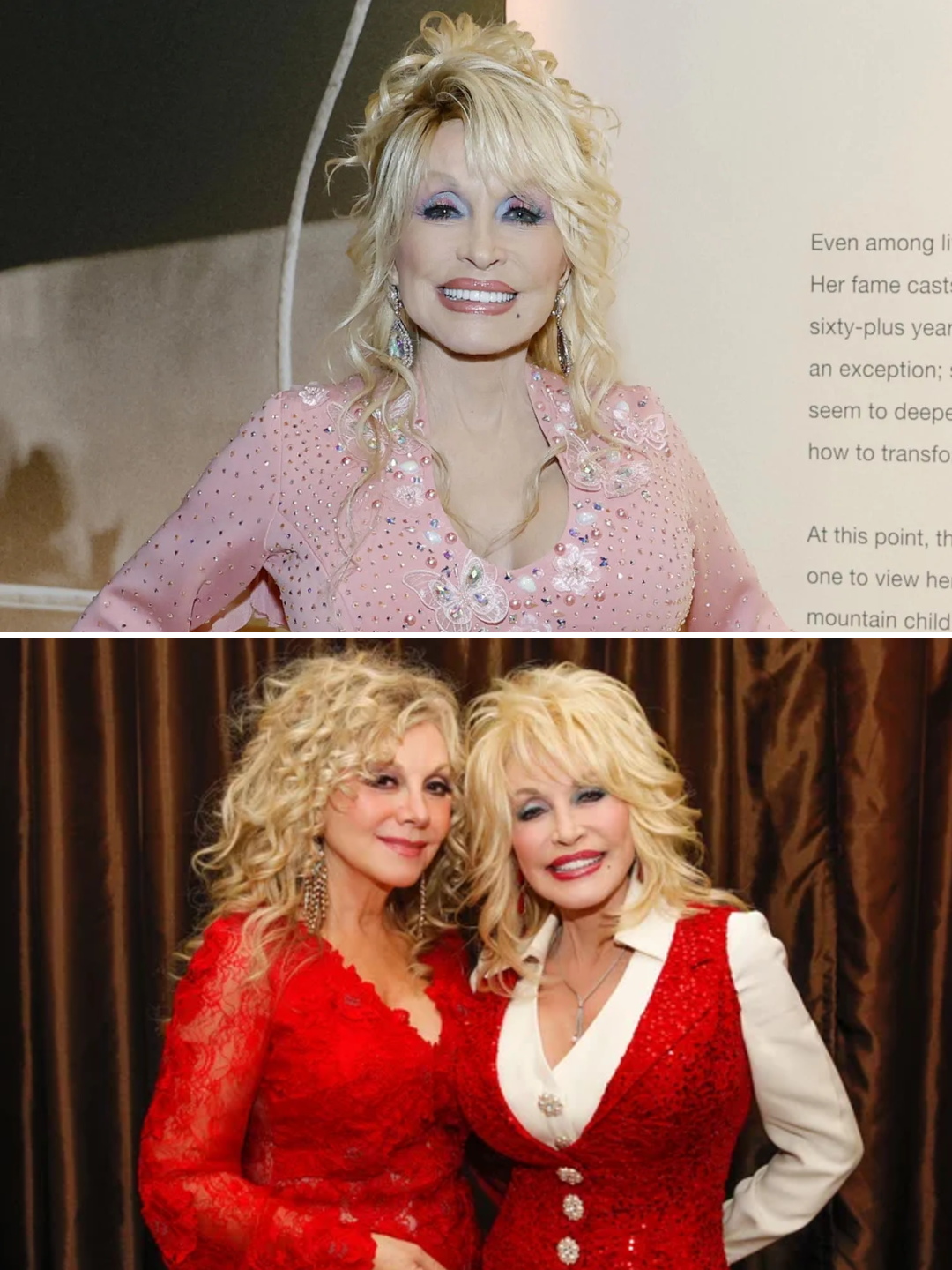
Even while facing the possibility that doctors might no longer be able to help her, Dolly Parton was apparently thinking about what her illness might do for someone else.
That is one of the most striking details to emerge from a new remembrance shared by her younger sister, Stella Parton, following the country music legend’s death.
The sisters spoke regularly, often beginning Tuesday mornings with what Stella described as their coffee time together.
During one of their recent conversations, Dolly discussed a possibility most families hope never becomes relevant.
What should doctors do if they reached a point where there was no realistic hope of recovery?
According to Stella, Dolly already had an answer.
If conventional treatment could no longer save her, she was willing to let her medical team try experimental drugs — not simply because she was searching for one last chance for herself, but because whatever doctors learned might someday help other patients.
“What the world saw is exactly who she was,” Stella wrote while sharing the story.
The detail turns what could sound like another broad tribute to Dolly’s generosity into something much more specific.
She had apparently thought about how her own final medical circumstances might still be useful to somebody she would never meet.:max_bytes(150000):strip_icc():focal(749x0:751x2):format(webp)/Dolly-Parton-and-Stella-Parton-attend-the-premiere-of-Dolly-Partons-Coat-Of-Many-Colors-082726-22657c49fcf04ce6bd6bb8317ec2aeda.jpg)
Stella Says Dolly Had Already Considered the Worst-Case Scenario
Dolly died on August 25, 2026, at age 80 after what her team described as a brief battle with cancer.
She died at Vanderbilt-Ingram Cancer Center in Nashville surrounded by loved ones.
In the days after her death, Stella shared memories that went beyond Dolly Parton the superstar.
She wrote about the relationship between two sisters who still maintained a small weekly ritual despite Dolly’s enormous public life.
Tuesday mornings meant coffee and conversation.
Stella said that routine would never feel the same again.
It was within the context of that close relationship that she revealed what Dolly had said about her medical care.
The key phrase was “if there was no hope.”
Dolly was not, based on Stella’s account, simply asking doctors to experiment for the sake of extending treatment at any cost.
The offer had a condition.
If her own situation had reached a point where her doctors believed recovery was no longer possible, she would still allow experimental drugs to be tried if the information gained could help people facing similar illnesses later.
That distinction is what makes the story so revealing.
It was not only about what Dolly wanted doctors to do to her.
It was about what she hoped they might learn from it.:max_bytes(150000):strip_icc():focal(749x0:751x2):format(webp)/Stella-Parton-and-Dolly-Parton-attend-Stella-Partons-Red-Tent-Womens-Conference-082726-9db892c842814fc49797359631613779.jpg)
The Idea Was Consistent With Something Dolly Had Done Before
The offer also fits an important part of Dolly’s public life that had little to do with music.
Years before her final illness, she had already put significant money behind medical research.
In 2020, during the COVID-19 pandemic, Dolly donated $1 million to research at Vanderbilt University Medical Center.
That funding supported work connected to the development of Moderna’s COVID-19 vaccine.
Dolly later played down her own role.
She repeatedly framed the donation in simple terms: she had been in a position to help and wanted the money to do some good.
That attitude became part of a broader pattern.
Her philanthropy ranged from education programs in Tennessee to the Imagination Library, which has distributed books to children on an enormous scale.
Through the Dollywood Foundation, she also supported educational opportunities connected to the community where she grew up.
Stella’s story adds another dimension to that history.
By the final stages of her life, Dolly was apparently considering not only what she could give through money or charitable programs, but what doctors might learn from her own body.:max_bytes(150000):strip_icc():focal(759x379:761x381):format(webp)/dolly-parton-exhibit-052025-8e9b9b3b4d7248f99c0f8f638c4fa4cd.jpg)
Stella Asked Fans to Honor Dolly Differently
In her remembrance, Stella did not simply ask people to listen to Dolly’s music or revisit old performances.
She suggested that the best tribute would be behavioral.
“My sister was always thinking of others,” Stella wrote, before encouraging people to show more kindness, lift others up and give more of their own time and resources.
That message carries particular weight because Stella was not describing a carefully managed public act.
She was describing something Dolly had apparently said privately during her illness.
The experimental-treatment offer was not announced as a charity campaign.
There was no public fundraising event built around it.
It emerged only afterward, when Stella decided to tell people what her sister had been thinking about.
That makes it different from many of the highly visible acts of giving associated with Dolly’s name.
Their Tuesday Calls Were Part of a Much Smaller Life
Dolly Parton lived an unusually public existence for more than half a century.
She became one of country music’s most successful songwriters and performers, crossed into Hollywood with films including 9 to 5 and Steel Magnolias, built Dollywood and created a public image recognized around the world.
But Stella’s remembrance emphasized something far more ordinary.
Two sisters talking over coffee.
She referred to their regular conversations as a “kaffeklatsch,” an informal coffee gathering, and wrote that her Tuesday mornings would never be the same without Dolly.
That detail helps explain why Stella’s account feels different from a celebrity tribute delivered by someone who knew Dolly primarily through work.
Stella knew the person behind the public image from childhood.
The Partons grew up as 12 siblings in rural Tennessee.
Dolly was the fourth child; Stella was the sixth.
Their relationship predated the records, movies, awards and theme park.
When Stella says the person audiences saw was the person she knew privately, she is speaking from a relationship that lasted most of their lives.:max_bytes(150000):strip_icc():focal(963x521:965x523):format(webp)/stella-parton-dolly-parton-red-tent-womens-conference-2014-100825-bb04c2a97ee242eb95c8be89b97d2aa4.jpg)
Dolly Had Spoken About Health Problems Before Her Death
Concern about Dolly’s health had surfaced before her death.
In 2025, another sister, Freida Parton, publicly asked fans to pray for her, prompting widespread concern. Dolly later reassured people that she was okay.
By May 2026, however, Dolly acknowledged that she had been receiving treatment for health issues and was not ready to return to stage-performance level.
She discussed kidney stones as well as problems involving her immune and digestive systems and canceled planned Las Vegas performances while recovering.
Her death months later after a brief cancer battle brought a flood of tributes.
But Stella’s new account provides something those tributes could not.
A glimpse into how Dolly was thinking when the questions became personal.
‘If There Was No Hope’
It would have been understandable for Dolly Parton to focus entirely on herself during serious illness.
According to her sister, she did not.
She considered the possibility that doctors might someday have nothing left to offer her personally.
And then she imagined one more way the situation might still matter.
If there was no hope for her, Stella says, Dolly was willing to let doctors try experimental drugs so that perhaps there could be more hope for someone else later.
There was no guarantee such an attempt would produce anything useful.
That was not the point.
The point was that Dolly was willing to try.
For decades, she had given people songs, books, education funding and money for medical research.
Near the end of her life, according to her sister, she was prepared to offer doctors something far more personal.
One last chance to learn.