LINDSAY CLANCY “SCARED” AS JURY REMAINS WITHOUT VERDICT AFTER TWO DAYS OF DELIBERATIONS
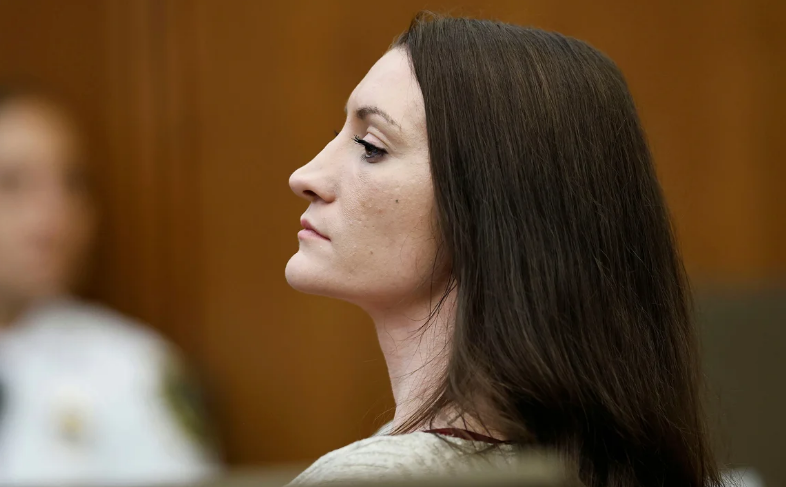
LINDSAY CLANCY “SCARED” AS JURY REMAINS WITHOUT VERDICT AFTER TWO DAYS OF DELIBERATIONS
PLYMOUTH, Mass. — Lindsay Clancy is spending another weekend waiting for an answer that could determine the rest of her life.
The Massachusetts mother is “nervous” and “scared” as jurors weigh whether she should be held criminally responsible for the deaths of her three young children, according to her defense attorney Kevin Reddington.
But after two days behind closed doors, the jury still has not reached a verdict.
Jurors were dismissed Friday afternoon and are expected to return Monday, Aug. 31, to continue deliberating.
The uncertainty comes after a five-week trial that centered on one extraordinarily difficult question:
Was Clancy legally responsible for her actions, or was she experiencing a severe psychiatric crisis that prevented her from understanding the wrongfulness of what she was doing?
:max_bytes(150000):strip_icc():focal(749x0:751x2):format(webp)/lindsay-marie-clancy-013023-1-176600bdc3614f6ca230e63734b87361.jpg) THE JURY HAS THE CASE — BUT NO ANSWER YET
THE JURY HAS THE CASE — BUT NO ANSWER YET
The 12-member jury — nine women and three men — began deliberating Thursday after closing arguments and final instructions from Judge William Sullivan.
On Friday, jurors continued reviewing the evidence before being sent home for the weekend without reaching a decision.
Their deliberations have already included a request to examine two particularly significant pieces of evidence: a knife Clancy allegedly used during her suicide attempt and bags containing empty prescription medication bottles recovered from the scene.
The requests do not indicate which way the jury is leaning.
Instead, they show that jurors are taking a close look at the evidence surrounding Clancy’s mental state and the events immediately surrounding the tragedy.
:max_bytes(150000):strip_icc():focal(749x0:751x2):format(webp)/lindsay-clancy-court-080426-1-0d554916be174019b004a84bdf0e8019.jpg) THE KILLINGS ARE NOT THE MAIN DISPUTE
THE KILLINGS ARE NOT THE MAIN DISPUTE
One of the most unusual aspects of the trial is that the defense has not primarily argued that Clancy did not cause the children’s deaths.
Instead, the central legal fight is criminal responsibility.
Clancy is accused of killing her three children — Cora, 5, Dawson, 3, and Callan, 8 months — at the family’s Duxbury home in January 2023 before attempting to take her own life.
Her defense argues that she was suffering from severe postpartum psychosis and that her mental state, combined with psychiatric treatment, left her unable to understand the wrongfulness of her actions.
Prosecutors acknowledge that Clancy was struggling with mental illness.
But they argue that being mentally ill does not automatically eliminate criminal responsibility.
Their case is that Clancy knew what she was doing, understood that it was wrong and deliberately created an opportunity to be alone with her children.
DEFENSE: “SHE WAS NOT IN REALITY”
Reddington has portrayed Clancy as a devoted mother whose mental health deteriorated into a profound psychotic episode.
Defense experts testified that she was experiencing postpartum psychosis and that she had lost contact with reality.
The defense has also attacked the psychiatric care Clancy received before the January 2023 tragedy, arguing that medication and inadequate treatment contributed to her deterioration.
Reddington has repeatedly pointed jurors toward Clancy’s behavior before the incident and her history as a mother, asking them to see a woman experiencing a catastrophic psychiatric breakdown rather than someone deliberately choosing to harm her children.
He has also highlighted her own suicide attempt, arguing that the severity of what happened afterward demonstrates how deeply disturbed her mental state had become.
PROSECUTION: SHE KNEW RIGHT FROM WRONG
Prosecutors have painted a sharply different picture.
They argue that Clancy was depressed and mentally ill but remained capable of making decisions and understanding consequences.
The prosecution has pointed to what it describes as a sequence of deliberate actions before the children’s deaths.
Prosecutors have argued that Clancy sent her husband, Patrick, out on errands, creating an opportunity to be alone with the children.
They have also relied on phone records, messages, searches and other evidence to argue that the killings were not the result of a sudden loss of control.
A prosecution expert, forensic psychologist Kirk Heilbrun, testified that Clancy retained moral awareness and challenged portions of her account concerning alleged voices and hallucinations.
A JURY FACING A COMPLEX CHOICE
Jurors have several possible outcomes available.
They can find Clancy guilty of first-degree murder, second-degree murder or manslaughter.
They can find her not guilty.
Or they can find her not guilty by reason of mental disease or defect.
That last possibility is particularly important.
A finding of not criminally responsible would not necessarily mean Clancy simply walks out of court.
She could instead be committed for psychiatric treatment and remain under state custody depending on subsequent evaluations and court decisions.
THE CHILDREN REMAIN AT THE CENTER
Throughout the trial, the courtroom has repeatedly returned to Cora, Dawson and Callan.
The prosecution used its closing argument to remind jurors that each child had a future that was abruptly taken away.
The defense, meanwhile, emphasized the relationship between Clancy and her children and the mother she had been before her mental health crisis.
That contrast has become one of the defining themes of the trial:
A mother prosecutors say deliberately made a terrible choice versus a mother the defense says was no longer capable of understanding reality.
CLANCY’S WAIT CONTINUES
According to Reddington, Clancy is struggling emotionally as the jury considers her fate.
“She’s scared,” he said, describing his client’s state of mind as the deliberations continued.
For the defense, every additional hour without a verdict means another hour of uncertainty.
For prosecutors, the jury’s continued review of the evidence means the case remains in the hands of the people chosen to decide it.
And for the families involved, the wait is tied to a tragedy that began more than three years ago.
ANOTHER DAY OF DELIBERATIONS AHEAD
The jury was sent home Friday without a verdict and is expected to return at 9 a.m. Monday.
By then, jurors will have spent additional time examining a case involving competing psychiatric opinions, disputed interpretations of Clancy’s behavior and deeply emotional evidence concerning three children.
There is no indication yet when a verdict will come.
For now, Lindsay Clancy remains in legal limbo.
Her attorney says she is scared.
The prosecution maintains she should be held criminally responsible.
The defense argues that severe psychosis robbed her of that responsibility.
And 12 jurors must now decide which interpretation of the evidence meets the legal standard.
After years of investigation and five weeks of testimony, the most consequential question in the Lindsay Clancy case may finally be approaching its answer — but for now, the courtroom is still waiting.