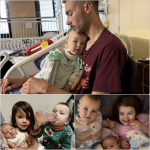
LINDSAY CLANCY “SCARED” AS JURY ENDS SECOND DAY WITHOUT VERDICT — JURORS ASK TO REVIEW KEY EVIDENCE
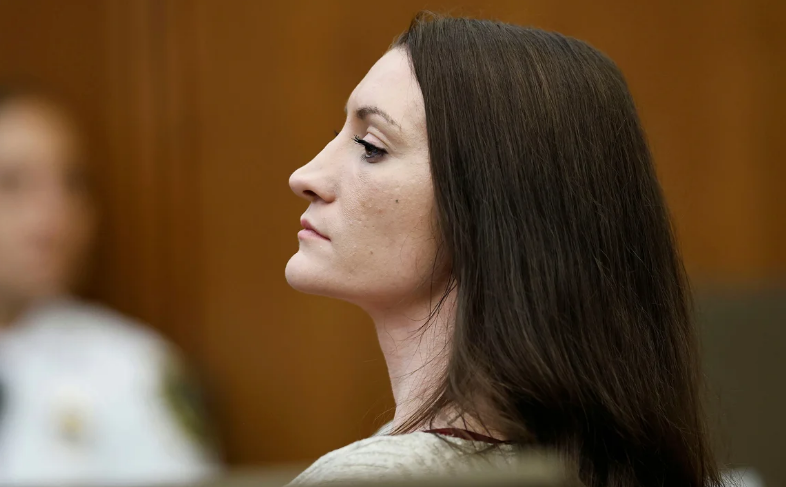
LINDSAY CLANCY “SCARED” AS JURY ENDS SECOND DAY WITHOUT VERDICT — JURORS ASK TO REVIEW KEY EVIDENCE
PLYMOUTH, Mass. — Lindsay Clancy is facing another agonizing weekend with no answer from the jury.
After roughly 10 hours of deliberations over two days, the 12-member jury in Clancy’s closely watched Massachusetts trial was dismissed Friday without reaching a verdict. Jurors are expected to return Monday to continue weighing whether Clancy was criminally responsible for the deaths of her three young children in January 2023.
Her attorney, Kevin Reddington, said Clancy is “nervous” and “scared” as she waits to learn her fate.
And while the jury has not publicly revealed how it is leaning, its requests for additional evidence have added fresh intrigue to the deliberations.
:max_bytes(150000):strip_icc():focal(749x0:751x2):format(webp)/lindsay-marie-clancy-013023-1-176600bdc3614f6ca230e63734b87361.jpg) JURORS WANT TO SEE THE EVIDENCE AGAIN
JURORS WANT TO SEE THE EVIDENCE AGAIN
During Friday’s deliberations, jurors asked to review the knife involved in Clancy’s suicide attempt and bags containing prescription medications.
The requests do not indicate whether jurors are leaning toward the prosecution or defense.
But they suggest that evidence surrounding Clancy’s mental state remains an important part of the jury’s consideration.
The defense has argued that Clancy was suffering from severe postpartum psychosis and that psychiatric treatment and medication played a major role in the deterioration of her mental health.
Prosecutors acknowledge that Clancy was struggling psychologically but argue that she nevertheless understood what she was doing and was capable of controlling her actions.
THE CENTRAL QUESTION IS NOT WHETHER CLANCY CAUSED THE CHILDREN’S DEATHS
One unusual aspect of the case is that the basic facts surrounding the children’s deaths are not the central dispute.
Clancy is charged in the January 2023 deaths of her children Cora, 5, Dawson, 3, and Callan, 8 months.
The defense has acknowledged that Clancy caused their deaths.
Instead, jurors must determine whether she was criminally responsible at the time.
That distinction could determine everything.
If jurors conclude that Clancy’s mental illness prevented her from appreciating the wrongfulness of her actions or from conforming her conduct to the law, she could be found not criminally responsible by reason of mental disease or defect.
If prosecutors persuade them that she understood what she was doing and could control her behavior, the outcome could be dramatically different.
:max_bytes(150000):strip_icc():focal(749x0:751x2):format(webp)/lindsay-clancy-court-080426-1-0d554916be174019b004a84bdf0e8019.jpg) TWO VERY DIFFERENT STORIES
TWO VERY DIFFERENT STORIES
The prosecution and defense have spent more than five weeks presenting competing explanations for what happened.
Reddington portrayed Clancy as a devoted mother whose mental health deteriorated rapidly after childbirth.
He argued that she experienced postpartum psychosis and that her treatment failed to recognize the severity of her condition.
The defense also highlighted her own suicide attempt immediately after the children’s deaths.
Clancy jumped from a second-story window and suffered catastrophic injuries that left her paralyzed.
Reddington has argued that the severity of that attempt contradicts the idea that she calmly planned everything and understood the consequences.
PROSECUTORS SAY SHE KNEW EXACTLY WHAT SHE WAS DOING
The Commonwealth has offered a much darker interpretation.
Prosecutors argue that Clancy’s actions demonstrated awareness, planning and control.
They pointed to communications, internet searches and other evidence surrounding the events, arguing that she deliberately created an opportunity to be alone with her children.
The prosecution’s position is not that Clancy was mentally healthy.
Rather, prosecutors argue that being severely depressed or mentally ill does not automatically eliminate criminal responsibility.
Their case depends on convincing jurors that Clancy still understood the nature and wrongfulness of her actions.
THE JURY IS NOW WEIGHING FIVE POSSIBLE OUTCOMES
The jurors have several potential paths.
They could find Clancy guilty of first-degree murder, second-degree murder or manslaughter.
They could find her not guilty.
Or they could determine that she was not criminally responsible by reason of mental disease or defect.
A finding of not criminally responsible would not simply mean Clancy walks out of court. Under Massachusetts law, such a finding can result in psychiatric hospitalization and continued court-ordered evaluation.
WHY THE DELIBERATIONS COULD TAKE TIME
The jury has been asked to process an enormous amount of evidence.
More than 80 witnesses testified during the trial, including medical professionals, mental-health experts, friends, relatives and Clancy’s former husband, Patrick.
The jury also heard sharply conflicting expert testimony about Clancy’s psychiatric condition.
Now those jurors must determine which interpretation is supported by the evidence beyond a reasonable doubt.
The fact that deliberations have continued for two days does not necessarily indicate a deadlock.
It may simply reflect the complexity of the case.
ANOTHER MASSACHUSETTS CASE ADDS TO THE CONVERSATION
As Clancy’s jury deliberates, another recent case has brought postpartum psychosis back into the national conversation.
A New York judge recently found Dimone Fleming not criminally responsible by reason of mental disease or defect in the deaths of her two young sons.
That case is legally separate from Clancy’s, but its timing has drawn additional attention to the difficult question of how the justice system should handle severe psychiatric illness in cases involving mothers and young children.
NOW COMES THE WAIT
For Clancy, the arguments are over.
There will be no more closing statements.
No more witnesses.
No more attempts to persuade the jury.
The decision now belongs entirely to the 12 people inside the jury room.
Her attorney says she is scared.
Her children’s families are waiting.
And after two days of deliberations, there is still no answer.
The jury will return Monday.
Until then, Lindsay Clancy’s fate remains unresolved — suspended between two competing explanations of the same devastating events:
Was she a mother overwhelmed by a devastating psychiatric illness who could no longer understand reality — or was she a woman who knew exactly what she was doing?
That is the question 12 jurors must now answer.