LINDSAY CLANCY “SCARED” AS JURY REMAINS DEADLOCKED — JURORS ASK TO REVIEW KEY EVIDENCE
LINDSAY CLANCY “SCARED” AS JURY REMAINS DEADLOCKED — JURORS ASK TO REVIEW KEY EVIDENCE
PLYMOUTH, MASS. — The wait for a verdict in the Lindsay Clancy trial has entered another tense stage.
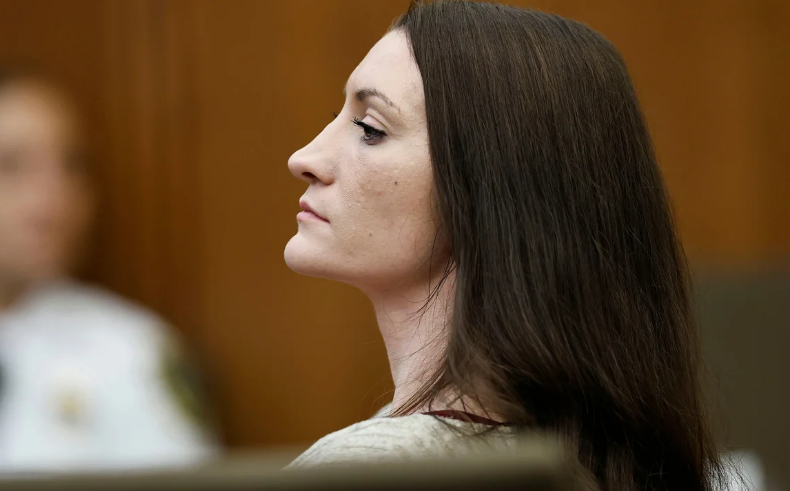
Clancy is reportedly “scared” and “nervous” as a 12-member jury considers whether she was criminally responsible for the January 2023 deaths of her three young children, according to her attorney Kevin Reddington.
But after two full days of deliberations, jurors have yet to reach a decision.
They were dismissed Friday afternoon and are scheduled to return Monday morning to continue deliberating.
:max_bytes(150000):strip_icc():focal(749x0:751x2):format(webp)/lindsay-marie-clancy-013023-1-176600bdc3614f6ca230e63734b87361.jpg) THE QUESTION THAT COULD DETERMINE CLANCY’S FUTURE
THE QUESTION THAT COULD DETERMINE CLANCY’S FUTURE
There is little dispute over the central physical events of the case.
Prosecutors and defense attorneys agree that Clancy was responsible for the deaths of her three children — 5-year-old Cora, 3-year-old Dawson and 8-month-old Callan.
The fight in court has centered on something far more complicated:
Was Lindsay Clancy criminally responsible for her actions at the time?
Her defense argues that she was experiencing severe postpartum psychosis and that her psychiatric treatment contributed to a devastating break from reality.
Prosecutors acknowledge that Clancy suffered from serious mental-health problems, but argue that she nevertheless understood what she was doing and could control her behavior.
:max_bytes(150000):strip_icc():focal(749x0:751x2):format(webp)/lindsay-clancy-court-080426-1-0d554916be174019b004a84bdf0e8019.jpg) DEFENSE: A MOTHER IN PSYCHOSIS
DEFENSE: A MOTHER IN PSYCHOSIS
Defense attorney Kevin Reddington has repeatedly portrayed Clancy as a loving mother whose mental condition deteriorated dramatically after the birth of her youngest child.
Defense experts testified that Clancy experienced psychosis and severe suicidal thinking.
One psychologist testified that Clancy reported hearing a male voice instructing her to harm her children.
The defense has also attacked the psychiatric treatment Clancy received before the tragedy, arguing that she was prescribed numerous medications without receiving adequate care for the underlying condition.
Reddington has argued that Clancy’s own suicide attempt immediately afterward demonstrates the depth of her mental crisis.
She survived the attempt but suffered catastrophic injuries and is now paralyzed.
PROSECORS: SHE KNEW WHAT SHE WAS DOING
The prosecution has presented a dramatically different picture.
Prosecutors argue that Clancy was depressed and mentally ill, but that illness did not eliminate her ability to understand right from wrong.
They pointed to evidence they say shows preparation and deliberate decision-making before the children were harmed.
Prosecutors also challenged the defense’s account of a command hallucination, arguing that Clancy’s behavior was inconsistent with someone who had completely lost touch with reality.
A prosecution expert testified that she retained “moral awareness” and was criminally responsible for her actions.
THEN THE JURY ASKED TO SEE THE EVIDENCE
The jury’s requests during deliberations have added another layer of suspense.
Jurors asked to review prescription medication bottles and a knife that had been introduced as evidence during the trial.
The knife was recovered from Clancy’s bedroom following her suicide attempt.
Her attorney declined to speculate publicly about why jurors wanted to examine those items.
The request does not reveal what the jurors are thinking.
But it shows that physical evidence presented during the five-week trial remains part of their deliberations.
MORE THAN 80 WITNESSES
The jury has spent weeks hearing from medical experts, relatives, first responders, police officers and Clancy’s former husband, Patrick Clancy.
Patrick made the devastating 911 call after discovering what had happened inside the family home.
The testimony has repeatedly returned to Clancy’s mental state, her medications, her behavior before the tragedy and the events immediately surrounding the children’s deaths.
Now, jurors must sort through that enormous amount of evidence and determine which version of Clancy’s mental state they believe.
NO VERDICT YET
The jury deliberated for roughly 10½ hours through Friday before being dismissed for the weekend.
There is currently no verdict.
When deliberations resume Monday, jurors will once again face the same difficult question that has dominated the trial:
Was Clancy suffering from a mental disease or defect so severe that she could not appreciate the wrongfulness of her actions or conform her conduct to the law?
Or, despite her serious mental-health struggles, did she remain legally responsible for what she did?
For Clancy, the waiting has become its own ordeal.
Her attorney says she is frightened by the uncertainty.
For the families involved, the stakes could hardly be higher.
And after five weeks of testimony, dramatic closing arguments and hours of private deliberations, 12 jurors now hold the answer to the question that will determine the next chapter of Lindsay Clancy’s life.