THE SEARCH WAS UNDERWAY — BUT THE TRACKER WASN’T WITH HER
THE SEARCH WAS UNDERWAY — BUT THE TRACKER WASN’T WITH HER
5-Year-Old Saylor Hayes Was Found in the Water Hours After a Massive Search Began. Now Investigators Are Examining What Her Parents Knew
The search for 5-year-old Saylor Hayes began with an urgent race against time.
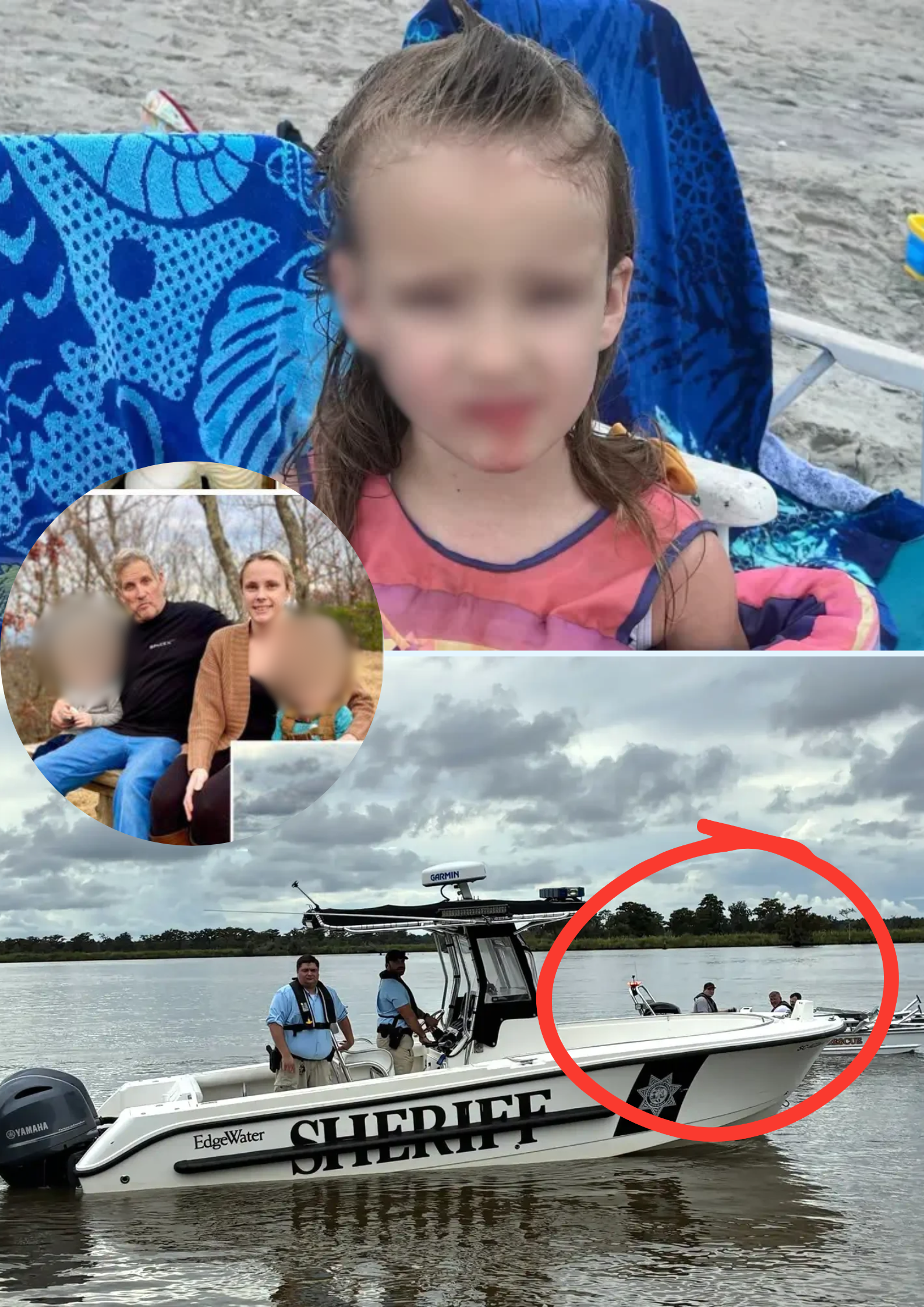
Hundreds of people joined law enforcement agencies in South Carolina, searching neighborhoods, docks, shorelines and waterways after the nonverbal child disappeared from her family’s vacation rental in Pawleys Island on Sunday, August 30.
There were drones in the air.
K-9 teams on the ground.
Boats moving through the water.
Divers checking around docks.
And even a helicopter equipped with technology specifically designed to locate people wearing a Project Lifesaver transmitter.
But there was one devastating problem.
Saylor wasn’t wearing the transmitter.
And according to newly released arrest warrants, her parents allegedly knew it.
That revelation has transformed the case — from a heartbreaking missing-child search into a criminal investigation focused on what happened during the critical hours before Saylor was found.
 A TECHNOLOGY THAT WAS SUPPOSED TO HELP FIND HER
Saylor, who was severely nonverbal and had a known history of wandering, had been enrolled in the Project Lifesaver program in Virginia since June 2024.
The system is designed for people who are at risk of wandering. A small transmitter worn on the body emits a unique radio frequency that trained search personnel can use to help locate the person.
For a child like Saylor, the technology could be especially valuable during a disappearance.
But when she vanished in South Carolina, investigators could not detect her signal.
At first, search teams still tried.
At approximately 2:25 p.m. Sunday, authorities said deputies were using Project Lifesaver equipment while K-9 officers, drones, boats and volunteers searched the area.
By 3:10 p.m., a Charleston County Sheriff’s Office helicopter equipped with Project Lifesaver technology had arrived.
At 4:15 p.m., divers were searching around area docks.
Search crews were also working along the Waccamaw shoreline.
The operation was expanding by the minute.
Then investigators in South Carolina contacted authorities in Virginia.
The question was simple:
Where was Saylor’s transmitter?
 THE SIGNAL WAS FOUND — BUT NOT WHERE SEARCHERS NEEDED IT
Washington County Sheriff’s Office personnel in Virginia checked the family’s home.
They eventually detected Saylor’s assigned frequency.
But the signal wasn’t coming from South Carolina.
It was coming from a vehicle on the property in Virginia.
Inside was Saylor’s Project Lifesaver transmitter.
She had been thousands of feet away — in another state — while the device designed to help locate her remained behind.
Authorities say the transmitter had been removed before the family left Virginia.
And according to officials, the specialized band used to secure the device cannot simply be unclasped by a child. It must be physically cut to remove the transmitter.
That discovery created an agonizing question:
How much time had the search lost because the technology everyone was relying on could never have produced a signal from Saylor?
Authorities have said the answer is still part of the investigation.
THE WATER WAS THERE FROM THE BEGINNING
One important detail makes the timeline even more painful.
The water was not completely ignored during the search.
From the early stages, authorities were checking waterways and shorelines. Boats were deployed, divers joined the operation, and search teams examined docks and the Waccamaw shoreline.
But investigators now allege something much more serious.
According to the arrest warrants, Saylor’s parents encouraged search efforts to focus on the tracking technology despite allegedly knowing she was not wearing the transmitter.
The warrants also allege that the parents directed search efforts away from a nearby body of water.
That allegation has become one of the most significant elements of the case.
Because less than a day later, the search ended at the water.
THE DISCOVERY THAT CHANGED EVERYTHING
Around 9:45 a.m. Monday, August 31, agents with the South Carolina Department of Natural Resources found Saylor in the water near Hagley Landing, close to the area where she had disappeared.
The massive search had lasted through the night.
Hundreds of people had participated.
Multiple agencies had been involved.
But the little girl everyone had been desperately trying to find was ultimately discovered in a waterway near the rental property.
An initial examination reportedly found no visible signs of trauma.
Her cause and manner of death remain pending further examination.
And suddenly, investigators were no longer simply asking:
Where did Saylor go?
They were asking:
What did the adults responsible for her know — and when did they know it?
A CHILD KNOWN TO BE DRAWN TO WATER
The arrest warrants describe Saylor as severely nonverbal, with a history of wandering and a known affinity for water.
That information is central to the allegations against her parents.
Investigators say the circumstances created an unreasonable risk to her safety because she was a particularly vulnerable child who required appropriate supervision and safeguards.
Authorities also allege that Saylor was left unsupervised near a body of water.
Those allegations form the basis of the charges filed against her parents.
THE ARRESTS
On September 1, one day after Saylor was found, her parents were arrested in Carter County, Tennessee.
John Herb Hayes III, 70, and Geordyn Nichole Hayes, 31, were each charged with unlawfully placing a child at risk and willfully abandoning a child.
They were being held in Tennessee while awaiting extradition to Georgetown County, South Carolina.
Importantly, the charges do not establish that either parent caused Saylor’s death.
They are allegations that must be proven in court.
Georgetown County Sheriff Carter Weaver has emphasized that investigators are following the evidence and that the arrests were based on information developed during the investigation.
THE QUESTIONS THAT NOW HANG OVER THE CASE
The timeline has left investigators and the public with a series of difficult questions.
Why was Saylor’s transmitter removed before the family left Virginia?
Why was the device left inside a vehicle instead of being worn by Saylor?
When did her parents realize she did not have it?
Why, investigators allege, were searchers encouraged to rely on a tracking system that could not locate her?
And what information was given to search crews about the nearby water?
Those questions are now at the center of the investigation.
Officials have stressed that the extensive search did include waterways from the beginning. But the newly released warrants have raised concerns about whether searchers were given accurate information about Saylor’s actual circumstances.
A COMMUNITY THAT REFUSED TO STOP LOOKING
While investigators reconstruct those crucial hours, one fact remains undeniable: an enormous effort was made to find Saylor.
Residents joined the search.
Emergency personnel worked through the day and night.
Law enforcement agencies deployed specialized equipment.
Divers entered the waterways.
Aircraft searched from above.
Volunteers checked surrounding areas.
Everyone was looking for the same little girl.
But by Monday morning, the search had become a recovery operation.
And now the case has entered a very different phase.
THE INVESTIGATION IS ONLY BEGINNING
Saylor’s story has raised painful questions about supervision, tracking technology and the information provided during an emergency search.
The Project Lifesaver transmitter that was supposed to help authorities locate her was ultimately found in Virginia.
Saylor was found in South Carolina.
And the distance between those two places has become one of the most important details in the entire case.
Investigators are continuing to examine the family’s actions, the search timeline and the circumstances surrounding Saylor’s final hours.
For now, the legal allegations remain just that — allegations.
But one question continues to dominate the investigation:
If the tracker had been on Saylor, and if searchers had been given the complete picture from the beginning, could the search have unfolded differently?
That is a question investigators will now have to answer.
And for Saylor’s family and the community that searched for her, it may be the most painful question of all.