MIDDLESBROUGH SCHOOLS SHUT EARLY FOR A66 FUNERAL — BUT THE DECISION SPARKED A FURY OF ITS OWN
MIDDLESBROUGH SCHOOLS SHUT EARLY FOR A66 FUNERAL — BUT THE DECISION SPARKED A FURY OF ITS OWN
Schools sent children home early. Roads were closed. Hundreds gathered in the streets. And politicians were left arguing over whether the decision was about safety — or whether it meant disorder had won.
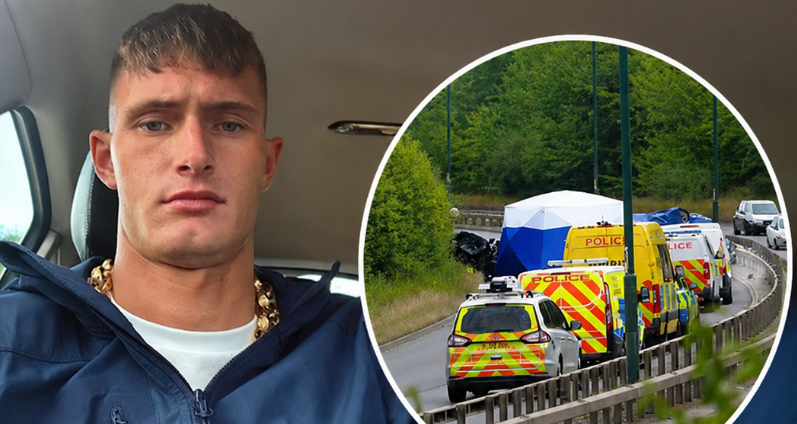
Middlesbrough was placed under heightened security on Friday as hundreds of mourners gathered for the funeral of Jakub Matusiak, one of five young men who died in the devastating A66 crash.
But before the funeral even began, another controversy had already taken hold.
Several schools in the area closed their doors early because authorities expected large crowds, traffic disruption and possible problems surrounding the funeral procession.
The decision immediately divided opinion.
Some said protecting children and ensuring safe journeys home had to come first.
Others accused authorities of allowing the threat of disorder to interfere with education.
And after a series of chaotic tributes following the crash, fears about what might happen were not without context.
 WHY WERE SCHOOLS CLOSED?
At least six schools in the South Bank area changed their normal schedules.
South Bank Primary School closed at noon, while St Peter’s Catholic College, St Margaret Clitherow and Outwood Normanby also closed around lunchtime.
Archway closed at 11:45am, while Mackenzie Thorpe was closed for the full day.
The schools said the measures were taken because of anticipated congestion and transport disruption around the funeral.
South Bank Primary’s headteacher said large numbers of people were expected in the area and that the decision had been made after considering the impact on pupils, staff, families and transport arrangements.
For some parents, it was an inconvenience.
For others, it was a necessary precaution.
But the political reaction was immediate.
 ‘GIVING IN TO THUGS?’
Shadow Education Secretary Laura Trott strongly criticised the decision.
She argued that children should not be kept out of school because of the behaviour of people who might cause trouble.
Her comments reflected a growing concern among politicians that the aftermath of the A66 crash was beginning to affect ordinary residents who had nothing to do with the incident.
Redcar and Cleveland Council leader Alec Brown also expressed frustration.
He said it was “awful” that children’s education was being disrupted and warned that dangerous riding, reckless driving, road blockages or antisocial behaviour would not be acceptable.
But the council also made clear that the early closures were not intended as an endorsement of disorder.
Officials said they followed discussions with headteachers and the local authority because of expected traffic and transport disruption associated with the funeral.
THE FEARS DIDN’T COME FROM NOWHERE
The concerns had been heightened by what happened at previous tributes.
A memorial following the deaths of the five young men had already attracted criticism after masked youths were filmed riding motorbikes, scooters and quad bikes and performing stunts.
Another tribute for Michael Cahill, one of the other A66 victims, reportedly ended with vehicles being set alight.
Those scenes prompted condemnation from local politicians and raised fears that another large gathering could spiral into disorder.
That was the backdrop against which schools made their decisions.
Authorities were not simply preparing for a normal funeral.
They were preparing for a funeral taking place in a community already under enormous tension.
THEN HUNDREDS TURNED OUT
On Friday, the funeral of Jakub Matusiak went ahead at St John the Evangelist Church in South Bank.
Hundreds of mourners gathered to pay their respects.
The procession featured two white horses, a white Rolls-Royce and a Lamborghini.
Mourners wore black and orange — orange reportedly being Matusiak’s favourite colour.
His coffin was decorated with orange and white flowers, with the word “son” displayed prominently on top.
Roads around the church were closed as crowds arrived.
Police had warned that delays were expected between roughly 3pm and 5pm.
But despite the fears surrounding the event, reports from the day indicated that the funeral itself remained largely peaceful.
That fact has added another layer to the debate.
A FUNERAL CAUGHT IN THE MIDDLE OF A NATIONAL ARGUMENT
For Matusiak’s family and friends, the day was about grief.
For local residents, however, the funeral became part of a much wider crisis.
The August 22 crash killed seven people in total.
Five young men were travelling in a Volkswagen Passat when it collided head-on with a marked police vehicle while travelling the wrong way along the A66.
The two police officers inside — PC Matthew Blades, 37, and PC Tom Clough, 38 — also lost their lives.
The tragedy has since been followed by heightened tensions, police investigations and concerns about criminal activity in the wider area.
Extra police resources have been deployed, while authorities have made a major effort to prevent further disorder.
The Home Office has also announced additional funding for Cleveland Police amid concerns about serious crime in Middlesbrough.
THE TWO SIDES OF MIDDLESBROUGH
The contrast could hardly have been sharper.
On one side were grieving families saying goodbye to young men who died suddenly.
On the other were police officers, politicians, teachers and residents worried about what might happen when hundreds of people gathered in one place.
Education Secretary Lucy Powell defended the headteachers’ decisions, saying they had made a difficult judgment in an “incredibly exceptional situation” and that safety had to be considered.
She also said the government was putting additional policing resources into the area to help calm tensions.
That leaves an uncomfortable question hanging over Middlesbrough:
Should schools ever have to close because authorities fear what might happen at a funeral?
Critics say the answer should be no.
Those defending the decision say the answer is more complicated when children’s safety and transport are involved.
THE FUNERAL ENDED — BUT THE QUESTIONS REMAIN
By the end of Friday, hundreds had paid their respects to Jakub Matusiak.
The expected funeral procession had caused significant disruption, but the service itself did not produce the level of disorder some had feared.
For Jakub’s loved ones, the day was ultimately about saying goodbye.
For Middlesbrough, however, it became another chapter in a story that has already brought tragedy, public anger, political arguments and intense scrutiny.
And perhaps the most uncomfortable part is this:
Children were sent home early not because they were in danger — but because authorities feared what other people might do.
Whether that was an unavoidable safety measure or a sign that a community has been pushed too far remains a question Middlesbrough will continue to wrestle with long after the flowers have been cleared from the streets.